

Short answer: International business etiquette varies enough by country that one cheat sheet won’t save you. As of 2026, the non-negotiables are: bow and exchange business cards with two hands in Japan and South Korea; be exactly on time in Germany, the UK, and Japan (and relaxed about it in Mexico); never give clocks or sets of four in China; expect long, relationship-building lunches in France and Mexico; and remember the UAE weekend is Saturday-Sunday now, not Friday-Saturday. Use the master table below to prep fast, then click through to the full country guide before you fly. Confirm anything time-sensitive on an official source, because the logistics move.
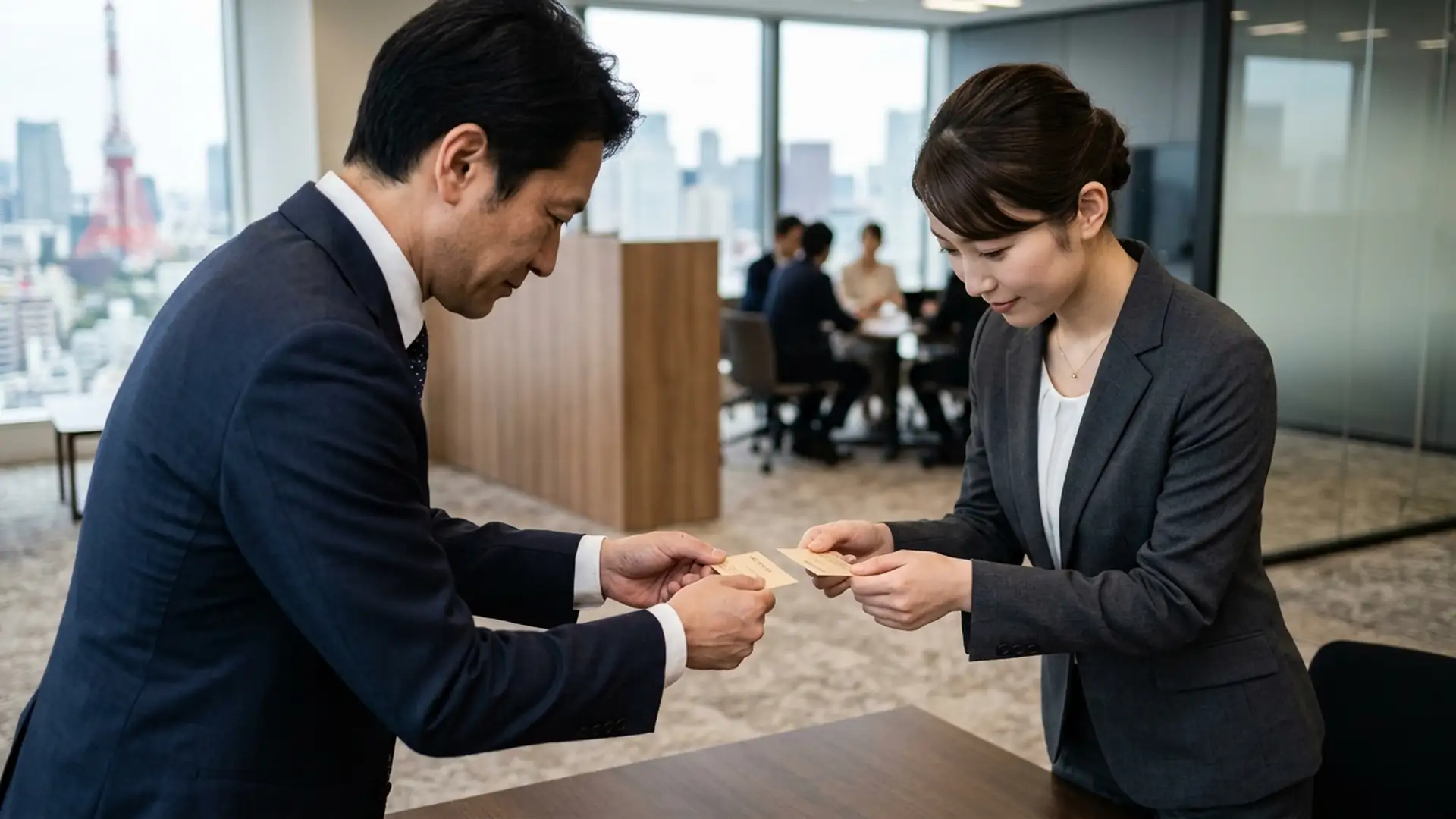
My first overseas deal nearly died in a Tokyo conference room because I took a man’s business card with one hand, glanced at it, and shoved it in my back pocket. A colleague kicked me under the table. Turns out I’d just sat on his face. Nobody warned me. I learned this stuff the embarrassing way so you don’t have to.
The Master Etiquette Table (Nine Countries, Five Things You’ll Get Wrong)
Here’s the whole cluster on one screen. I keep a version of this in my phone notes and skim it on the plane. Every cell is short on purpose. The detail lives in the country posts linked under the table.
| Country | Greeting | Punctuality | Gift-giving | Business cards | Dining / dinner norm |
|---|---|---|---|---|---|
| Japan | Bow; light handshake if offered | Strict — be early | Expected; wrap it, give & receive with both hands | Both hands + slight bow; study it, don’t pocket it | Host pours; wait to be seated; never stand chopsticks upright |
| China | Light handshake; nod to the senior person first | Be on time | Common, but no clocks or sets of four; expect a polite refusal first | Both hands; read it before you sit | Banquet seating by rank; toasts (ganbei) matter |
| South Korea | Handshake + slight bow | Be on time | Reciprocity expected; both hands | Both hands, facing them; don’t write on it | Eldest eats first; pour for others, never yourself; turn away to sip near a senior |
| Germany | Firm handshake, eye contact | Very strict — apologize for 2-3 min late | Modest, not expected; skip the extravagance | No ritual; exchange casually | Keep hands visible; business is fine at the table |
| France | Light, quick handshake | On time, slightly relaxed | Optional; tasteful, never flashy | No ritual | Long lunch; business comes late, often after dessert |
| Mexico | Warm handshake; cheek kiss once you know them | Relaxed — yours matters, theirs may slip | Welcome; relationship-oriented | No ritual | Comida after 2pm runs 2+ hours; family talk before business |
| UK | Firm handshake, polite greeting | Be a few minutes early | Not expected; can read as currying favor | No ritual | Pub rounds; understatement; you buy your turn |
| India | Handshake or namaste; greet seniors first | Flexible — build in buffer | Welcome; avoid leather for Hindus, give with the right hand | Right hand or both; never just the left | Right hand for eating; check for vegetarian needs |
| UAE | Handshake (same gender); wait for a woman to extend first | Be on time; hosts may run late | Welcome; no alcohol or pork; give with the right hand | Right hand or both | Weekend is Sat-Sun; right hand for food; no pork or alcohol at most tables |
One cell catches more people than any other: the UAE weekend. It moved. The UAE shifted its official weekend to Saturday and Sunday at the start of 2022, and the federal government now runs a four-and-a-half-day week with a short Friday — offices typically close around noon. Private companies set their own hours, and Sharjah went its own way entirely with a straight four-day week. If you’re still picturing Friday-Saturday, you’ll book meetings into a dead day. As of 2026 this is the rule, but confirm the specific company’s schedule before you lock your calendar — these things shift, and the emirates don’t all march in step.
The Two Rules That Travel Everywhere
Strip away the country quirks and two rules survive every border I’ve crossed.
- Use both hands and slow down. Cards, gifts, a drink poured for a senior colleague — across most of Asia and the Gulf, two hands says respect and one hand says you don’t care. It costs you nothing.
- Mirror, don’t lead. Watch how formal they are, then match it one notch more formal. Let them invite first names, the cheek kiss, the handshake with a woman, the joke. Nobody ever got burned for being slightly too polite.
If you remember nothing else, remember those two. They’ve bailed me out in rooms where I had no clue what the local rule was.
Region Index: Pick Your Destination, Read the Full Guide
The table gets you on the plane. These spokes get you through the meeting. I’ve grouped them by region so you can jump straight to wherever you’re headed.
Asia
- Japan — The handshake-versus-bow question, the card ritual, and why the meeting starts before anyone speaks. Read business etiquette in Japan: handshake or bow.
- China — Banquet seating, toasting order, and the gift taboos that can sink a deal. Read navigating business dinners in China.
- South Korea — The drinking culture is a business arena. Two hands, never pour your own, turn away to sip near the boss. Read business dinner drinking etiquette in Seoul.
- India — Namaste or handshake, hierarchy, the right-hand rule, and why “yes” sometimes means “I heard you.” Read India business etiquette.
- The pan-Asia warning — Across much of Asia, a polite “yes” is not a commitment. Read why “yes” doesn’t mean yes in Asian business communication.
Europe
- Germany — Precision is a love language here. Titles, the formal “Sie,” and apologizing for two minutes late. Read mastering German business etiquette.
- France — The long lunch, business after dessert, and addressing everyone as Monsieur or Madame. Read French business etiquette tips.
- United Kingdom — Understatement, queuing, pub rounds, and reading what a Brit actually means versus what they politely say. Read UK business etiquette.
The Americas
- Mexico — Relationship first, deal second. The comida runs long, family talk comes before business, and warmth wins. Read an introduction to doing business in Mexico.
Middle East
- UAE — The Sat-Sun weekend, the right-hand rule, no pork or alcohol at most tables, and gender-aware greetings. Read UAE business etiquette.
The Cross-Border Skills That Apply No Matter Where You Land
Some etiquette isn’t country-specific. It’s situational. These come up everywhere, and getting them right marks you as someone who’s done this before.
- Business cards as a global ritual. A card means something different in Tokyo than in Toronto. Know the spectrum before you hand one over. Read business card etiquette around the world.
- Tipping you’ll get wrong in both directions. Over-tip in Japan, under-tip in the US, and you’ve insulted someone either way. Read tipping etiquette around the world.
- Dietary restrictions at the business dinner. Vegetarian in India, no pork in the Gulf, allergies anywhere — handle it without making it weird. Read handling dietary restrictions at a business dinner abroad.
My Pre-Trip Etiquette Checklist
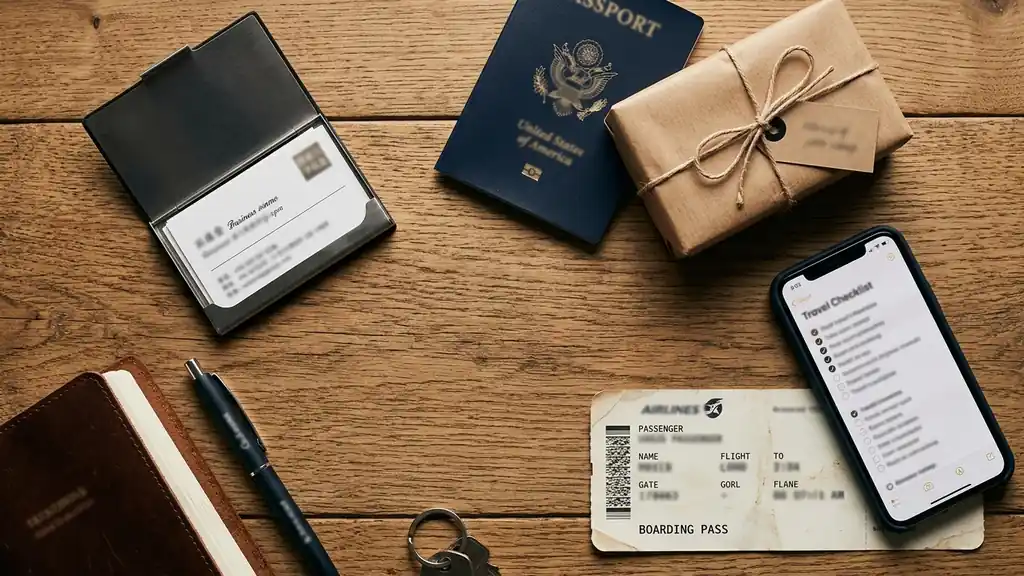
Before any international work trip, I run this list. It takes ten minutes and has saved me from more than one Tokyo-pocket moment.
- Read the one country post for where you’re going. Not all nine. Just the one. Do it the week before, not in the cab from the airport.
- Get proper business cards printed — bilingual if you’re headed to Japan, China, or Korea — and buy a real card case. Loose cards in a wallet read as sloppy in card-ritual cultures.
- Check the local weekend and working hours. Especially the UAE (Sat-Sun) and any half-day Fridays. Confirm the specific company’s schedule, not just the country default.
- Learn the greeting. Bow, handshake, namaste, or wait-and-mirror. Pick one and practice it once so it isn’t your first attempt in the room.
- Sort the gift question. If gifts are expected (Japan, China, Korea), buy something tasteful and wrappable before you fly. If they’re not (Germany, UK), don’t force it.
- Flag dietary and dining norms. Right-hand rule, no pork or alcohol, vegetarian options, who eats or pours first. Know it before you sit down.
- Build in a time buffer. Strict cultures (Germany, Japan) punish lateness; relationship cultures (Mexico, India) run late from the other side. Plan for both.
That’s it. Seven steps, repeatable, no panic.
A Quick Word on Where This Comes From
I’m a dad who travels for work, not a cultural anthropologist. Everything in that table I’ve either lived through or checked against current sources for 2026, and I flagged the one fact that genuinely trips people up — the UAE weekend — because I watched a colleague burn a Thursday in Dubai assuming it was a workday and write off the Friday assuming it was off. He had it exactly backward. The broad strokes here are stable: Germans value punctuality, Koreans pour with two hands. But the logistics — working hours, specific holidays — shift, so treat this as your launchpad and confirm the moving parts on an official source before you commit your calendar.
FAQ
What’s the single most common business etiquette mistake Americans make abroad?
Handling business cards carelessly in Asia. In Japan, China, and South Korea the card represents the person — take it with both hands, look at it, and never write on it or stuff it in your back pocket. It’s the fastest way to signal disrespect without saying a word, and it’s the easiest fix on this entire list.
Is the UAE weekend really Saturday and Sunday now?
Yes. The UAE shifted its official weekend to Saturday-Sunday at the start of 2022, and the federal government runs a four-and-a-half-day week with a short Friday. Private companies set their own hours and Sharjah runs a four-day week, so as of 2026 confirm the specific organization’s schedule before booking meetings.
Do I need to give gifts on every international business trip?
No. Gifts are expected and meaningful in Japan, China, and South Korea, where you give and receive with both hands and wrap thoughtfully. In Germany and the UK they’re not expected and can even read as currying favor. When in doubt, bring something small and tasteful from your home region and let your host’s reaction guide you.
How early should I arrive to a meeting in each country?
In Germany, Japan, and the UK, arrive a few minutes early — being even 2-3 minutes late in Germany warrants an apology. In Mexico and India, still be punctual yourself, but expect your counterpart to run late and build buffer into your day. Match the strict cultures and stay patient in the relaxed ones.
Does “yes” always mean yes in international business?
Not across much of Asia. In several Asian business cultures a polite “yes” can mean “I heard you” or “I don’t want to embarrass you by saying no,” rather than firm agreement. Confirm commitments in writing and watch for indirect signals. We dig into this in the dedicated post on why “yes” doesn’t always mean yes.
Etiquette won’t close your deal — your product and your follow-through do that. But getting it wrong can kill a good deal before you reach the substance. Skim the table, read the one country post that matters this trip, and you’ll walk in looking like you’ve done this before. Which, after enough kicks under enough tables, I finally have.