
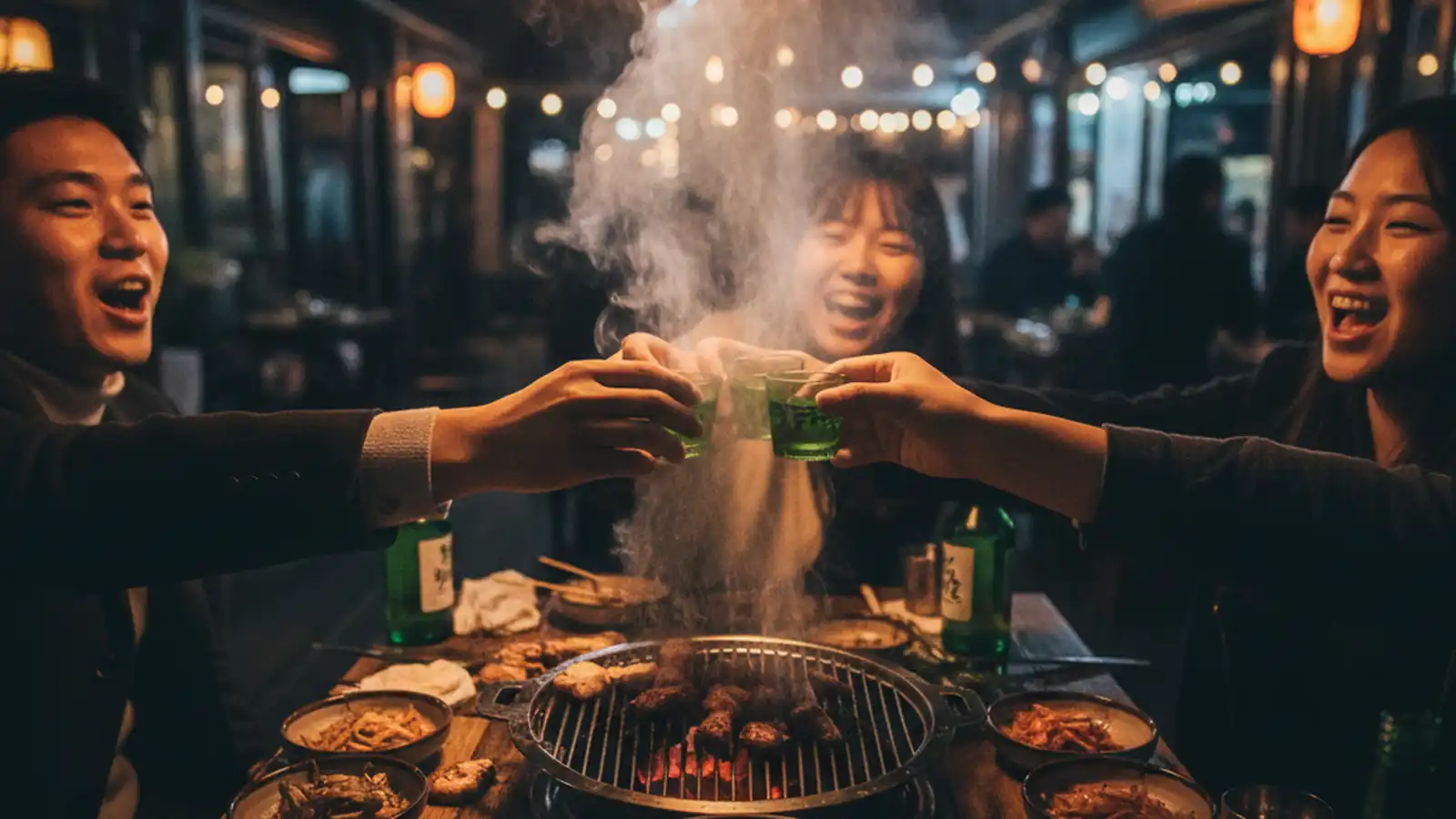
Short answer: You don’t get drunk in Seoul by drinking less and pacing smart. Eat first, keep a water glass going one-for-one, never pour your own, and don’t try to match the heavy hitters. I drink the first three carefully, decline the fourth politely, and stay engaged through dessert. The dinner is the meeting—how you handle the soju says more than the soju does.
Three soju toasts in, my Korean host poured a fourth and watched my face. I had been ambushing my own liver for years. Here’s how I do business dinners in Seoul now — without going home wrecked, and without losing the relationship that the dinner is actually for.
The Seoul Dinner That Wrecked Me
The dinner was in Gangnam, in a private room at a Korean BBQ place I’d never been to before. Six of us — three from their team, three from ours. The customer was an electronics manufacturer we’d been courting for almost a year, and this dinner was the social half of a two-day visit.
I had not done my homework on Korean drinking culture.
The first toast came after we sat down. Soju glasses, small, all raised together. “Geonbae” — the Korean equivalent of “cheers.” We drank. I drank. The second round came about ten minutes later, when their president personally poured for me with both hands, which I now know was a sign of respect. I held my glass with one hand, took a half-sip, and put it down.
The third toast was specifically dedicated to “the new partnership” and was a full empty-the-glass moment. I emptied. So did everyone else.
By the fourth round, I’d lost track. Their president poured for me again. I poured for myself. He laughed politely and said something I didn’t catch. My local colleague leaned over and whispered, “you don’t pour for yourself.”
By the seventh round, I was speaking too loudly, agreeing to things I shouldn’t have agreed to, and trying to remember the Korean phrase for “I’m okay.” By the time I got back to the hotel, I was a mess. I woke up at 4 AM with the kind of hangover that feels like a punishment for being naïve.
The deal eventually moved forward, but the dinner itself wasn’t the win I’d thought it was. My Korean colleague told me later, kindly, that I had been seen as someone who didn’t know how to pace. The relationship was fine. It was just clear I had a lot to learn.
Why Drinking Is Part of Business Dinners in East Asia
The first thing to understand is that business drinking in Korea, Japan, and parts of China is not “going out for drinks after work.” It’s a structured, intentional part of how relationships are built and trust is established.
The reasoning, as it’s been explained to me by colleagues over many years:
- The formal meeting room is hierarchical, restrained, and bound by what can and can’t be said in front of senior people. Real opinions are often held back.
- The dinner table, with alcohol, is the place where the formality eases. Honest views can surface. Personal warmth can develop.
- How a person handles drink — pacing, pouring for others, refusing politely — communicates character traits that are valued: self-control, generosity, humility, the ability to remain a guest even when relaxed.
- Refusing to participate at all is often read as refusing to build the relationship.
This is why the dinner can’t really be skipped, and why it can’t be reduced to “a couple of drinks.” It’s a working session in a different format. The substance of it just looks different.
Korea: The Pour Rules
If you only learn one set of rules for East Asia, learn the Korean pour rules. They translate, with small modifications, to Japan and parts of China.
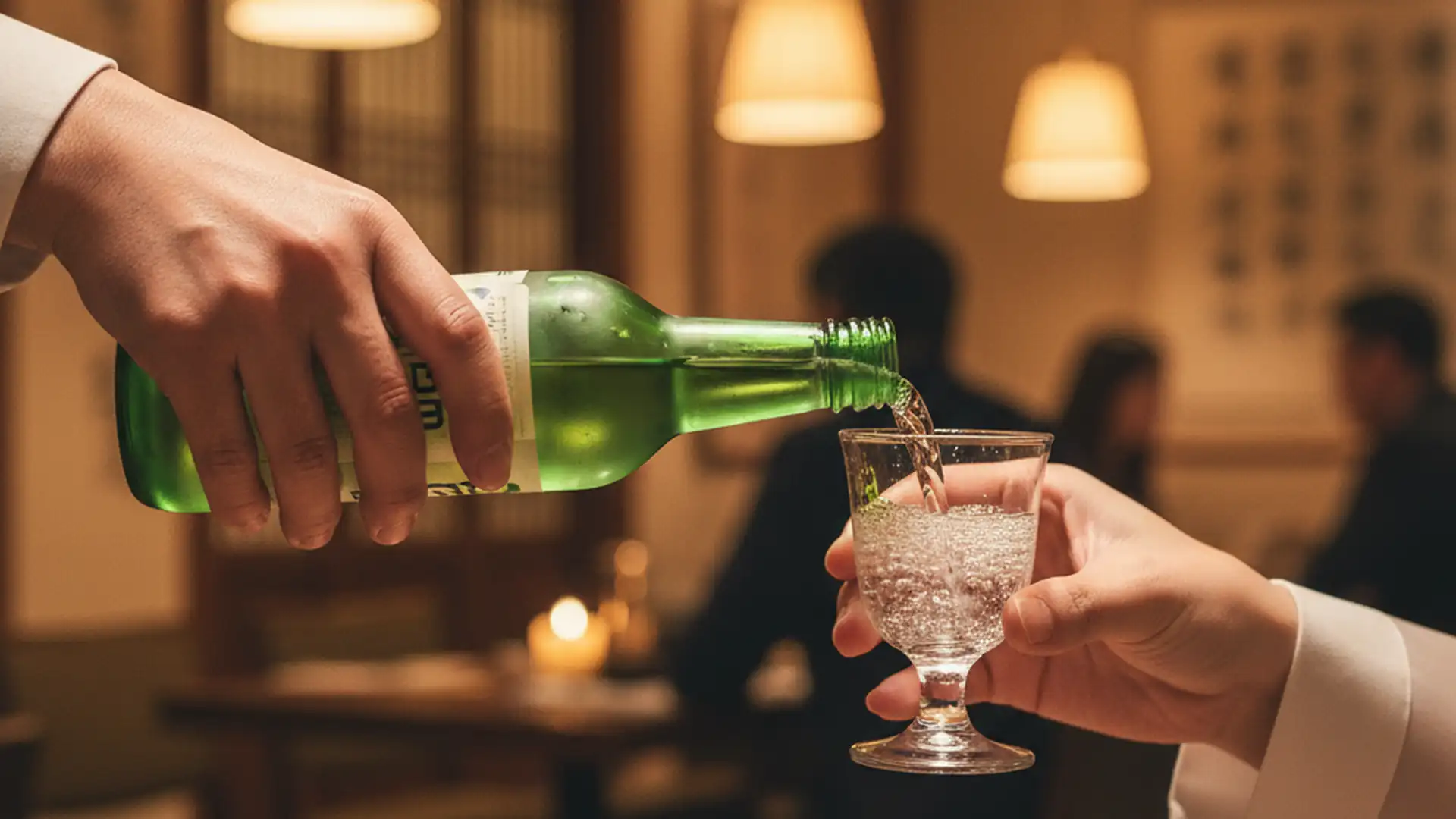
- Don’t pour for yourself. Wait for someone to pour for you. Pour for others, especially seniors, before they have to ask.
- Use both hands when pouring for someone older or more senior. One hand on the bottle, the other lightly supporting your forearm. The same when receiving.
- Hold your glass with both hands when receiving. Same logic — both hands signal respect.
- Turn your head slightly to the side when drinking the first toast in front of a senior. Don’t face them directly. This was, originally, a sign of respect to elders. It’s still observed in formal settings.
- Empty glass after a “geonbae” toast. If the toast is “geonbae” (cheers, bottoms up), empty it. If it’s a softer toast, a sip is fine.
The bigger principle: pouring is a constant. Watch glasses. When a senior counterpart’s glass is half-empty, offer a refill. When yours is half-empty, someone will fill it for you. The table is a small ecosystem of mutual care.
Japan: Different Rules, Same Spirit
Japanese business drinking has its own conventions, often more restrained than Korean but with the same core idea — drink as relationship-building.
- Don’t pour for yourself. Same as Korea.
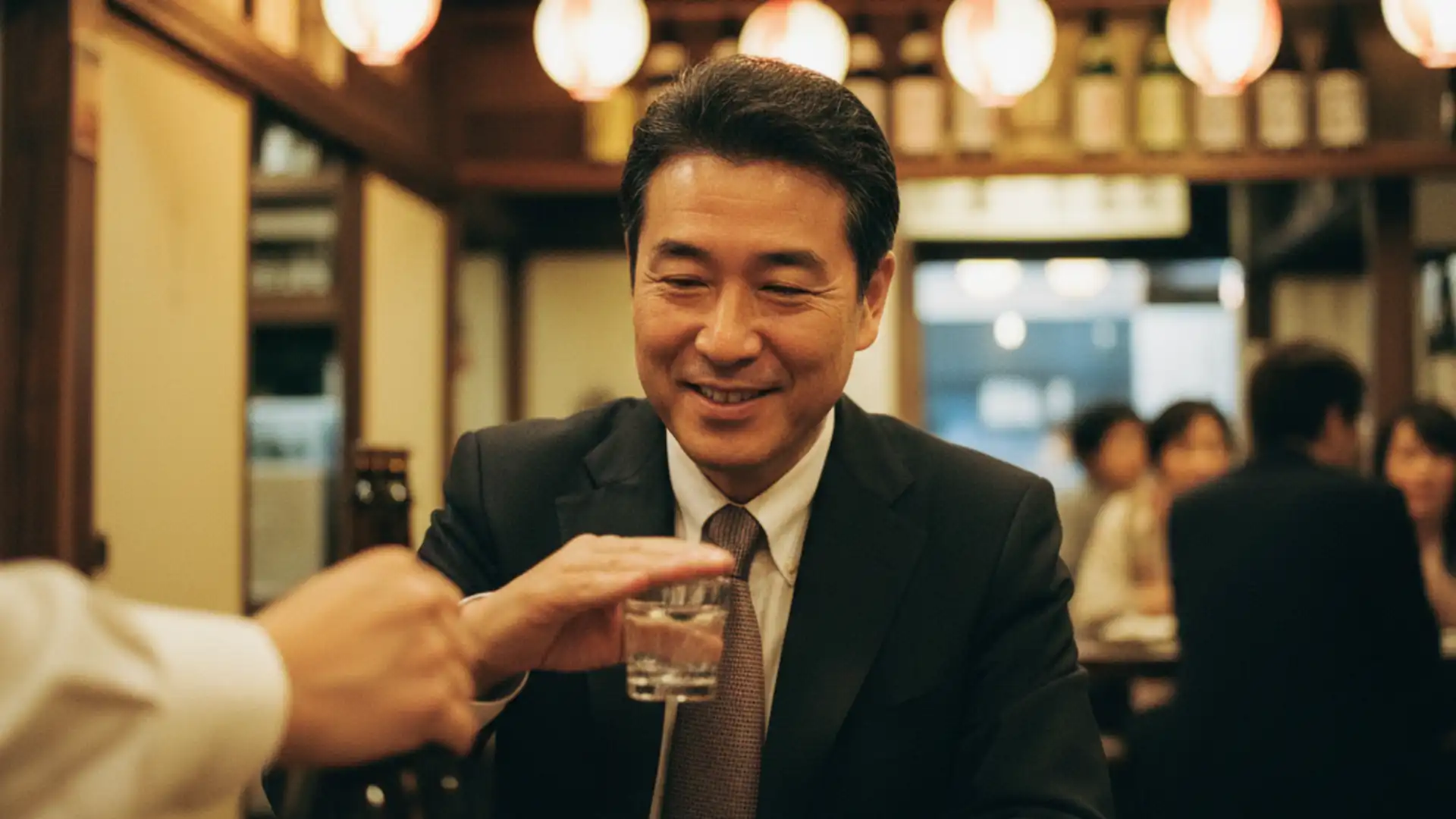
- Hold your glass with both hands when receiving a pour from a senior. One hand at the base, the other supporting.
- Sake cups are small for a reason — sip and refill. The constant cycle of small pours is part of the rhythm.
- Beer often comes first, sake later. Don’t push for sake; let the host introduce it.
- The first “kanpai” toast is often the only formal toast. After that, drinking continues but more freely.
Japan is generally less aggressive about pace than Korea, but the etiquette is just as important. The rules I built for myself there work everywhere I’ve used them.
China: Pragmatic and Variable
Mainland China is more variable than Japan or Korea. The conventions depend a lot on the region (Beijing vs Shanghai vs Shenzhen), the company (state-owned vs private), and the specific people in the room.
What seems to be consistent:
- Toasts (“ganbei”) are common and frequent. “Ganbei” literally means “dry the cup” — empty it.
- If you can’t or don’t want to drink at full pace, signal it early. “Suiyi” — drink at your own pace — is an acceptable phrase, especially for non-drinkers
- Two-handed glass holding is appreciated when toasting with a senior
- The host often controls the pace and the toasts. Follow their lead.
- Baijiu is a serious drink. It’s much stronger than soju or sake, often 40-50% alcohol. Don’t treat it like wine.
In one particular dinner in Shanghai, the host called for “ganbei” five times in the first twenty minutes. I switched to small sips and quietly told my translator I’d be drinking water alongside. She handled the diplomacy. Nobody seemed to mind.
The Polite Refusal That Works Everywhere
The single most useful skill I developed for these dinners was the polite refusal. Not refusing to drink at all — refusing the next round, or the third toast, or the after-dinner round at the karaoke bar.
The framing that has worked for me, in any country:
- Acknowledge the offer warmly
- Gently signal the constraint — health, an early flight, a long day tomorrow
- Don’t make it a big deal. Don’t apologize repeatedly.
- Offer to continue with water or tea so you stay socially in the rhythm
“Thank you, this has been a wonderful dinner. I’m going to stay with water for the rest of the evening — I have an early flight.” Said with a small smile and direct eye contact, this works in Seoul, Tokyo, and Beijing. It would work in Hanoi or Bangkok too.
The mistake I see Westerners make is either refusing too forcefully (“I don’t drink, sorry”) or refusing too apologetically (multiple “sorrys”, visible discomfort). The middle ground — graceful, low-key, with a small alternative — almost always lands well.
Pacing Tactics I Use Now
The actual technique of staying functional through these dinners is more practical than philosophical. What I do:
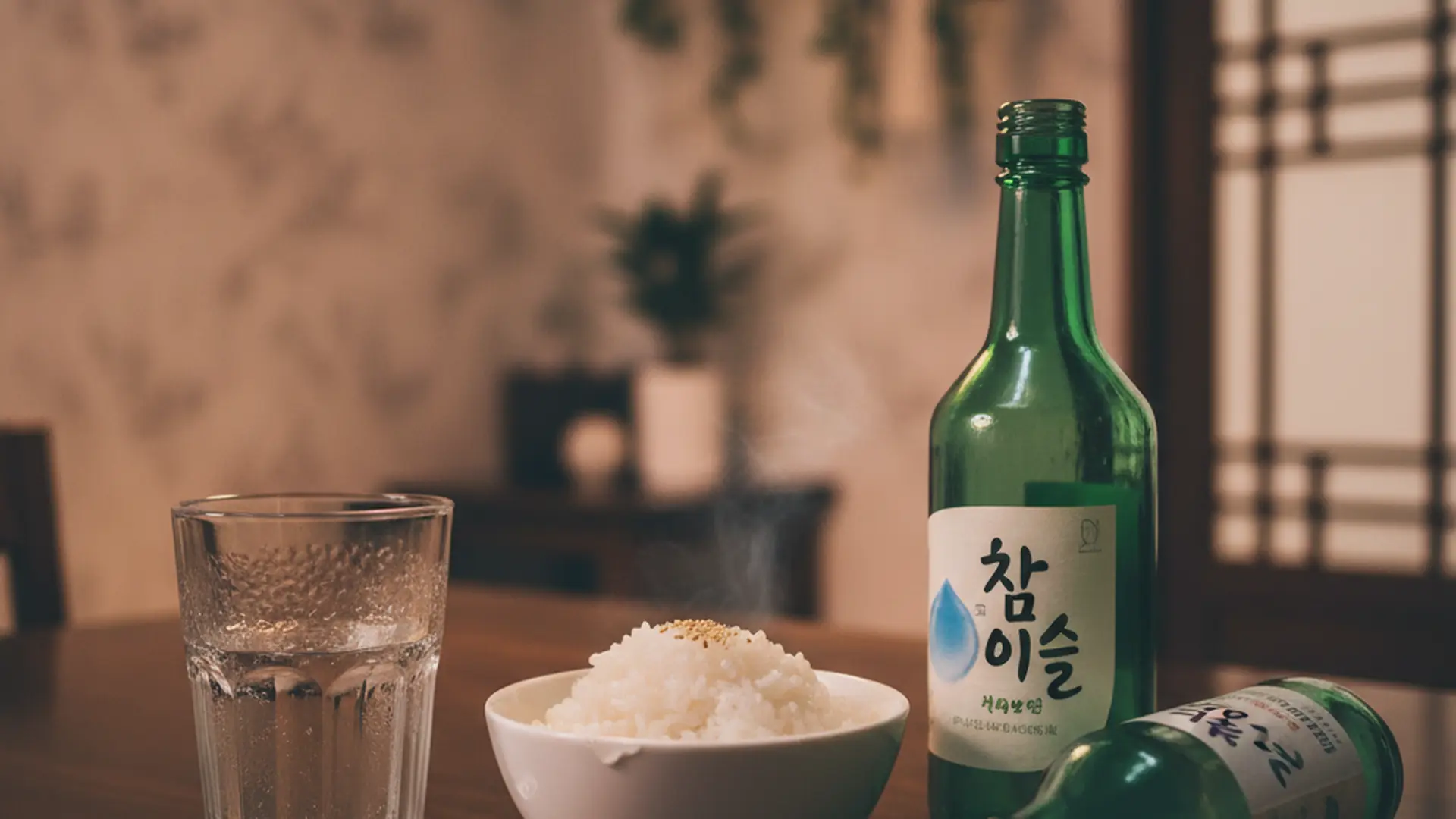
Eat first, drink second. Korean BBQ comes with a lot of food. Eat it. Eating slows the absorption of the soju and gives you something to do with your hands during the rapid toasts. Same in Japan with the appetizers, and in China with the cold plates that come at the start of dinner.
Water on the table, full glass, refill it yourself. Most restaurants will bring water if you ask. I drink one glass of water for every glass of soju or beer. The water is also socially neutral — nobody comments on it.
Slow the toasts when you can. If you’re hosting or co-hosting, you have some control over pace. Initiate slower toasts. Talk between rounds. The toasts will keep coming, but the rhythm doesn’t have to be every five minutes.
Don’t try to keep up with someone who outweighs you by 50 pounds. Some hosts can drink truly remarkable amounts. Don’t match them shot for shot. Pace yourself for what you can sustain.
Switch to lighter drinks if there’s an option. Beer is generally lower-alcohol than soju, sake, or baijiu. If beer is on the table, lean into it after the first toasts.
Eat a real breakfast tomorrow. The recovery starts the next morning. Hydrate, eat real food, don’t try to power through with coffee alone.
When You Don’t Drink at All
If you don’t drink — for health reasons, religious reasons, or personal preference — the dinners are still doable, but you have to plan for them.
The strategies I’ve watched colleagues use successfully:
- Signal it early. Tell your local colleague before the dinner, so they can prep the host. Surprises at the table are awkward; advance notice is just information.
- Have a clear short reason. “On medication,” “doctor’s orders,” “religious reasons” — any of these is enough. You don’t owe a long explanation.
- Drink something else with energy. Tea, sparkling water, a non-alcoholic beer. Hold a glass. Be in the rhythm even if you’re not drinking the same thing.
- Stay for the meal. Don’t leave early. The relationship-building is the point, not the alcohol.
I have a colleague who hasn’t had a drink in 15 years and has done business across East Asia successfully the entire time. The non-drinking has never been the issue. The way he’s handled it has always been graceful and clear, and the dinners have always continued to be productive.
After the Dinner: Karaoke and “One More Round”
In Korea especially, the dinner often has a second act: a noraebang (karaoke room) or a second bar. The “one more round” can extend the evening by another two hours.
This is where I’ve learned to draw a line earlier rather than later.
The dinner itself is non-negotiable. The second round is more flexible. You can usually decline the second round graciously: “Thank you so much, this has been a wonderful evening. I have an early flight, I need to head back.” Said warmly, with handshakes or bows, this works.
If you do go to the second round, treat it as a continuation, not a separate event. Same pacing rules. Same polite refusals. The relationship-building is still happening — you’re just doing it on a couch instead of at a dinner table.
The Bigger Lesson From Seoul
What I learned in Seoul wasn’t really about drinking. It was about the difference between being a guest and being a participant.
I’d treated the dinner as a thing to get through. The Korean side had treated it as the meeting itself. By trying to “endure” the drinking, I’d missed the actual purpose — the slow build of trust between people who would eventually have to work together for years.
Now I treat business dinners the way I treat the meeting: prepared, intentional, with a plan for how to participate well. I drink less than my hosts most of the time, and that’s fine. What matters is whether I’ve been present, whether I’ve reciprocated the warmth, and whether I’ve followed the small forms that signal respect.
The deal in Seoul closed. The relationship survived my early mistakes. The hangover was the cost of an education I should have started before the trip.
This is the same overall pattern that runs through the broader country-by-country etiquette cheat sheet and the harder lessons from the Tokyo handshake story: form is part of substance. The dinner is the meeting. The pour is the relationship. And taking it seriously, while still being human, is most of the work.
Combined with simply eating reasonably on the road the rest of the week, the business dinner becomes one tool in a longer trip — not the event that wrecks the trip.
The fourth soju in Seoul was a turning point I didn’t appreciate at the time. Now I drink the first three carefully, decline the fourth politely, and stay engaged through dessert. The dinners are better, the relationships are stronger, and my mornings are something I can actually use.

Title: Tipping around the world (the times I got it wrong)
Drinking rules are one half of the dinner. Tipping is the other — and it goes wrong in funnier ways. Here’s the country-by-country fix.
Inside:
- Where I’ve tipped wrong and embarrassed myself
- When tipping is rude, expected, or built in
- What I do at the end of every business dinner now
Key takeaways
- Eat substantially first. Food slows the alcohol down and gives your hands something to do during toasts.
- Run water one-for-one. Keep a full water glass, refill it yourself, one glass of water per drink.
- Never pour your own. Wait for others. Use both hands when pouring for someone senior, and both hands when receiving. Turn your head slightly on the first toast before a senior.
- Know your toasts. “Geonbae” means empty the glass; softer toasts you only sip. Don’t drain every round on reflex.
- Don’t match the heavy drinkers. Pace for your own capacity. Switch to beer—it’s lighter than soju.
- Refuse without drama. Acknowledge the offer warmly, name a quiet reason (early flight, long day), stay in the rhythm with water or tea. Don’t apologize on a loop.
- My rule: first three careful, fourth declined politely, present through dessert.
FAQ
Can I refuse a drink at a Korean business dinner without insulting anyone?
Yes. Acknowledge the offer warmly, gently signal a constraint—health, an early flight, a long day tomorrow—and don’t make it a big deal. Something like “Thank you, this has been wonderful. I’m staying with water—I have an early flight.” The mistakes are refusing too forcefully or apologizing over and over. Offer to keep going with water or tea so you stay in the social rhythm.
What if I don’t drink at all?
Tell a local colleague before dinner so the host is prepared. Give a brief reason—medication, doctor’s orders, religious reasons—and drink something with presence like tea, sparkling water, or non-alcoholic beer. Stay for the whole meal; don’t leave early. A colleague of mine ran 15 years of East Asian business without drinking and did fine.
Do I have to go to the karaoke round after dinner?
No. You can decline the noraebang graciously: “Thank you so much, this has been wonderful. I have an early flight, I need to head back.” If you do go, the same pacing rules apply—eat, water one-for-one, and don’t try to match the room.