

Short answer: Tipping rules swing wildly by country, so check the bill first. If a service charge is included, you’re done. Don’t tip in Japan, South Korea, or mainland China. Almost everywhere else, 5-10% is generous, rounding up always works, and when your host pays, you don’t tip. When in doubt, ask a local colleague.
I tipped a Tokyo waiter and watched him chase me down the street to give the money back. I tipped a Roman taxi driver too much and got a 20-minute lecture about tourists. Here’s the country-by-country tipping guide a grumpy dad has assembled the hard way.
Why Tipping Is the Trickiest Part of the Dinner
The American instinct, which I am not free of, is that tipping is universal and the only question is how much.
It isn’t.
Tipping varies more wildly across countries than almost any other part of business travel. In some places it’s expected and the absence of a tip is rude. In others it’s flatly insulting and signals you don’t understand the culture. In a third group it’s optional but appreciated. In a fourth, the service charge is built into the bill and a tip on top is wasted money. And the rules can change from one neighborhood to the next within the same city.
I’ve gotten this wrong, by my count, at least seven times in seven different countries. Each one was a small embarrassment. Each one taught me something. The list below is what I wish I’d had on day one.
The Tokyo Tip That Came Back
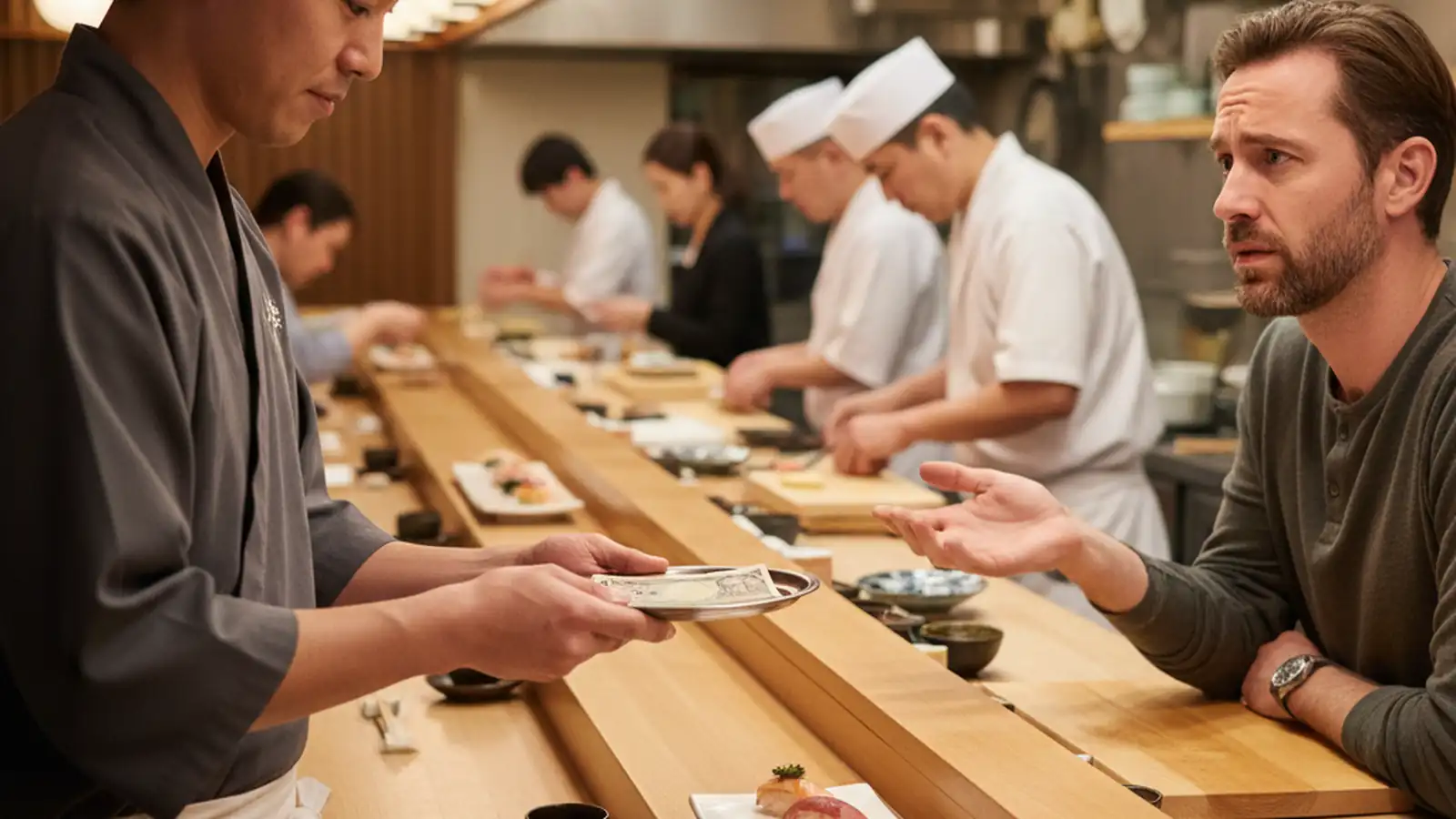
My first big tipping mistake was at a small ramen shop in Shinjuku. I’d had a great bowl, paid the bill, and left a small bill on the counter as a thank-you tip. American instinct.
I was halfway down the block when the owner came running out, holding the bill, looking concerned. He bowed deeply, pressed it back into my hand, and said something I didn’t understand. I bowed back, smiled awkwardly, and accepted the money back.
I asked my colleague the next day what had happened. He laughed. “Japan doesn’t tip. He thought you’d left the money by accident. He chased you down because he didn’t want you to lose it.”
Japan, it turns out, treats tipping as either confusing or insulting. The wage and pricing structure is built so that the bill is the bill, and adding extra money implies the staff or restaurant aren’t being properly compensated — which is a small insult to the employer.
The rule in Japan: don’t tip. Anywhere. Restaurants, taxis, hotels, hairdressers — none of them.
The exception: high-end ryokan or guided tour operators sometimes accept a small “thank you” envelope. Even then, it’s usually presented in a sealed envelope, not as cash on a counter.
South Korea: Mostly the Same as Japan
Korea tips less than the West but more than Japan, and the rules are softer.
- Restaurants: no tip. The price is the price. Some upscale places add a service charge, which is the equivalent.
- Taxis: no tip needed. Round up to the nearest 1,000 won if you want to be polite, but it’s not expected.
- Hotels: a small tip for porters or housekeeping is acceptable but not standard. Many Koreans don’t tip at all.
- The exception: Western-style hotels and restaurants in tourist areas may have adjusted to international expectations. A 5-10% tip in those settings is fine.
If you’re with Korean colleagues at a business dinner, the host will pay and there’s no tip. Don’t bring out cash to “leave something extra.” It’s not how the meal is structured.
China and Hong Kong
Mainland China generally doesn’t tip. Tipping in restaurants is uncommon and can be seen as confusing. In some upscale or international hotels, tipping is acceptable but not expected.
Hong Kong is more international. Restaurants typically add a 10% service charge, and an additional 5% on top is appreciated for good service. Taxis: round up. Hotel staff: small tips are normal.
Singapore: similar to Hong Kong. Service charge is usually included. Tipping above that is appreciated but optional. In hawker centers, no tipping.
Italy: Where I Got Lectured
I was in Rome on a vacation extension after a Milan business trip. I took a taxi from the train station to the hotel — short ride, modest fare. I handed the driver about 30% extra “for the help with the bags,” American-style.
He gave me back about half of it, then proceeded to explain, in fluent English, that tipping like this was “what tourists do, and it ruins the city.” He went on for several minutes. I sat in the cab with my bag in my lap, increasingly humbled, and finally said “thank you, I appreciate the lesson” and got out.
The Italian rules, as he and others have explained to me since:
- Restaurants: a “coperto” (cover charge) is often on the bill. Service is usually included. A small additional tip — maybe a few euros, or rounding up the bill — is fine for excellent service. Not 20%.
- Taxis: round up to the nearest euro or two. Not more.
- Bars and cafes: no tip needed. Maybe leave a few small coins on the counter at a bar.
- Hotels: 1-2 euros for a porter, a few euros for housekeeping at the end of the stay. Not the American 10-20%.
The big rule: don’t import American 20% tipping into Italy. It’s not about being cheap. It’s about not distorting the local economy in a way that locals find genuinely irritating.
France: Service Compris
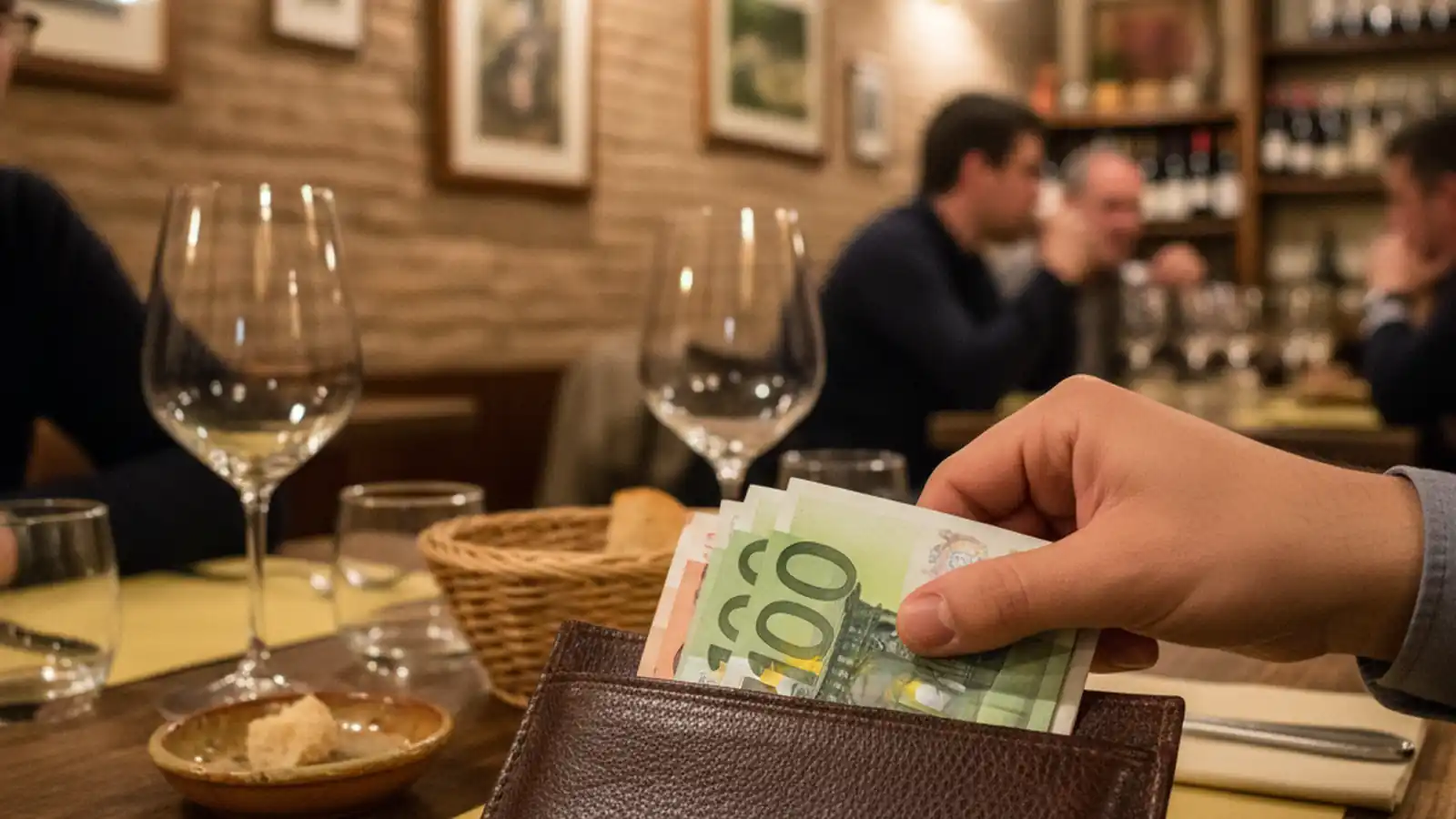
France is similar to Italy. Most restaurant bills include “service compris” (service included) by default. The price you see is the price you pay.
- Restaurants: round up the bill or leave a few euros for excellent service. 5% is plenty.
- Cafes and bars: a few coins is appropriate, not necessary
- Taxis: round up
- Hotels: 1-2 euros for porters, a few euros for housekeeping at the end of a stay
French waiters are professionals — many do this as a long-term career, not a college job. The wage structure reflects this. Over-tipping doesn’t help and can feel patronizing.
Germany, Switzerland, Austria
German-speaking Europe has its own rhythm:
- Restaurants: round up to the nearest euro or franc, or add 5-10% for excellent service. Tell the server the total amount you want to pay (with tip) when they bring the card machine, rather than leaving cash on the table.
- Taxis: round up
- Hotels: a few euros for porters and housekeeping
- Bars: round up the drink price
The Germans tip pragmatically. Not zero, not American. The middle ground.
United Kingdom
The UK has shifted in the last decade. The current state, as I’ve seen it:
- Restaurants: a 12.5% service charge is now common, especially in London. Check the bill. If service is included, no further tip is needed. If not, 10-15% for good service.
- Pubs: no tip on drinks at the bar. You can offer to “buy the bartender a drink” — they’ll often add a small amount to your bill.
- Taxis: round up. Black cabs sometimes get a 10% tip; ride-hailing tips through the app are optional.
- Hotels: a few pounds for porters and housekeeping
The UK is more flexible than continental Europe but less aggressive than the US.
Mexico, Brazil, and Latin America
Latin America is closer to the US tipping culture, with some variation:
- Mexico: 10-15% in restaurants. Round up taxis. Small tips for hotel staff.
- Brazil: 10% service charge often included, called “couvert” or “serviço.” Additional tip optional for excellent service. Taxis round up.
- Argentina: 10% is standard in restaurants. Taxis round up.
- Colombia: 10% is often added to the bill — they will sometimes ask if you want to include it (many locals do)
Across the region, a small tip for hotel staff and bellhops is appreciated. The amounts are smaller than the US, but the spirit is similar.
Middle East: Hospitality Plus Bakhshish
In the Gulf, tipping varies:
- UAE: 10-15% in restaurants if service isn’t included. Round up taxis. Small tips for hotel staff.
- Saudi Arabia: similar, with the additional habit of “bakhshish” — a small tip for various services, often handed discreetly
- Egypt and parts of North Africa: bakhshish is more common and more expected. Small tips for many services.
The pattern: cash, modest amounts, handed discreetly, often expected for small services. Don’t be flashy about it.
India and Southeast Asia
India: 10% in restaurants if service isn’t included. Small tips for hotel staff and taxi drivers, especially for any “extra” service.
Thailand: 10% in upscale restaurants. Round up taxis. Small tips for hotel staff. Street food: no tip needed.
Vietnam: tipping is becoming more common in tourist areas but isn’t expected widely. Round up. A small tip for excellent service is fine.
Indonesia and the Philippines: variable. Service charges are common. Additional tips for excellent service are appreciated.
The pattern across Southeast Asia: lower than the US, modest, optional but appreciated, and most strongly expected in higher-end international tourism settings.
The Patterns That Hold Up
After enough mistakes, a few patterns emerge:
1. Look at the bill first. Service charge included? You’re done. If not, tip per local norms.
2. Round up always works. Even in places where tipping isn’t expected, leaving the change is rarely wrong.
3. The American 20% is not universal. In most of the world, 5-10% is generous, 15% is unusually high, and 20% is suspicious.
4. Cash is often better than card. Even when tipping on a card is possible, cash goes more directly to the server in many countries.
5. Don’t tip in Japan, Korea, or mainland China. The exceptions are narrow.
6. When the host pays, you don’t tip. If your customer or local colleague is hosting, the tip is their responsibility, not yours.
7. Ask if you really don’t know. Asking your local colleague the night before — “what’s the tipping situation here?” — is not a stupid question. It’s basic preparation.
The End-of-Dinner Moment
The most common moment where tipping goes wrong is at the end of a business dinner, especially when you’re hosting.
What I do now:
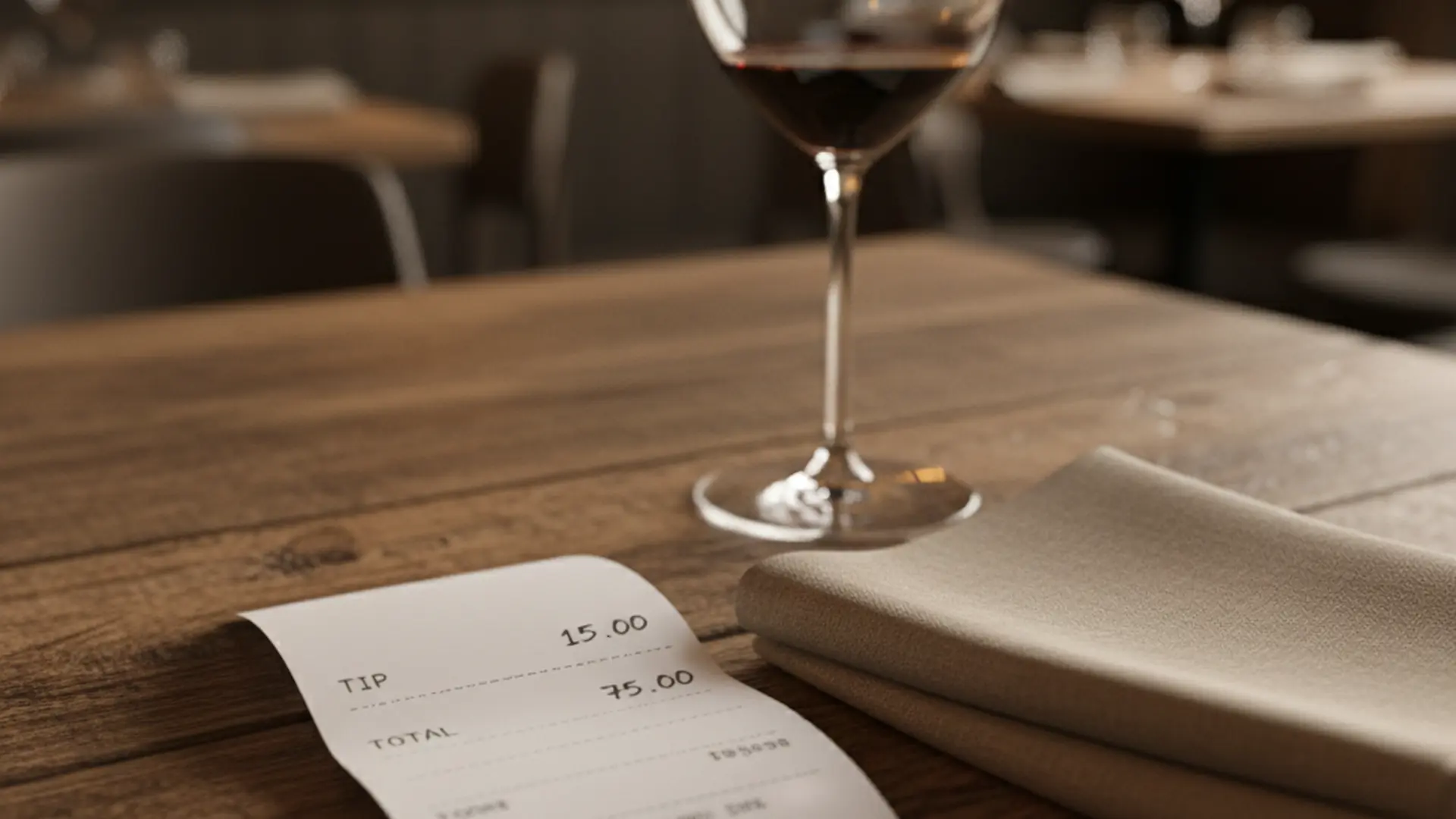
- Pay before the bill comes to the table if I’m hosting. Step away briefly, find the manager or server, pay the bill including any service charge, add an appropriate tip discreetly. Return to the table. The customer never sees the bill.
- Round numbers, never down to the cent. A clean total is more elegant than a precise calculation.
- If the customer is hosting, do not reach for the bill. Don’t perform the polite reach. Don’t insist on splitting. Don’t try to leave money. Accept the hospitality, thank them warmly, and reciprocate on the next trip.
- Reciprocity comes later, not in the moment. The customer who hosted you in Tokyo will appreciate a thoughtful dinner from you on their next visit to your city, much more than they would appreciate you trying to pay for half of tonight.
When You Get It Wrong
The good news: most tipping mistakes are forgivable. The waiter who chased me in Tokyo wasn’t insulted, just confused. The Roman taxi driver wasn’t furious, just annoyed at the broader pattern. The Korean colleagues I once tried to leave money for laughed and waved me off.
The fix when you’ve miscalculated:
- If you’ve under-tipped in a place where it’s expected, you can sometimes hand a small additional tip directly to the person or to the manager. Don’t make a big deal of it.
- If you’ve over-tipped and someone returns the money, accept it back graciously. Don’t insist.
- If you’ve tipped where it isn’t customary, smile, accept the correction, and adjust next time.
Tipping mistakes are smaller than most other cultural mistakes. They’re embarrassments, not disasters. The only fatal version is the pattern: tipping the same way everywhere because you can’t be bothered to learn local norms. That signals something larger than confusion about tipping.
The Bigger Frame
Tipping, like the rest of business dinner etiquette, is one of those small forms that signals something bigger about how seriously you take being in a country. The amount almost never matters as much as the demonstration that you’ve thought about it at all.
This is the same logic that runs through the broader country-by-country etiquette cheat sheet. Small amounts, small forms, big signals. Get them right and the rest of the trip is smoother.
And if you’ve already navigated the harder choreography of business dinner drinking rules, the tipping piece is a much smaller test — but failing it leaves a less subtle mark, because it happens at the end, after the meal, in front of the team. Don’t let it be the part you didn’t prepare for.
And if the menu itself has been a mystery to you all evening — that’s a different problem entirely, which is what ordering when you have no clue what’s on the menu tries to fix at the start of the meal, not the end.
Seven embarrassments later, I’ve finally got the basics. You’ll get yours faster, hopefully, with the cheat sheet I built out of mine.

Title: What to order when the menu is in another language
Tipping is the end of the meal. The harder problem is the start — when you can’t read the menu and your host is watching.
Inside:
- The ‘house special’ move that always works
- How to defer to your host without seeming clueless
- What to do when nothing on the menu makes sense
Key takeaways
| Situation | What to do |
|---|---|
| Bill already has a service charge | You’re done. Don’t add more. |
| Japan, South Korea, mainland China | Don’t tip. In Japan they’ll chase you down the street to give it back. |
| Most of the world | 5-10% is generous. The American 20% is not universal. |
| Taxis | Round up to the nearest unit. That’s it. |
| A host is paying (e.g. a business dinner) | You don’t tip. Don’t pull out cash for “something extra.” |
| You genuinely don’t know | Ask a local colleague. It’s not a stupid question. |
The one rule that matters: the only fatal mistake is the pattern, tipping the same way everywhere because you can’t be bothered to learn the local norm.
FAQ
Should I tip in Japan?
No. Japan doesn’t tip, anywhere. Restaurants, taxis, hotels, hairdressers, none of them. I left a small tip on the counter at a ramen shop in Shinjuku and the owner came running down the street to give it back. Leave the money in your pocket.
How much should I tip at a restaurant in Europe?
Check the bill first. Italy has a “coperto” cover charge and France has “service compris” baked in, so the work is already done. Anything extra is small, a few euros, maybe 5%. Don’t import the American 20%; in Rome a taxi driver once handed half of it back and told me it’s what tourists do.
Do I tip at a business dinner when someone else is hosting?
No. When the host pays, you don’t tip. If you’re at a business dinner with Korean colleagues, the host pays and there’s no tip, so don’t bring out cash to leave something extra. Let the host handle it.