
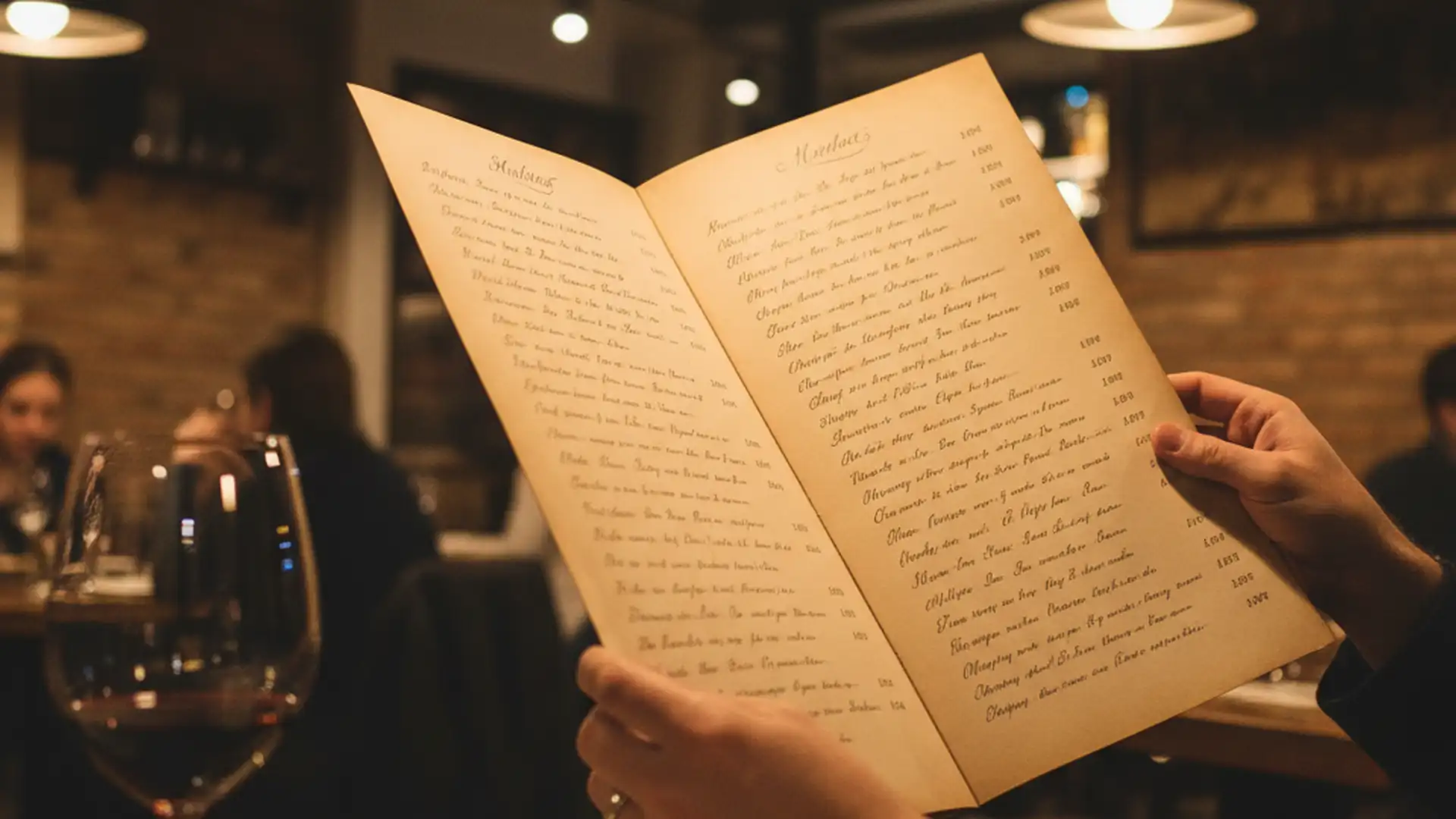
Short answer: Stop trying to crack the menu. Hand it back. Tell your host, “I’m not picky and I’m here to try the local cuisine — please order what you’d order for yourself.” Ask for the house special, glance at what neighboring tables are eating, and mention any real restriction quietly to the server. The dinner is about how you behave, not the dish.
I once pointed at the third item from the top in a Bangkok menu and got something I still can’t describe — vaguely seafood, definitely spicy, possibly intestinal in origin. The host laughed kindly. I learned a lesson. Here’s the system I use now when nothing on the menu makes sense.
The Bangkok Menu Disaster
I was at a business dinner in Bangkok, hosted by a customer who had brought me to a small place in a neighborhood I would never have found on my own. The restaurant had no English menu. The customer’s English was excellent, but he politely handed me a Thai menu and said, “please, choose anything you’d like.”
I panicked.
The menu was four pages of Thai script with no pictures. I couldn’t ask the host to read every line out loud — that would have been awkward and time-consuming. I couldn’t say “you choose” because that felt like dodging. So I did the only thing I could think of: I pointed at a line on the third page that had a number next to it, suggesting it was a popular dish, and said “this one.”
The waiter raised an eyebrow. The customer raised a different eyebrow. Twenty minutes later, a bowl arrived with what I can only describe as an active culinary event — broth, intestines, vegetables, spice that hit hard and stayed. I ate enough of it to be polite. The customer, gracious as he was, switched the conversation to other dishes coming to the table and helped me through the meal.
Afterward, in the cab back to the hotel, I committed to figuring out a system for ordering in restaurants where I had no clue what was on the menu. The system below has saved me from the second Bangkok disaster many times. It hasn’t always produced the most exciting meals, but it has consistently produced ones I could actually finish.
Three Universal Principles
Before any country-specific tactics, three principles that apply everywhere:
1. Defer to the host. If the customer or local is hosting, the cleanest move is to invite them to order. “Would you mind ordering for the table? I trust your judgment.” This is not weakness. It’s good manners. It signals interest in their cuisine, trust in their taste, and humility about the limits of your own knowledge.
2. Ask for the house special. Even in places where you don’t speak the language, “what does the chef recommend” or “what is the house specialty” is almost always understood. Restaurants love this question. The recommended dish is almost always good.
3. Watch the other tables. If a dish is landing on multiple tables around you and the locals look happy with it, that’s market research. Point politely. Servers are used to this in tourist-friendly cities.
Three moves. They get me through 90% of meals where I can’t read the menu.
Japan: The Easiest Country to Order In, Once You Know How
Japan has more solutions to the “I can’t read the menu” problem than any country I’ve worked in:
- Plastic food displays. Many smaller restaurants, especially noodle and curry shops, have realistic plastic models of every dish in a window display. Take a photo. Show it to the server inside. Done.
- Picture menus. Common in casual dining spots. Easy to point.
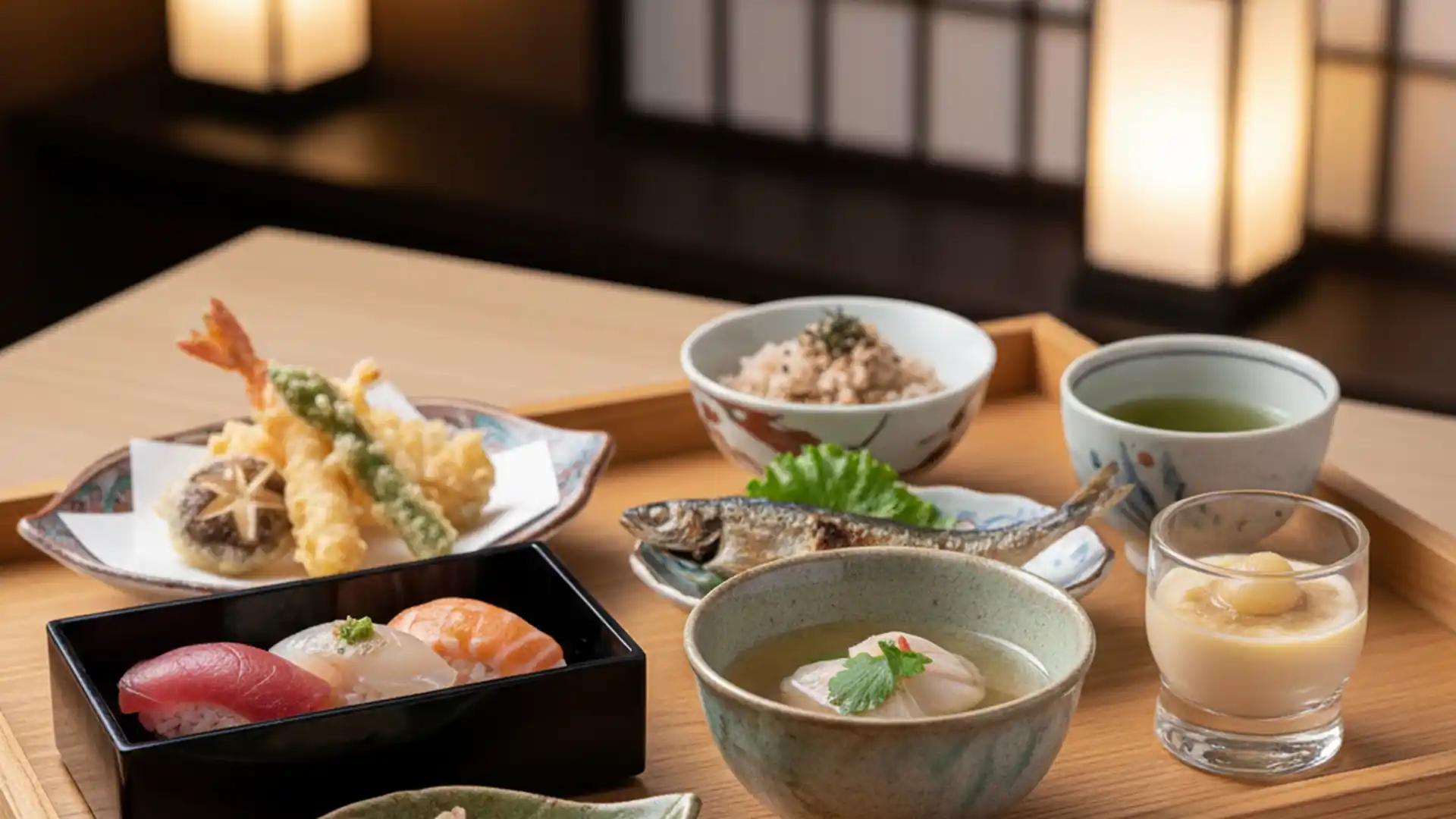
- Set menus (teishoku, kaiseki, omakase). Order the chef’s choice. You’ll get a balanced, multi-course meal without having to choose individual items.
- Counter sushi: omakase. Tell the chef you’ll have what they recommend. They’ll guide you through the meal piece by piece, often pacing it based on your reactions.
For business dinners specifically, the host will usually have ordered ahead or chosen a set menu. Your only job is to enjoy it. If you have a real allergy — which is a different conversation, covered in dietary restrictions abroad — flag it before the meal, not at the table.
China: Family-Style and the Spinning Lazy Susan
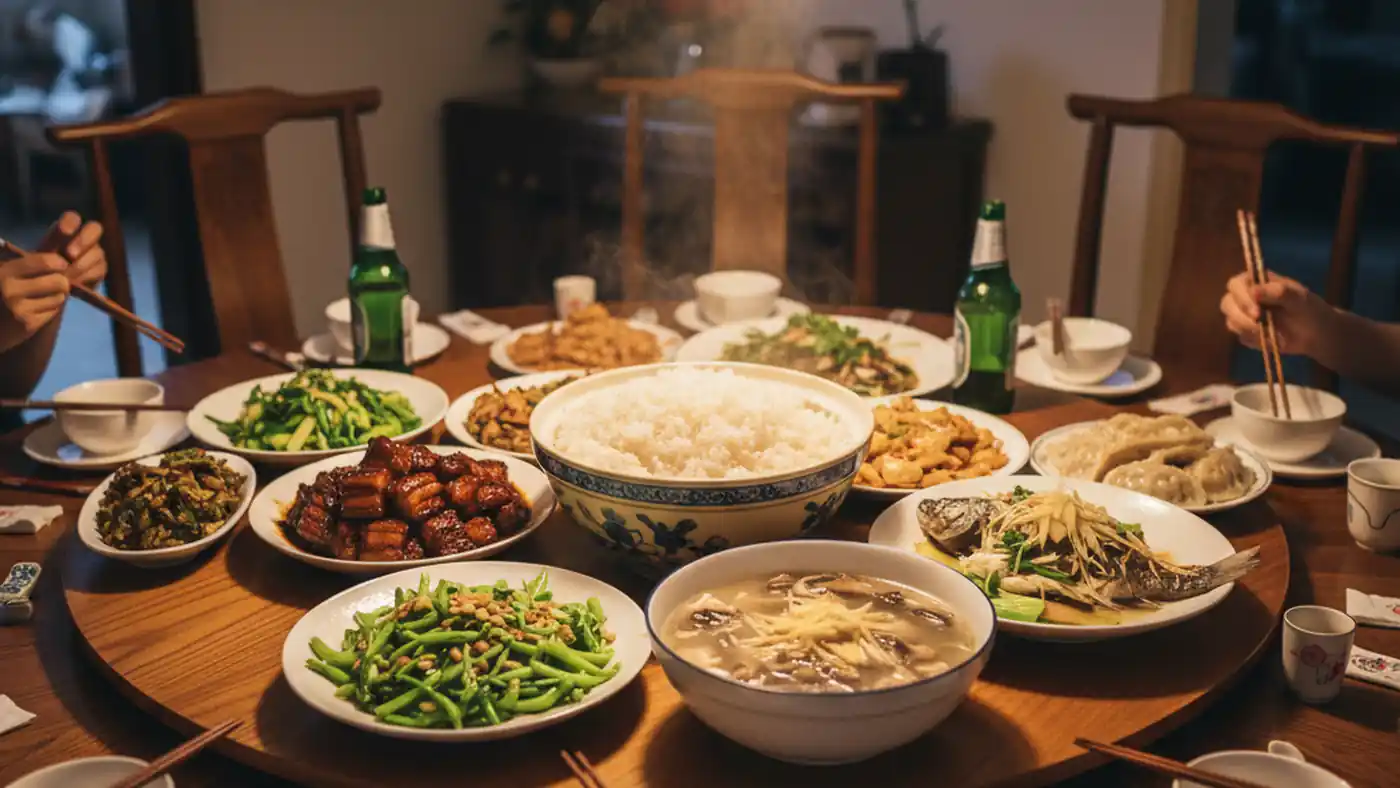
Chinese business dinners are usually family-style. The host orders a series of dishes that come to the center of the table, often on a rotating lazy Susan. Everyone serves themselves from the shared dishes.
Your job:
- Try a small amount of everything you’re offered
- Compliment the dishes you genuinely like
- Don’t take the last piece of any shared dish — leave it as an offering
- Use chopsticks if you can; if not, ask politely for utensils
- If you’re served a dish you really can’t eat, eat a polite minimum and move on
If the host invites you to order something specific, ask for “the chef’s signature dish” or “what’s the most famous local specialty.” This delegates the choice to expertise and never lands wrong.
India: Variety and Vegetarian Awareness
Indian restaurants typically have extensive menus with extensive options across spice levels and cuisines (North Indian, South Indian, regional specialties).
- Set your spice tolerance early. “Medium” in India is hotter than “medium” in the US. Don’t try to be macho about heat.
- Vegetarian options are abundant — take advantage of them. Indian vegetarian food is among the best in the world.
- Thali sets are an excellent introduction — multiple small dishes on one platter, giving you a tour of the cuisine.
- If you’re hosting Indian guests, ask about their dietary preferences in advance. Many Indians are strict vegetarians, some don’t eat onion or garlic, some don’t eat eggs.
Italy: Don’t Order What You Already Know
The mistake to avoid in Italy is ordering the dishes you already know — spaghetti carbonara, lasagna, tiramisu — instead of trying regional specialties.
The system:
- Ask about the regional specialty. “What is the local dish here in [region]?”
- Order in the Italian sequence: antipasto (small starter), primo (pasta or rice), secondo (meat or fish), contorno (side), dolce (dessert). You don’t have to do all four — most Italians don’t on a weeknight — but understand the structure.
- House wine is fine. Don’t over-order on bottles.
- Coffee comes after dessert, never with it. And espresso, not Americano. Cappuccino is a breakfast drink only.
The Italian approach to food is much less casual than the American one. The order matters. The pacing matters. Following the structure shows respect.
France: Defer Generously
France rewards the customer who defers to the chef and the server. The “menu” — meaning a set, multi-course tasting menu — is often the best thing on offer.
- “Le menu” usually means a set tasting menu at a fixed price
- “La carte” is the à la carte menu
- Asking the server’s recommendation is appreciated
- Order wine by the glass if you’re not sure; the house pairing is usually thoughtful
- Cheese course before dessert is normal
French servers are professionals and often take real pride in guiding the meal. Asking “what would you recommend?” is the most respectful question you can ask. The answer will rarely disappoint.
Spain and Portugal: Tapas and Plates to Share
Spain operates on a tapas rhythm — small plates ordered one or two at a time, eaten standing or seated, often across multiple bars in an evening.
- Order a couple of tapas, eat them, then decide what to order next
- Don’t try to “complete the meal” with one big dish. The meal is the cumulative tapas.
- Ask the bartender what’s good today — they’ll tell you
- Cured meats, olives, sardines, croquetas — almost always safe choices
Portugal has similar small-plate conventions in some regions, with strong seafood specialties. Bacalhau, in many forms, is the national dish.
The Middle East: Mezze and Sharing
Middle Eastern restaurants — Lebanese, Turkish, Israeli, Saudi — often start with a spread of mezze: small dishes shared by the table.
- The mezze is the meal in many cases. Don’t rush past it to “the main course.”
- Hummus, baba ghanoush, tabouleh, kibbeh, fattoush — all safe and usually excellent
- If a host orders for you, eat what’s served. Refusing dishes signals disrespect for the hospitality.
- Coffee at the end is part of the ritual. Take the cup.
When You’re Hosting and Don’t Know the Cuisine
Sometimes the worst position is being the host of a dinner in a cuisine you don’t know. Your customer is your guest. You’re supposed to lead. And the menu is in a language you can barely read.
What I do:
- Pre-order with the restaurant. Many higher-end restaurants will let you call ahead and arrange a set menu, especially for business dinners. The cost is no higher than à la carte and the experience is smoother.
- Ask the customer’s preferences in advance. “Are you familiar with French cuisine? Any dishes you particularly enjoy or avoid?” This is good manners and saves the menu surprise at the table.
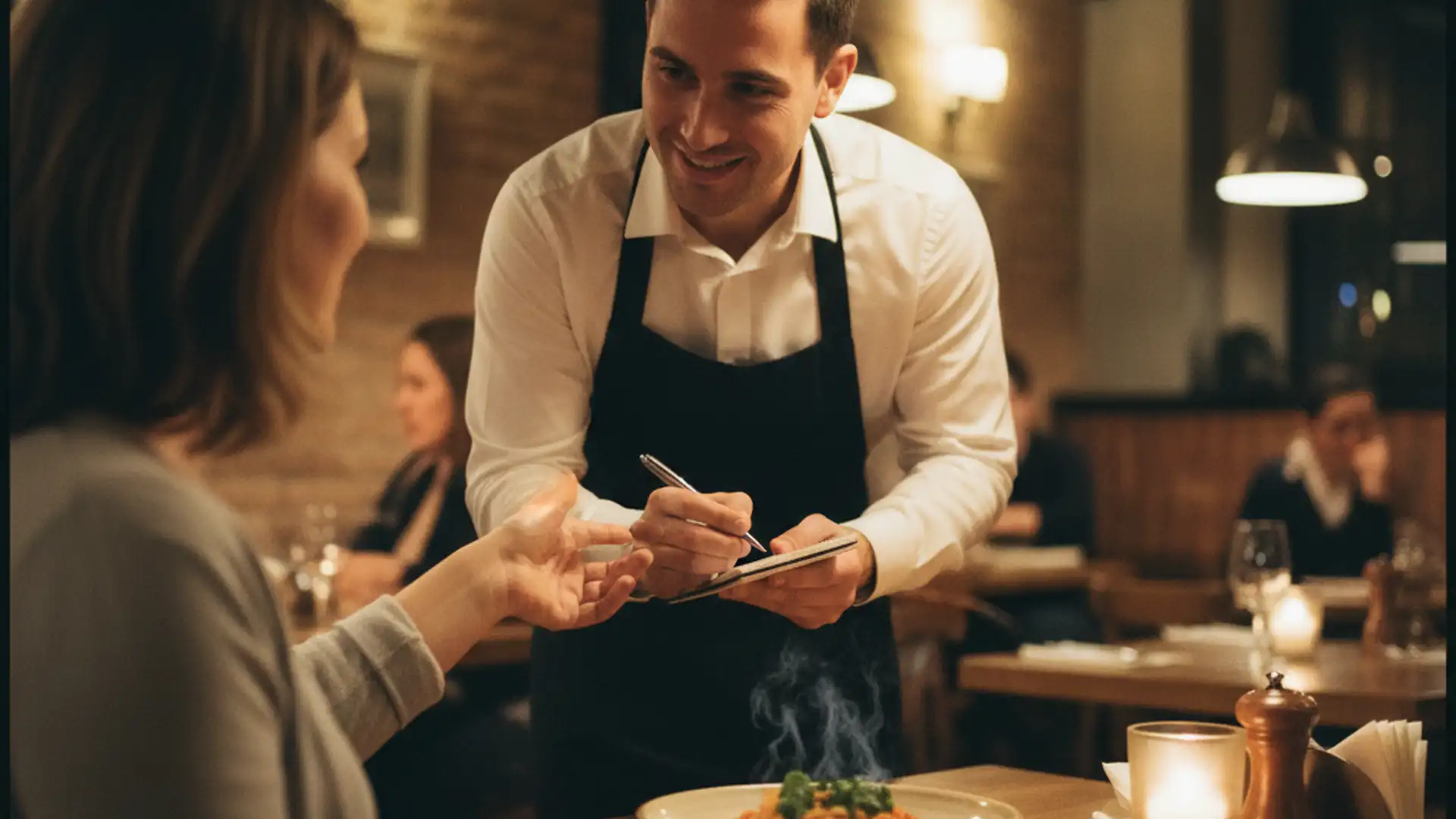
- Lean on the server. Tell the server, ideally before the customer arrives, that you’d like the chef’s tasting menu or the most famous house dishes. Set a budget if needed.
- Frame your deference as care. “I want to make sure you experience the best of what this restaurant offers” — that lands much better than visible confusion at the menu.
The “I’m Not Picky” Framing
One specific phrase I use, internationally, when a host asks what I’d like: “I’m not picky and I’m here to try the local cuisine. Please order what you would order for yourself.”
This works because it:
- Communicates curiosity rather than fussiness
- Gives the host permission to choose adventurously, knowing you’ll go along
- Avoids the “you order, no, you order” loop that wastes everyone’s time
- Signals that you respect their judgment
The variant I use when there’s a real dietary restriction: “I don’t eat shellfish, but other than that I’m happy to try anything you’d recommend.” Specific, brief, not apologetic.
The thing I never do: list off five things I don’t eat at the start of the meal. Even if all five are real, that’s a logistical request that should happen with the server quietly, not with the host as performance.
Drinks and Coffee
The drinks side of the menu has its own rules:
- House wine is almost always fine. Don’t fuss with the wine list unless you really know.
- If you don’t drink, see business dinner drinking etiquette for how to handle the dinner gracefully.
- Coffee at the end of dinner is universal. Espresso in Italy, French press in France, Turkish coffee in the Middle East. Take what’s offered.
- Asking for “milk in your coffee after dinner” in Italy is a small social mistake. Skip it.
The Mistakes I Still Make
I’m not free of menu disasters. I still occasionally point at the wrong thing. I still occasionally order a dish that doesn’t sit well. I once ordered something in Korea that turned out to be live octopus, which I was not mentally prepared for. (I ate it. The host was delighted. I was traumatized.)
The system isn’t perfect. It’s a default. The default is: defer, ask, observe, eat what’s served, react graciously to whatever shows up. The system fails maybe one trip in twenty. That’s fine.
The Bigger Idea
The point of all this isn’t to optimize the meal. It’s to keep the meal from becoming a performance about my preferences. The dinner is a relationship-building event. Whatever’s on the plate matters less than how I behave with it.
If I can eat curiously, defer warmly, and end the meal with sincere thanks for the experience — I’ve done my job. The food becomes a memory of an evening, not the center of it.
This is the same instinct that lives behind the broader work of business meals — pacing through the business dinner drinking etiquette, getting the tipping etiquette by country right at the end, and threading the dietary needle without making the host feel responsible for solving your preferences. The whole evening is a small social choreography. The menu is just one step.
The Bangkok dish whose name I never learned is still funny in retrospect. The system below was built so I’d have one fewer story like it. So far, it’s mostly working.

Title: The dietary restriction conversation
Ordering well is half the battle. Telling the host you can’t eat shellfish without ruining the meal is the other half.
Inside:
- When to mention restrictions (and when not)
- What to say to your host without being ‘that guy’
- Vegetarian, vegan, gluten-free, allergy — country by country
Key takeaways
- Defer to the host. “Would you mind ordering for the table? I trust your judgment” turns a problem into a compliment.
- Ask for the house special or the chef’s recommendation — you skip the guesswork and order what they’re proud of.
- Watch the other tables. Visible dishes are free market research. Point and order.
- Use the safe phrase: “I’m not picky and I’m here to try the local cuisine. Please order what you would order for yourself.”
- Handle restrictions quietly with the server — not as a performance for the host. “I don’t eat shellfish, but other than that I’m happy to try anything you’d recommend.”
- Lean on local shortcuts: photograph plastic food displays and order omakase in Japan, go family-style in China, order a thali in India, pick regional specialties in Italy, order tapas one or two at a time in Spain.
- Accept the failure rate. The system flops maybe one trip in twenty. Eat enough to be polite and move on.
FAQ
What do I say when I can’t read the menu at a business dinner?
Hand the menu back and let the host drive: “Would you mind ordering for the table? I trust your judgment.” If you want to order yourself, ask for the house special or the chef’s recommendation. The line that never fails is “I’m not picky and I’m here to try the local cuisine — please order what you would order for yourself.”
How do I mention a dietary restriction without making it awkward?
Say it quietly to the server, not to the host as a performance. Keep it short — “I don’t eat shellfish, but other than that I’m happy to try anything you’d recommend” — instead of reciting a long list of exclusions at the table the moment you sit down.
What happens if the dish that arrives is something I really can’t stomach?
It happens — about one trip in twenty the system fails. The author’s own Bangkok dinner produced a bowl of broth, intestines, and spice he hadn’t bargained for. He ate enough to be polite while the host steered him to other dishes. The dinner is a relationship-building event; how you behave with the plate matters more than what’s on it.