

Short answer: In Japan, pair a small bow (about 15 degrees, eyes briefly down) with the handshake. Don’t lead with just a firm grip, big smile, and direct eye contact. Read the name placards before you sit, swap business cards with both hands, study the card on the table, let silence sit, and wait for the host before touching your tea.
I shook hands too firmly, sat in the wrong seat, and slid a business card across the table like it was a poker chip. By the end of the first ten minutes, I’d already lost the room. I just didn’t know it yet.
The Tokyo Meeting I Walked Into Like a Tourist
It was 2018. I was 38, had been doing international business travel for about six years, and was confident enough in myself that I assumed common sense would carry me through any room.
Tokyo was supposed to be a routine meeting. We were trying to expand a partnership with a longtime Japanese distributor — they’d been buying from our company for over a decade — and the trip was meant to formalize a bigger volume agreement. The deal was 80% done before I got on the plane. My job, as I understood it, was to fly in, shake some hands, eat some sushi, and bring the contract home.
The meeting was on a Tuesday morning, in a glass-walled conference room on the fourteenth floor of an office in Ginza. Three of their team and three of ours. I walked in 90 seconds late, jet-lagged, with the firm smile of a man who’d just had two cups of hotel coffee.
What I didn’t know — what nobody had told me — was that the next ten minutes were the meeting. Everything that came after, the slides, the projections, the polite questions, was already shaped by what I did or didn’t do in those ten minutes.
The Handshake I Got Wrong
The most senior person on their side, a man named Tanaka-san who I’d never met before, stood up to greet me as we walked in.
I did what an American businessman is trained to do: firm grip, look him in the eye, big confident smile, “very nice to meet you.” It probably lasted three seconds.
What I should have done: a small bow, a softer handshake — Tanaka-san had extended his hand, which was a courtesy to me — and a quiet “Hajimemashite, Tanaka-san.” Five seconds, slower, less eye contact than I would have used in New York, no big smile.
The bow doesn’t have to be deep. From the waist, maybe 15 degrees, eyes briefly down. It’s a gesture of respect that says “I see you, I know where I am, I’m not going to barrel in here like I own the place.” Even when the Japanese counterpart offers a handshake — which they often will, to put Westerners at ease — the small bow on top of it shows you’ve done some homework.
I hadn’t done any homework. I just shook hands like I was at a sales conference in Atlanta. And the room registered it. I didn’t notice at the time, but Tanaka-san’s smile got a little smaller, and the rest of his team became slightly more formal in the way they greeted my colleagues. The temperature dropped half a degree.
The Seat I Took (That Wasn’t Mine)
Then I made it worse.
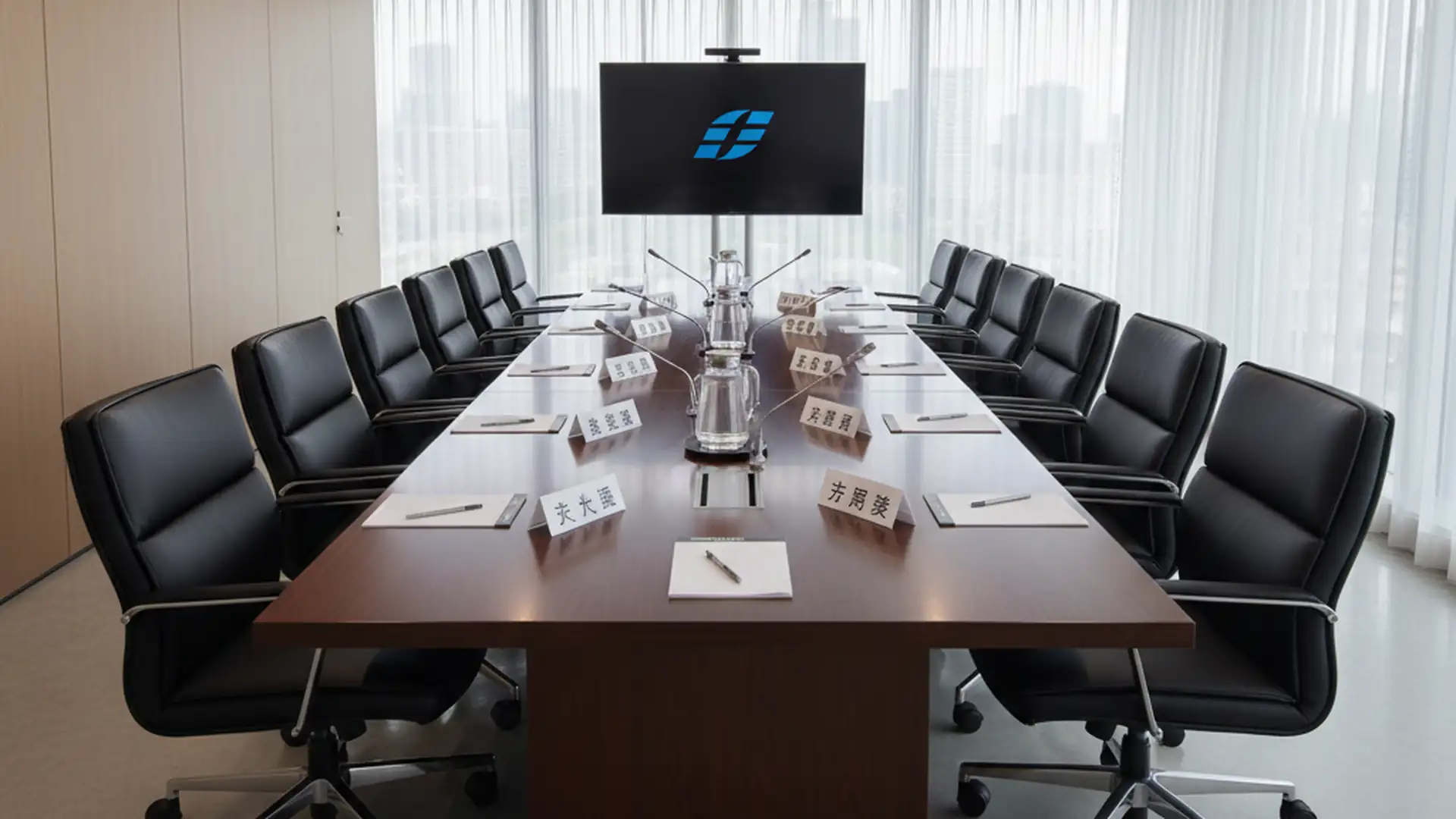
The conference table was set up so that the door was on one side, with chairs on both sides facing each other. There were small name placards in front of each seat, but I didn’t read them carefully. I just walked in, picked the chair closest to the window — because I like windows — and sat down.
That chair was the kamiza, the seat of honor, traditionally reserved for the most senior visitor. In Japan, seating order in a meeting is not random. The most senior person sits furthest from the door, often near the head of the table or with the best view. The most junior sits nearest the door, ready to handle interruptions or the arrival of tea.
I was not the most senior person on our side. My boss, who had flown in with me, was. By taking the kamiza, I’d accidentally elevated myself above him in the eyes of our hosts, and made him sit somewhere lower than he should have.
My boss, who was good at this, gracefully redirected me with a quiet “actually I think we’re over here” before the Japanese team had to say anything. But the move had been made. The placards had been read. The fix was visible.
The Business Card Disaster
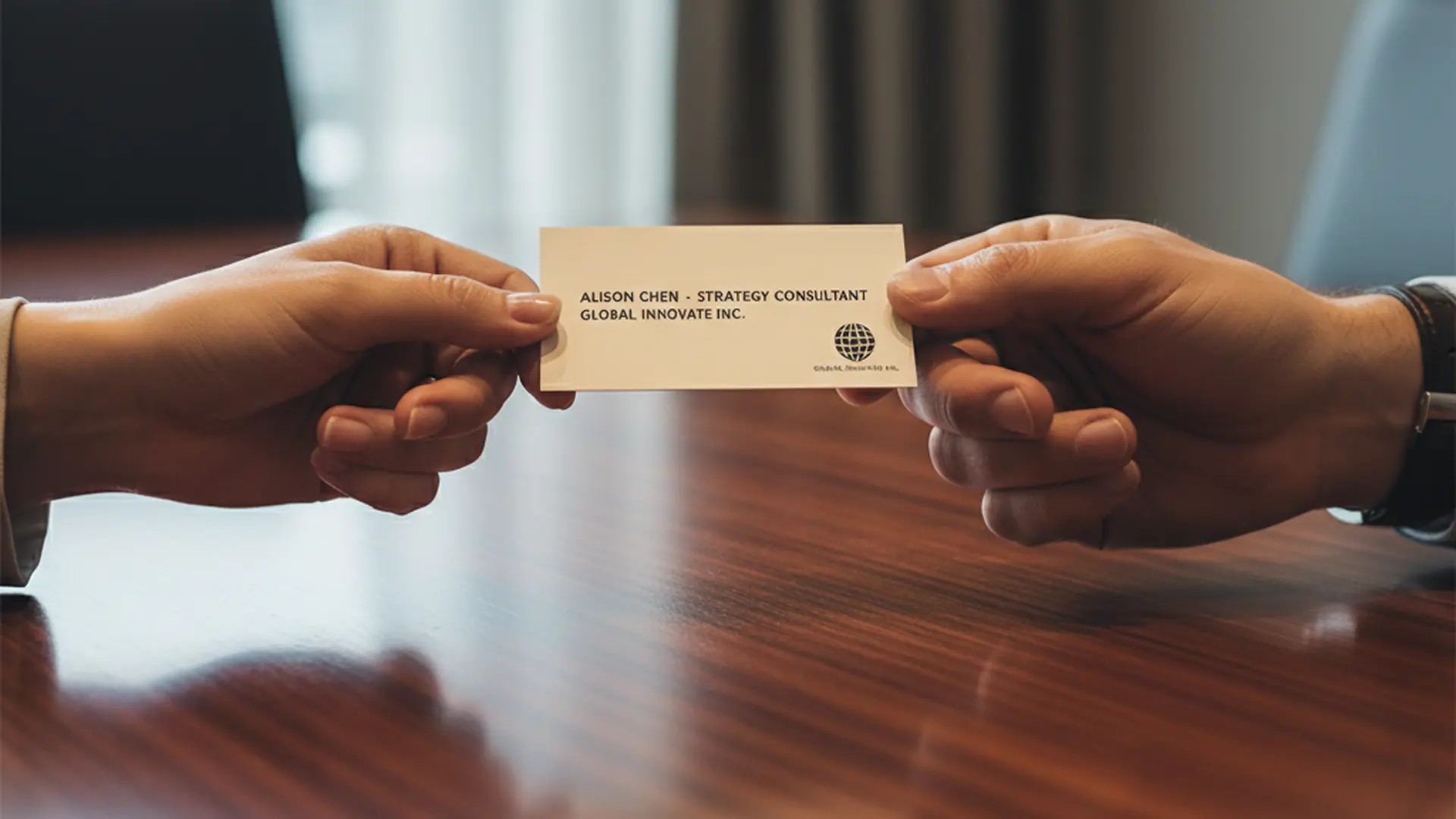
Then came the meishi koukan — the business card exchange. This is, in Japan, a small but serious ritual.
You stand. You present your card with both hands, the printing facing the recipient so they can read it without rotating it. You bow slightly. You say your name and your company. They do the same with theirs. You receive their card with both hands, study it for a moment, place it carefully on the table in front of you for the duration of the meeting, and don’t write on it.
What I did:
I held my card with one hand. I slid it across the table toward Tanaka-san. I took his card with one hand and immediately put it in my pants pocket. Then I sat down without studying it.
I had, in the space of about 11 seconds, committed three separate small offenses. None of them was unforgivable on its own. Together, they communicated very clearly: this American doesn’t know where he is, and hasn’t bothered to find out.
The deeper problem with what I did with the business card is that the card represents the person. Treating it like a gum wrapper communicates how you’ll treat the relationship. I learned all of that later, the hard way, after I read about business card etiquette around the world the night before my next trip.
The Silence I Read Wrong
About 25 minutes into the meeting, after my colleagues had presented our deck, Tanaka-san asked one question. I answered it. Then there was silence.
To me, the silence felt awkward. Long. So I filled it. I added more detail to my answer, then offered a follow-up insight, then suggested a refinement to our proposal — none of which had been requested.
What I didn’t understand: in Japanese business culture, silence is not a vacuum to be filled. It’s a thinking space. The person on the other side is processing what you said. By rushing to fill it, I’d communicated either nervousness, lack of confidence in my own answer, or both.
This is part of why when “yes” doesn’t mean yes in Asian business communication is such a hard skill for Westerners — silence and indirectness aren’t gaps in the conversation, they’re part of it.
The Tea Moment I Missed
About forty minutes in, an assistant came in with small cups of green tea. She placed them in front of each person, starting with Tanaka-san, then his colleagues, then us. I picked up my cup the moment it landed in front of me — I was thirsty and the meeting had been going for a while.
Nobody else had touched theirs.
I drank. I felt the eyes shift, just barely. Then I put the cup down. Tanaka-san waited another ten or fifteen seconds, gave a small nod to his team, and only then did everyone else pick up their cups.
The custom is simple. The host signals when to drink. You wait. I don’t think anyone in that room cared that I’d jumped the gun on tea — these are sophisticated business people who deal with foreigners all the time. But the cumulative effect of the handshake, the seating, the card, and now the tea was that I’d shown up as someone who hadn’t bothered to learn even the easiest of cues. And I didn’t realize it until much later.
What Happened Next
The meeting ended cordially. We bowed, we shook hands, we exchanged “thank yous.” Tanaka-san walked us to the elevator personally, which I assumed was a sign that things had gone well. I felt fine about the meeting. I texted my wife “went well, heading to lunch.”
The deal didn’t close that quarter. It didn’t close the next quarter either. There was a polite delay, a request for another round of “internal discussion,” a suggestion that we might revisit the proposal “with some adjustments” later in the year.
It took a senior colleague, who had worked in Japan for fifteen years, to gently explain to me what had probably happened. He didn’t know for sure — neither do I, even now — but his read was: I’d presented as someone who hadn’t earned the partnership. The deal didn’t blow up; it just lost momentum. And momentum, in long-term Japanese business relationships, is hard to rebuild.
The deal eventually did close, six months later, after we sent a different team for a follow-up visit. But it cost us those six months. And I had to be very honest with myself about why.
What I Do Now in Tokyo
I’ve been back to Japan many times since 2018. The mistakes from that first trip taught me a small set of habits I now apply automatically:
- The bow comes first. Even if a handshake is offered, a small bow comes with it. It costs nothing and signals everything.
- I read the placards before I sit. If there are no placards, I wait for someone to indicate where I should sit. I don’t take a seat until I’m shown one.
- The card case lives in my breast pocket. Not in my wallet, not in my pants. Out it comes with both hands. Their card goes back into the case respectfully, after I’ve studied it on the table for the meeting.
- I don’t fill silence. I count to five in my head. If they want me to keep talking, they’ll signal it. If they want to think, they’ll think.
- I let the host serve tea first. Don’t reach for the cup until they’ve made the gesture. Small thing, big signal.
It’s Not Just Japan
Some of these habits transfer to other countries. Some don’t.
South Korea has its own version of the bow-and-card-exchange ritual, with its own subtle differences. China is more transactional in some ways but values seniority just as much. In Germany, the firm handshake I used in Tokyo would have been correct — but the eye contact would have been even more direct, and the small talk shorter. In Brazil, the warm hug I would never give in Tokyo can be appropriate after the second meeting.
This is why, after the Tokyo trip, I started keeping a small international etiquette cheat sheet on my phone — country-by-country, the things I want to remember in the elevator before I walk into the meeting. Not because I want to be perfect. Because I want to walk in knowing I’ve at least done some homework.
I update it after every trip. If a Korean colleague corrects me on something small, I write it down. If a German customer is direct in a way that surprises me, I make a note about why. The cheat sheet is twenty lines long now, organized by country, and I read it on the flight over. It’s not magic. It just keeps me from being the guy who walks in confident and wrong.
The Lesson That Took Six Months
The deeper takeaway from Tokyo wasn’t really about handshakes or business cards. It was about humility.
I had assumed, because I was good at my job in the US, that the way I did business in the US was the way business was done. I assumed people would meet me halfway, would recognize my expertise, would forgive small differences in how I behaved because the substance was right.
Tokyo taught me that in many countries — and Japan is one of the strictest — the form is part of the substance. You don’t get to skip the form because you’re a good guy with a good product. The form is how trust is established. Without it, the substance doesn’t get heard.
That isn’t a Japanese-specific lesson. It applies in some form in every country I’ve worked in since. The first ten minutes of a meeting are when the room decides whether you’ve shown up as a guest or as a tourist. If you’ve shown up as a guest, you’ve earned the right to talk substance. If you’ve shown up as a tourist, the substance is going to land in a smaller room than you wanted.
The handshake didn’t ruin the deal. It cost the deal six months. And it taught me, finally, that homework on a country isn’t optional preparation. It’s the meeting before the meeting. The one I almost skipped — and never will again.

Title: The 10-minute first impression cheat sheet
Tokyo taught me one country. The first 10 minutes work everywhere — here’s the country-by-country playbook.
Inside:
- What to do in your first 10 minutes (Japan, Korea, China, Germany, more)
- The 3 mistakes that cost Westerners deals
- What’s universal across every culture I’ve worked in
Key takeaways
- Bow comes first. Add a small bow (~15 degrees, eyes briefly down) to the handshake. Even when they offer a Western handshake, the bow shows you did your homework.
- Read the placards before you sit. The kamiza, the seat of honor, sits farthest from the door for the most senior visitor. The junior person sits nearest the door. If there are no placards, wait to be shown.
- Cards with both hands. Stand, present with both hands and the print facing them, bow slightly, say your name and company. Receive with both hands. Study the card on the table. Don’t write on it or stuff it in your pocket.
- Let silence sit. Silence is thinking space, not an awkward gap. Filling it reads as nervous. I count to five before jumping in.
- Wait on the tea. Don’t reach for your cup until the senior person does.
- The form is part of the substance. A good product doesn’t buy you a pass on the first ten minutes.
FAQ
Do you shake hands or bow in a Japanese business meeting?
Do both. Pair a small bow, roughly 15 degrees from the waist with your eyes briefly down, with the handshake. Don’t lead with a firm grip, direct eye contact, and a big smile alone. Even when your Japanese counterpart offers a handshake to accommodate you, adding the bow signals respect and that you came prepared.
What’s the right way to handle business cards in Japan?
The card exchange, meishi koukan, is its own ritual. Stand up, present your card with both hands and the print facing the recipient, bow slightly, and state your name and company. Receive their card with both hands and study it on the table during the meeting. Never write on a card or pocket it immediately. The card represents the person.
Why does silence matter in a Japanese meeting?
Silence is a thinking space, not an awkward gap to fill. Rushing to talk over it reads as nervous or low on confidence. Wait for signals before continuing. I now count to five silently before I fill a pause.