

Short answer: You survive 24 hours in Tokyo by structuring the day, not cramming it. Land, shower, hydrate, take a 30-45 minute daylight walk, eat simple, sleep by 10. Stay in Marunouchi near Tokyo Station, use a Suica or Pasmo and the Yamanote Line, make lunch your one great meal, and skip the tourist sites entirely.
Tokyo can chew up 24 hours and spit you out before your jet lag clears. After more than a dozen trips, here’s the dad-tested playbook for a single business day in Tokyo without losing the trip — or yourself.
Why Tokyo Is the Hardest 24-Hour City
Tokyo is the most efficient city I work in. It’s also the easiest city to mismanage in 24 hours.
The reason: there’s too much to do, the meeting culture demands you arrive sharp, the food is so good it’s easy to overdo, and the transit is so seamless that you can accidentally cover an entire prefecture in a single morning. By dinner you’ve taken 18,000 steps, eaten three things, and still have a customer dinner ahead of you.
The first time I did Tokyo in 24 hours, I tried to “see the city” between meetings. I ended up walking from Shibuya to Roppongi to Ginza to Shinjuku, eating a bad ramen near a train station, and arriving at the customer dinner half-broken and overstimulated. The dinner suffered. The next morning’s meeting suffered.
The fix is not “do less.” The fix is “structure the day differently.” Below is what I do now on a typical 24-hour Tokyo trip — typically a Monday afternoon arrival, all-day Tuesday meetings and dinner, Wednesday morning flight.
Where to Stay (And Why It Matters More Here)
Tokyo’s geography rewards picking a hotel near where your meetings actually are.
The big business areas:
- Marunouchi/Otemachi. Adjacent to Tokyo Station. Heart of corporate Tokyo. If meetings are anywhere in Chiyoda or Chuo wards, stay here. Not exciting, but extremely convenient.
- Akasaka/Roppongi. More energy, more food, more nightlife. Convenient for tech and finance meetings in southern Tokyo.
- Shinjuku. Big, busy, complicated. The hotel rooms are often great. The walk to the station from your hotel might be 15 minutes through a maze. Worth it if your meetings are in the western half of the city.
- Shibuya. Younger, busier, lots of food. Less business-focused but increasingly so. Be ready for crowds.
- Ginza. Upscale, quiet, walkable. Good for meetings in central Tokyo and short walks to dinner spots.
For business travel I default to Marunouchi. Boring on paper. Saves me 30 minutes of transit each way, every day. The trade is always worth it on a 24-hour trip.
The Arrival: Don’t Try to “See Tokyo”
If I land in the afternoon — common from the US — I do exactly three things between airport and dinner:
- Get to the hotel. Narita Express or Limousine Bus from Narita; Keikyu or Tokyo Monorail from Haneda. Skip taxis from Narita; the Express is cheaper and faster.
- Shower, change, drink water. The flight has dehydrated me, my clothes feel wrong, and my brain isn’t where it should be.
- Walk for 30-45 minutes. Not to “see the city.” To get sunlight, get my body used to local time, and reset the jet lag clock.
This is also the time I review my notes for the next day’s meetings, run through the the Tokyo handshake story in my head as a mental rehearsal of what not to do, and confirm the meeting addresses with the front desk.
Dinner that first night, if I’m not yet meeting customers, is something simple and local. Not a famous restaurant. Just a small place with a counter near the hotel. A donburi or a bowl of soba. Bed by 10 PM local.
The Working Day: How to Time the Meetings
Tokyo business meetings tend to start at 10 or 10:30 AM, which is more humane than American 8 AM starts. Use the morning well.
My Tuesday looks like this:
- 6:00 AM — wake naturally (jet lag is helping me here)
- 6:15 — drink water, do 10 minutes of stretching
- 6:30 — go for a 30-minute walk through whatever neighborhood the hotel is in. Tokyo at 7 AM is one of the most pleasant cities on earth — quiet, clean, beautiful
- 7:30 — breakfast at the hotel or a nearby cafe
- 8:30 — review the day’s agenda one more time, pack what I need into a small bag
- 9:30 — leave for the first meeting, allowing extra buffer for navigation
The walk in the morning is non-negotiable for me now. It anchors my day. It also exposes me to enough sunlight that the jet lag fades faster than if I stayed in the hotel until the meeting.
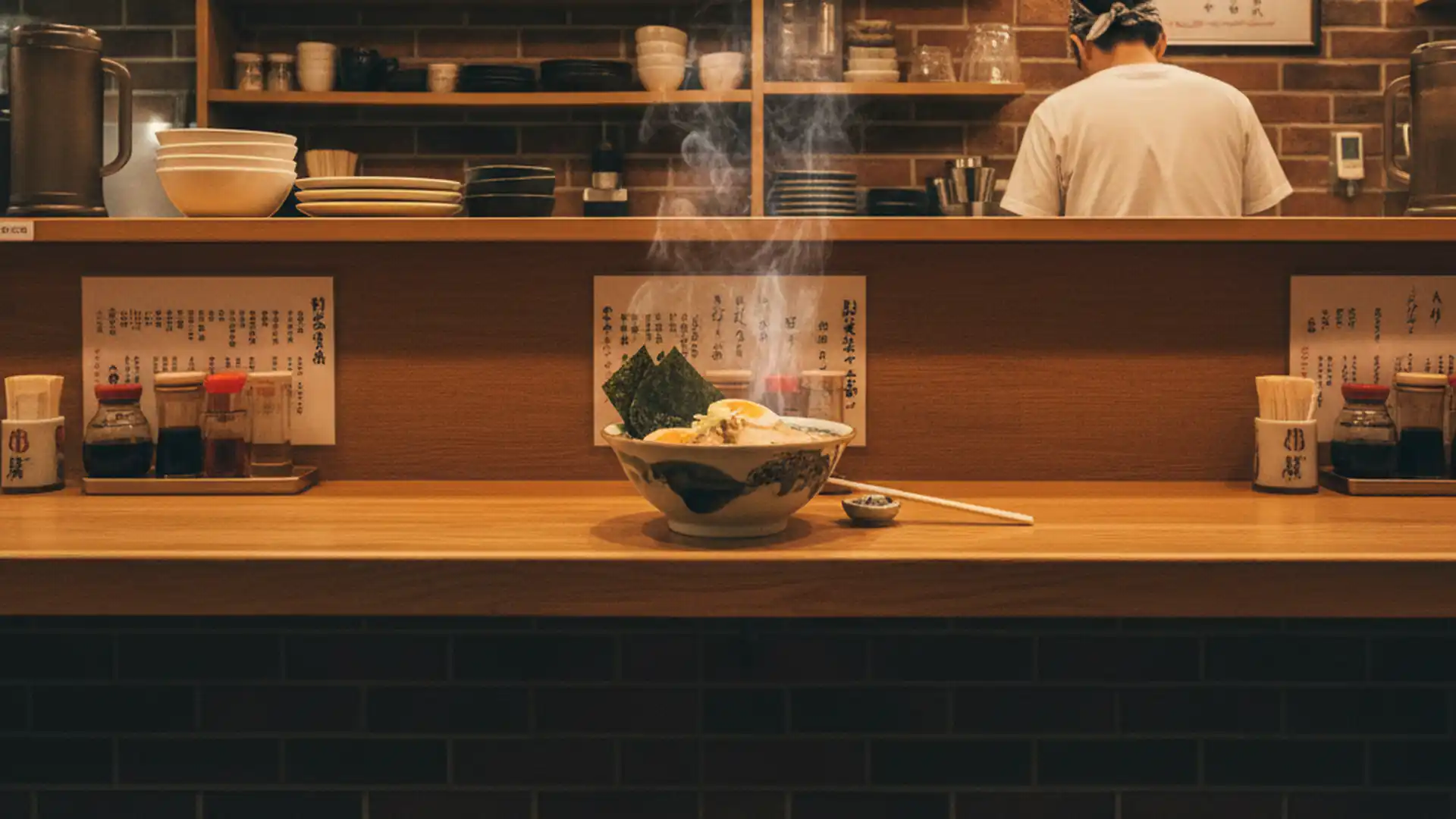
Lunch: The Most Underrated Tokyo Meal
If you only have 24 hours in Tokyo and you eat one really good thing, make it lunch.
Reasons:
- Lunch in Tokyo is high-quality, fast, and affordable
- The famous restaurants offer business-lunch specials that are a fraction of the dinner price
- You’re awake and present at lunch — at dinner you may be jet-lagged or post-meeting tired
- The customer lunch is often more relaxed than the customer dinner
Specific moves:
- Conveyor belt sushi. Even modest places in central Tokyo are excellent. Avoid only the most touristy ones.
- A small ramen shop. Look for a place with a vending machine at the entrance — that’s how locals order. Pick a popular bowl, get a ticket, hand it to the cook, sit down, eat in 15 minutes.
- Tonkatsu (breaded pork). Hearty enough to power you through afternoon meetings. The sets at lunch are usually a clear bargain.
- Soba or udon. Light, fast, restorative.
I avoid lunch buffets, hotel lunches, and anything in a tourist district. Twenty minutes off the main streets is where the food becomes excellent and the bill becomes reasonable.
Getting Around: Trains, Not Taxis
Tokyo’s subway and JR train system is the best in the world for a business traveler. Specifics:
- Get a Suica or Pasmo card on arrival. Tap to enter and exit. No fumbling for tickets.
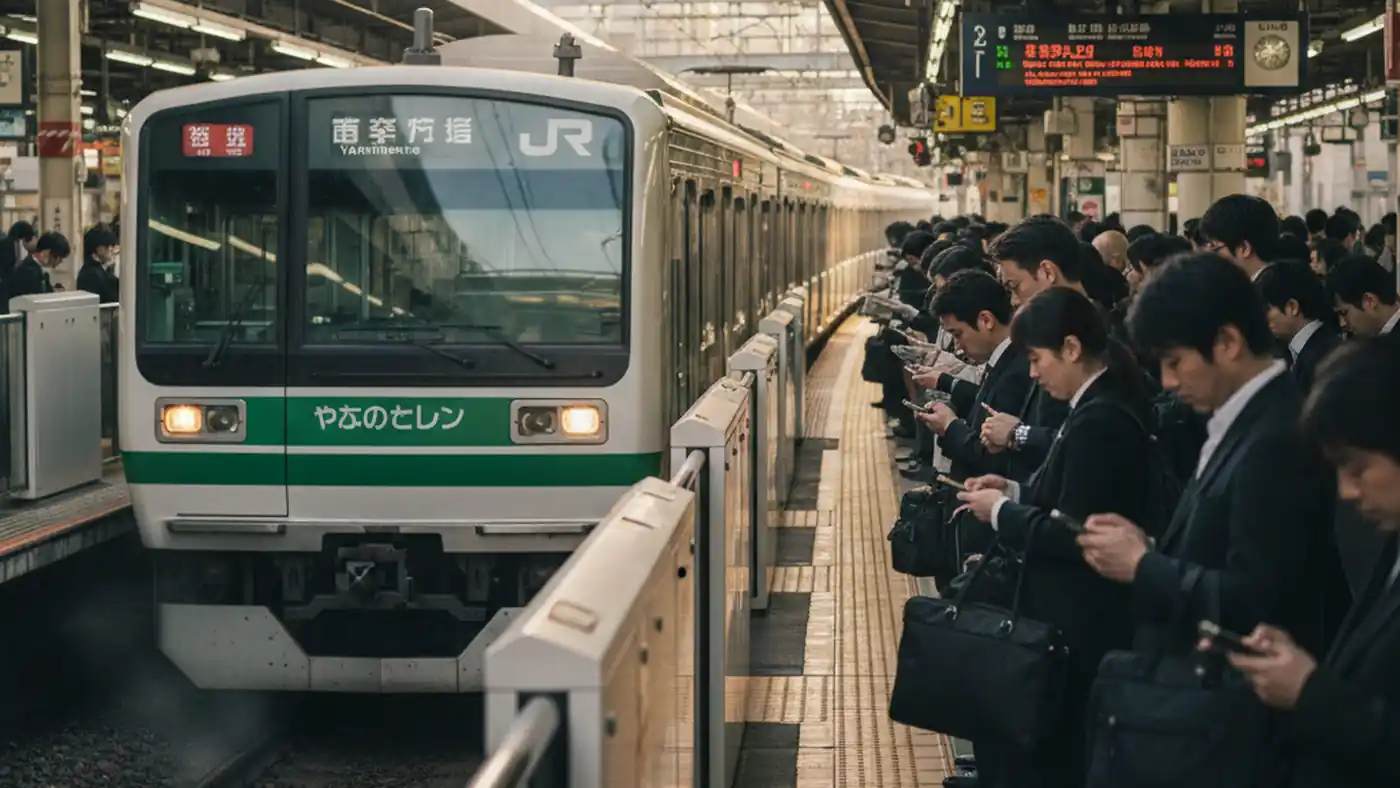
- The JR Yamanote line is a loop around central Tokyo. Most business areas are along it. Learning the four or five stations near your hotel and meetings is enough for a 24-hour trip.
- Google Maps works perfectly. It tells you exit numbers, transfer stations, and walking time door-to-door. Trust it.
- Taxis are excellent but expensive. Reserve them for after dinner when transit is harder, or for one-off long trips.
- Walking is faster than you think. Many central Tokyo destinations are 15 minutes apart on foot. Sometimes a walk is the cleanest move.
The single biggest mistake I made early on: trying to use taxis for everything. They’re slower than trains in central Tokyo during business hours. Trains are also where you get to observe the city. Take them.
The 60 Minutes Between Meetings
Sometimes you’ll have an unexpected hour between meetings. Don’t waste it on a coffee shop and your phone. Tokyo rewards small detours.
What I do with 60 spare minutes:
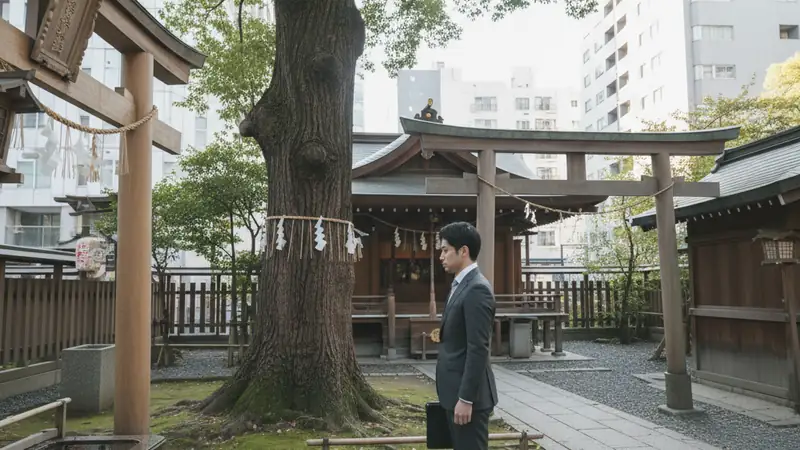
- Walk to the nearest small shrine. Most central wards have one. Five minutes of quiet under trees, three deep breaths, back to work. Resets the brain.
- Find a tiny cafe in a side street. Not Starbucks. Not Doutor. The kind of place with eight seats and a coffee machine the owner has clearly babied for thirty years.
- Browse a department store basement (depachika) for ten minutes. The food halls in Mitsukoshi or Isetan are an architecture of obsessive perfection. You’ll leave inspired.
- Visit one bookstore — Maruzen, Kinokuniya. Even if you can’t read Japanese, the design and order of the place are calming.
The point of the spare hour isn’t to “do something.” It’s to step out of the work mode for long enough that you re-enter it slightly clearer.
The Customer Dinner
If the trip ends with a customer dinner, the dinner is the trip. Treat it that way.
Practical notes:
- The customer will pick the restaurant. Don’t suggest one.
- Arrive five minutes early. Not earlier, not later.
- The seating, the toasts, the pacing — see the etiquette work I covered separately. The dinner is its own meeting.
- Don’t drink at lunch if there’s a customer dinner that evening. The recovery isn’t worth it.
- Plan to stay until the host signals the dinner is over. They will. Don’t try to leave early.
If the dinner runs long — past 10 PM — expect to take a taxi home. Trains in Tokyo run until about midnight, but the last train scramble is real. Don’t get caught.
The Morning of Departure
If your flight is in the late afternoon — common for transpacific routes — you have a small Wednesday morning window before checkout. Use it well.
What I do on a typical Wednesday morning before a 4 PM flight:
- Wake at 6, walk for 45 minutes, eat a real breakfast
- Pack the bag (using my 24-hour pre-flight checklist)
- One short visit to a place I’ve enjoyed — a particular bookstore, a small park, a coffee shop near the hotel
- Check out by 11. Take the train to the airport. Leave more buffer than you think you need; Narita is an hour from central Tokyo.
- Eat lunch at the airport — Tokyo airports have good food and you’ll have time
The 24-hour rule of Tokyo: if you’ve structured the day so you arrive at the airport without panic, you’ve done it right. The flight home is the recovery. Sleeping on the plane is its own discipline — see sleep on planes without pills if you, like me, used to rely on chemistry to make it through.
What I Skip in 24 Hours
The list of things I love about Tokyo but don’t try to do on a 24-hour business trip:
- The famous tourist sites. Senso-ji, Tokyo Tower, Shibuya Crossing — all worth seeing. None worth squeezing in around meetings.
- Day trips. Kamakura, Hakone, Nikko — they’re a full day each. Don’t try.
- Specialty shopping districts. Akihabara, Harajuku, Tsukiji. Each is its own afternoon.
- The mega-meal experience. Twelve-course kaiseki, three-Michelin-star sushi — these are tomorrow trips. They’re not the casual side meal of a work day.
- Late nights. Tokyo nightlife is real and rewarding, but staying out until 2 AM destroys the next day. Save it for trips with more recovery time.
The principle: 24 hours doesn’t reward “more.” It rewards a clean structure and a few good moments.
The One Thing That Surprises Me Every Time
Even after a dozen Tokyo trips, the thing that still surprises me is how quiet the city is for a city of 14 million. The trains are quiet. The streets, even busy ones, have a controlled volume. People speak softly. Restaurants don’t blast music. The result is that even on a high-pressure meeting day, the ambient stress is lower than I’d expect from the population density.
The other surprise: how kind small encounters tend to be. The convenience store clerk who asks where you’re from when you struggle with a coupon. The taxi driver who waits patiently while you pull up the address. The hotel staff who notice you forgot something and quietly bring it to your room.
None of these is a “highlight” of a trip. They’re the texture. They’re also the reason I keep wanting to come back.
The Bigger Idea
Tokyo in 24 hours isn’t a vacation. It’s a workday in a city that happens to be one of the great cities of the world. The fight isn’t to maximize tourism. The fight is to do the work well and leave a little space for the city to register on you.
If I do that — if I show up to the meeting prepared, eat something memorable at lunch, take a 60-minute walk between obligations, and arrive at the customer dinner present — I’ve used Tokyo well. The hotel disappears. The transit becomes routine. The meeting becomes the thing it’s supposed to be.
The mistake I made early on was treating Tokyo as something to “experience.” Now I treat it as a place to work, with small windows of attention to the city itself. The city wins more often that way.
This same logic applies to other dense, high-energy business cities — which is why I built a similar playbook for Singapore that uses the layover dynamic differently. The 24-hour Tokyo trip and the 48-hour Singapore stop are cousins, not opposites.
Tokyo is the city I learned the most expensive lessons in. It’s also the city I’ve grown to love quietly. The 24-hour version doesn’t show that off. It just gets the job done while leaving the door open for the longer trips later.

Title: Singapore in 48 hours, the realistic version
Tokyo is one day. Singapore is the layover that gives you two — here’s how to actually use them.
Inside:
- Where to stay if your meeting is in the CBD
- Hawker centers vs hotel breakfast (a real fight)
- What to skip and what to walk to
Key takeaways
- Pick your hotel by transit, not vibe. Marunouchi is boring on paper but saves 30 minutes each way. Shinjuku has great rooms and a maze walk to the station.
- Reset jet lag on arrival day. Check in, shower, hydrate, then a 30-45 minute walk for sunlight. Simple dinner (donburi or soba), bed by 10 PM.
- Get a Suica or Pasmo and learn the Yamanote Line. Tap in and out, learn 4-5 nearby stations, let Google Maps handle exit numbers. Skip taxis during business hours.
- Make lunch your one great meal. Conveyor-belt sushi, a small ramen shop with a vending-machine order, tonkatsu, or soba. Look 20 minutes off the main streets. Avoid buffets and hotel lunches.
- Use the gap between meetings to reset. A small shrine, a side-street cafe, a depachika, or a bookstore like Maruzen or Kinokuniya. Step out of work mode so you re-enter it clearer.
- Skip the highlights. No Senso-ji, no Shibuya Crossing, no day trips, no 12-course kaiseki. That is a different trip.
FAQ
Where should I stay in Tokyo for a short business trip?
Marunouchi or Otemachi, near Tokyo Station. It is the corporate heart and saves about 30 minutes of transit each way. Akasaka and Roppongi suit tech or finance meetings, Ginza is quiet and walkable, and Shinjuku has good rooms but a maze-like walk to the station.
What is the best way to get around Tokyo in 24 hours?
Get a Suica or Pasmo card and tap in and out. Use the JR Yamanote Line, which loops central Tokyo, and learn the 4-5 stations near your hotel. Google Maps is reliable for exit numbers and transfers. Avoid taxis during business hours because trains are faster downtown.
If I only have time for one good meal, what should it be?
Make it lunch. Go for conveyor-belt sushi, a small ramen shop with vending-machine ordering, a tonkatsu set, or soba or udon. Look about 20 minutes off the main streets and skip buffets, hotel lunches, and tourist-district restaurants. Save alcohol for a customer dinner.
📍 Part of: Business Travel City Guides — see also the full Tokyo City Guide.