

Short answer: Don’t try to do everything. In 48 hours, aim for three or four real moments — one great hawker meal, one good walk, one evening, one quiet morning — instead of eight half-experiences. Skip the nap on arrival so jet lag doesn’t wreck your night, eat at hawker centres over restaurants, and let Singapore do the easy part. It rewards calm visitors more than busy ones.
Singapore is the easiest 48-hour stop on the long-haul map — if you don’t try to do too much. After eight or nine layovers turning into mini-trips, here’s the dad-tested two-day playbook for a working layover that doesn’t wreck the rest of the trip.
Why Singapore Is the Layover That Works
Singapore is the city I’ve come to depend on as a stopover between Asia and Europe, or Asia and the US, or just to break up a flight that would otherwise destroy my body.
The reasons:
- The airport is the best in the world. Customs is fast. The immigration line moves. The connecting times are reasonable.
- Taxis and trains from the airport to the CBD take 25 minutes. No drama.
- English is everywhere
- The food, even at the casual end, is excellent and affordable
- The city is small enough that 48 hours actually shows you a lot of it
- You don’t need a visa for most passports
- The hotels are reliable
I’ve been to Singapore probably twelve times now. Maybe three of those were “real” trips with multi-day client meetings. The rest were 36-to-48 hour stopovers built around the convenience of the city. The playbook below is the version I’ve refined over those trips.
Where to Stay
Singapore’s geography makes hotel choice less critical than Tokyo’s, but a few rules:
- Marina Bay / CBD. Convenient if your meeting is in central Singapore. Lots of business hotels. Good walking access to Marina Bay, the financial district, and several food options.
- Orchard Road. Shopping district, plenty of business hotels, easy MRT access, slightly less convenient for business meetings but generally pleasant.
- Tanjong Pagar / Outram. Near the CBD but with more local character — historic shophouses, smaller restaurants, walkable.
- Sentosa. Resort island. Don’t stay here for a working trip. Save it for the trip with kids.
For 48 hours mostly leisure with one short meeting, I default to Tanjong Pagar. For 48 hours with multiple meetings or where I’m rushing, Marina Bay or Marina Centre makes more sense. The Pan Pacific, the Mandarin Oriental, the Marina Mandarin — all reliable.
Day One: Arrival, Recovery, First Real Meal
If I’m landing midday from a long-haul flight, the first 6 hours are about recovery, not exploration.
The arrival routine:
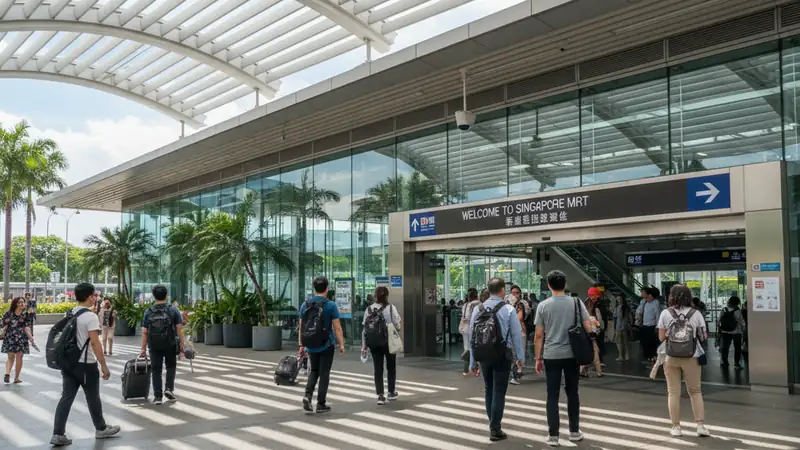
- Take the airport MRT or a cab to the hotel. Cab is faster, MRT is cheaper. Both work.
- Drop bags, shower, change. Don’t try to nap. The nap will wreck your sleep that night.
- Walk for 30-45 minutes. The walk is the recovery tool that works for me everywhere — Tokyo, Singapore, anywhere with daylight.
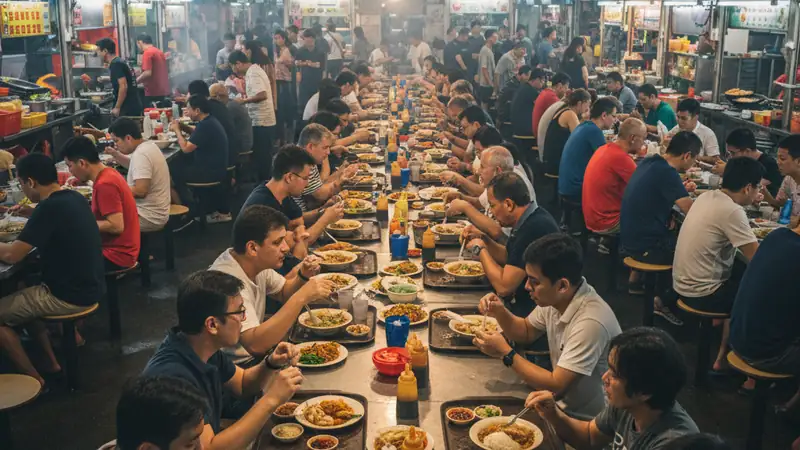
- Eat a real first meal. Singapore’s first-meal-on-arrival should be a hawker center.
The hawker center options that make a great first meal:
- Maxwell Food Centre in Chinatown. Tian Tian Chicken Rice is famous for a reason. Get it.
- Lau Pa Sat in the financial district. Strong for evening visits with the satay street that runs alongside it after 7 PM.
- Hong Lim Market & Food Centre. A bit less famous, often less crowded, excellent Hokkien noodles and char kway teow.
- Old Airport Road Food Centre further east. A favorite among locals and worth the cab if you have the energy.
One hawker center, two or three small dishes, a fresh juice — that’s the first meal. After that, back to the hotel by 9 PM, asleep by 10. The next day will reward the discipline.
Day Two: The Working Day
If the working part of the trip is on day two — typical pattern for an Asian customer call — structure it like a Tokyo day.
- Wake by 6:30, walk along the river or through the CBD, hydrate
- Breakfast at the hotel or a kopitiam (traditional coffee shop): kaya toast, soft-boiled eggs, kopi (local coffee)
- Meeting in the morning, lunch in a hawker center near the office, afternoon meetings or admin time
- Customer dinner if there is one, otherwise a leisurely dinner somewhere local
Singapore business meetings tend to be more direct than the Japan or Korea versions. You’ll get to substance quickly. Less etiquette ritual, more “let’s discuss the proposal.” This doesn’t mean form doesn’t matter — see the wider business card etiquette piece for the small-form rules that still apply — but the rhythm is different from Tokyo or Seoul.
The Hawker Center Strategy
The single thing I tell first-time Singapore visitors is: prioritize hawker centers over restaurants. Always.
The reasons:
- The food is often as good as or better than restaurants charging ten times more
- The variety lets you try multiple cuisines in a single meal — Chinese, Malay, Indian, Peranakan
- The pace is fast, which suits a layover
- You eat with locals, which is more interesting than eating with tourists
The system at a hawker center:
- Find a table first, mark it with a small item (Singaporeans use tissue packs — chope-ing). Then order.
- Order from a stall, pay, get a number, go back to the table. Food is brought to you.
- Try multiple stalls. A typical lunch might be one main dish plus a side from a different stall plus a fresh juice.
- Bus your own tray when done.
What to order? The simple list: chicken rice, char kway teow, Hokkien mee, laksa, satay, roti prata, chai tow kueh (carrot cake), bak chor mee. Pick three. Eat them. Plan to come back tomorrow for three different ones.
Getting Around
Singapore is small enough that walking is genuine option for short distances. For longer ones:
- MRT. Clean, fast, signed in English. Get an EZ-Link card or use contactless payment. The two main lines (East-West, North-South) cover most business areas.
- Grab. The Uber of Southeast Asia. Reliable, cheap, English-friendly drivers. I default to it for evening trips.
- Taxis. Honest, metered, plentiful
- Walking. Great in the cooler months (December-February). Brutal in the humidity of June-August. Plan accordingly.
One Singapore-specific tip: most business areas are connected via covered walkways and underground passages. You can sometimes walk from one tower to another without going outside. In high-humidity months, this matters.
Day Two Evening: The 4 Hours That Define the Trip
Singapore’s evenings are where the city becomes most itself. If the working day finishes around 6 PM and you have until 11 PM:
Option A: Marina Bay walk. The walk along the bay, past the Helix Bridge, around to Gardens by the Bay, takes about 90 minutes including stops. The Supertree Grove light show at 7:45 and 8:45 PM is touristy but genuinely good.
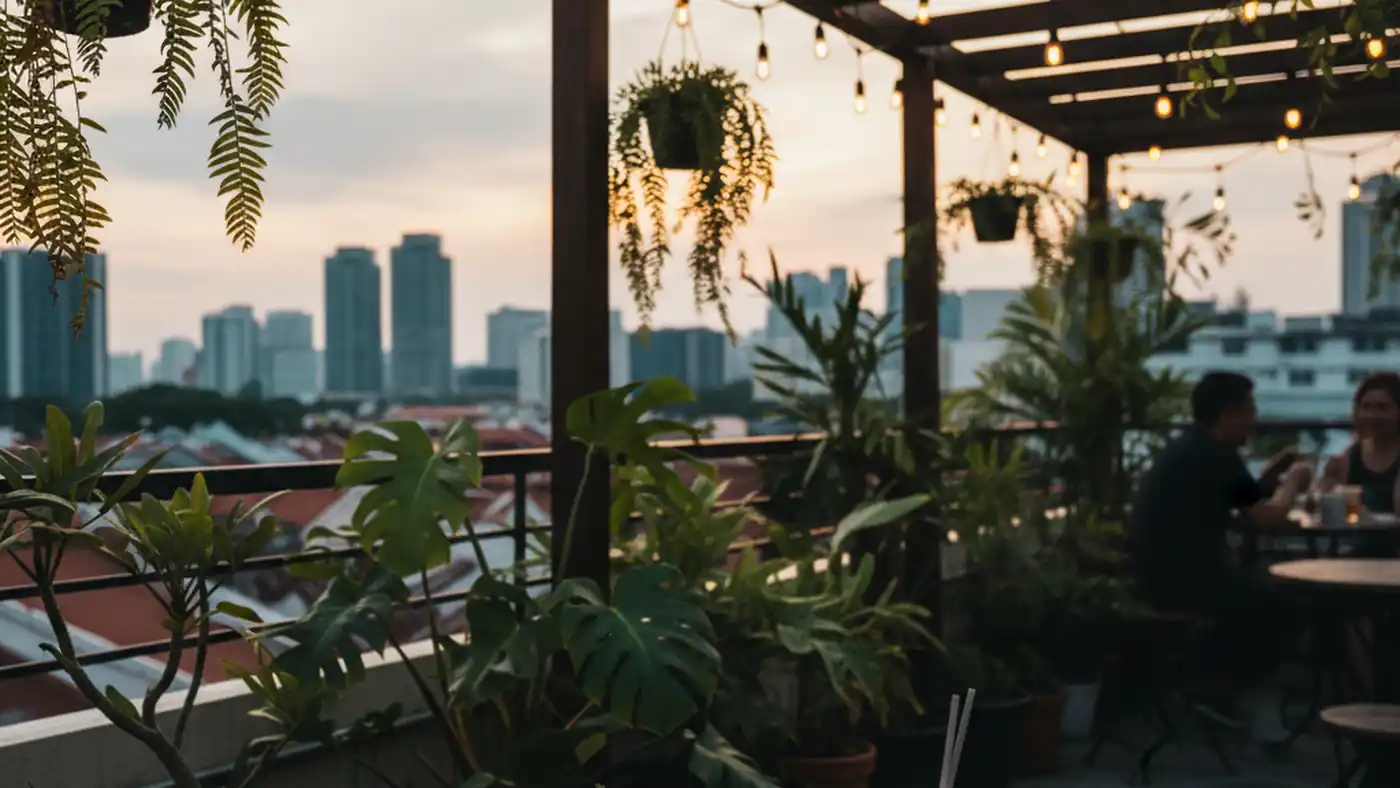
Option B: Tiong Bahru bar crawl. One of Singapore’s older neighborhoods, now reborn as a quiet hipster zone. A few rooftops, several quiet bars, and walkable streets.
Option C: Boat Quay or Clarke Quay dinner. Riverfront, busy, easy to walk. More tourist-driven but pleasant for a relaxed dinner outdoors.
Option D: A long dinner in Tanjong Pagar or Telok Ayer. Smaller restaurants, more ambitious cooking, less tourist density.
The key is to pick one. Don’t try to combine all four. The 48-hour playbook fails the same way the 24-hour Tokyo playbook fails — by trying to do too much. Pick one good evening and execute it.
The Morning of Departure (Day Three)
If you’re flying out late evening on day three, the morning before checkout is real time. Use it well.
Specific moves:
- Wake at 7, breakfast at the hotel or a nearby kopitiam
- One short visit — the Botanic Gardens for an hour, or a quiet temple in Chinatown, or a coffee at a small kopitiam I’ve enjoyed before
- Pack the bag (using my 24-hour pre-flight checklist)
- Check out by 11. Lunch at one last hawker center.
- To the airport by 1 or 2 PM. Changi rewards arrival time — eat dinner there, walk through the gardens, work in a quiet corner.
If you’re considering whether to use the lounge — Changi has many — the broader question is in lounge access calculus. For Changi specifically, the airline lounges (especially Singapore Airlines) are excellent. Worth using if you have access.
What I Skip in 48 Hours
Things I love about Singapore but don’t try to do on a working layover:
- Sentosa. The resort island. Save it for the family trip.
- Universal Studios. Same.
- Long museum visits. The Asian Civilizations Museum is excellent but it’s a half-day. Save for trip 3 or 4.
- The full Gardens by the Bay tour. The Cloud Forest dome is gorgeous but eats 2 hours. The walk-around-outside version is enough on a 48-hour visit.
- Day trips to Malaysia or Indonesia. Tempting but time-consuming. Skip.
- Trying every neighborhood. Pick two. Go deep. Save the rest for next time.
The pattern: in a 48-hour stop, three to four real moments — a great hawker meal, a good walk, one evening, one quiet morning — beat eight half-experiences.
The Underrated Singapore Move
The thing I now do on every Singapore stopover that I didn’t do on the first five: take an early morning walk in a residential neighborhood.
The CBD and Marina Bay are designed and impressive. They are not Singapore. Singapore is the small streets in Tiong Bahru where elderly men play chess at 8 AM, the markets in Chinatown where the day’s vegetables are arriving on trucks, the kopitiams in Telok Ayer where local office workers grab kaya toast before the day starts.
A 45-minute walk through one of these neighborhoods, before the meetings start, is the part of every Singapore trip that I remember six months later. It’s the city behind the city.
The CBD is what Singapore wants you to see. The neighborhood mornings are what make you understand why people who actually live there love the city. They’re free, they take an hour, and they’re the difference between “I had a layover in Singapore” and “I know Singapore a little.”
Comparisons to Other Asian Layovers
If you’re choosing between Singapore, Tokyo, Hong Kong, and Bangkok as a 48-hour layover destination, the rough scoring as I see it:
- Singapore — easiest. Best for a working layover. Reliable, English-friendly, fast airport.
- Tokyo — most rewarding. See the separate guide on Tokyo for the business dad. Higher cognitive load.
- Hong Kong — densest. Lots happening in a small space. The airport is far from the city.
- Bangkok — most fun, most chaotic. Not the layover for a serious working stop.
Singapore is the layover I default to when I have a lot of work to do and need the city not to fight me. Tokyo is the layover I take when I have time and energy. Both, in the right context, are excellent. Singapore is just the most reliable.
The Bigger Idea
The 48-hour Singapore stop is the rare layover where the city actively helps you. The airport works. The transit works. The food is great. The English is universal. The hotels are reliable.
What this means: you don’t have to fight Singapore. You can just be in it. That’s a rare property in a long-haul layover and worth using deliberately.
The trips I’ve enjoyed most have been the ones where I planned three real things — one great meal, one good evening, one quiet morning walk — and let everything else be downtime. The trips I’ve enjoyed least are the ones where I tried to “see Singapore” in 48 hours and ended up checking off attractions like a tourist on a deadline.
Don’t be the second kind. Singapore rewards calm visitors more than busy ones. Treat the layover as a working pause, not a sightseeing sprint, and the city will quietly become one of your favorites — the way it has for me, somewhere around layover number four.

Title: Mexico City for the working dad
Singapore gives you two days. Mexico City often gives you one — here’s how to make it count.
Inside:
- Where to stay (Polanco vs Roma vs Centro)
- The food that actually matters
- The altitude lesson nobody warns you about
Key takeaways
- Pick three to four real moments, not eight half ones. A great hawker meal, a good walk, one evening, one quiet morning. That’s the whole game.
- Get from Changi to the CBD fast. Taxi or MRT both run about 25 minutes. Cab is faster, MRT is cheaper. No drama either way.
- Day one is recovery, not sightseeing. Shower, change, take a 30-45 minute walk, eat light at a hawker centre — and do not nap. The nap wrecks that night’s sleep. Aim to be asleep by 10.
- Eat at hawker centres, full stop. Maxwell (Tian Tian chicken rice), Lau Pa Sat (satay street after 7 PM), Hong Lim, Old Airport Road. Order two or three small dishes and a fresh juice.
- Stay near the work. Tanjong Pagar is the author’s default; Marina Bay for CBD convenience. Skip Sentosa.
- Pick one evening, not all of them. Gardens by the Bay Supertree show (7:45 or 8:45 PM), the riverfront at Boat/Clarke Quay, or Tiong Bahru. One. Not a tour of the lot.
- What to skip: Sentosa, Universal Studios, the big museums, long Gardens tours, day trips. They eat the hours you don’t have.
FAQ
How do I beat jet lag on a Singapore layover?
Don’t nap when you land — it wrecks your sleep that night. Shower, change, then take a 30-45 minute walk to reset. Eat light at a hawker centre, be back at the hotel by 9, and asleep by 10. Wake around 6:30 the next morning.
How long does it take to get from Changi Airport to the city centre?
About 25 minutes to the CBD by either taxi or MRT. The cab is faster, the MRT is cheaper — grab an EZ-Link card if you take the train. No drama either way.
Is Singapore a good layover compared to Tokyo, Hong Kong or Bangkok?
It’s the one to default to when you’ve got a lot of work and need the city not to fight you. The airport is efficient, transit is fast, everyone speaks English, the food is excellent, and entry is visa-free. Calm, not chaotic — which is exactly what you want on a working trip.
📍 Part of: Business Travel City Guides.