

Short answer: Sometimes. A lounge is a quiet room with okay food, not a free upgrade to first class. It earns its keep on long international layovers, before-7-AM departures, and during delays when a lounge agent can rebook you in minutes. For short domestic layovers, late arrivals, or crowded hubs, skip it. Don’t pay a $695 fee just to belong.
Lounges are not free upgrades to first class. They’re a quiet room with okay food. Sometimes that’s exactly what your trip needs. Most of the time, it isn’t.
My First Lounge Visit Was a Disappointment
The first time I stepped into a real airport lounge, I was 31 years old and convinced I was about to enter the inner sanctum of business travel.
It was a Star Alliance lounge in Newark. I’d just made enough flights that year to qualify for access, and I marched up to the desk like I’d earned a trophy. The receptionist barely looked up. The lounge itself was crowded, the food was a sad pasta and a cheese board that had seen better days, and the only outlet I could find was on the floor next to a snoring man in a suit.
I spent forty-five minutes there, drank one bad coffee, and walked back out feeling vaguely scammed.
That was the lesson I needed. Lounges aren’t first class. They’re a tier of “slightly less terrible than the gate.” The real question is: when does that small upgrade actually matter, and when are you paying — in dues, fees, or annual card costs — for something that doesn’t move the needle?
After ten years of going in and out of them, I’ve sorted lounges into three buckets: when they’re a clear win, when they’re a trap, and when I just skip them entirely.
When Lounges Actually Earn Their Cost
Three specific scenarios. The lounge is worth it in all of them.
1. Long international layovers (4+ hours).
This is the obvious one. If you have a four-, five-, or eight-hour layover in a hub airport, the lounge is the difference between staring at a gate and actually resting. A shower, a meal that doesn’t come from a paper bag, a quiet desk for an hour of email, and somewhere to charge everything before the next ten-hour flight. In those cases the lounge isn’t a luxury — it’s basic recovery infrastructure.
I’ve done a Singapore stopover, a Frankfurt stopover, and a Doha stopover all because of long layovers. Each time the lounge made the second leg significantly less brutal.
2. Early-morning international departures (before 7 AM).
Most cities don’t have decent food before 6 AM. Most airport terminals don’t either. The lounge is often the only place where you can get real coffee, hot food, and water before you board a flight that’s going to feed you airline scrambled eggs at 30,000 feet.
Specifically: any 6 AM departure where I haven’t slept properly. The lounge gives me 30 minutes of warmth, decent food, and a place to brush my teeth in peace. That alone is worth the access.
3. Flight delays and weather chaos.
This is the underrated one. When a thunderstorm closes a runway and 2,000 people in the terminal are losing their minds, the lounge stays calm. The seats are still available, the bartender is still pouring, the agents working the desk often have rebooking authority. Twice in the last three years I’ve gotten rebooked faster from inside a lounge than I would have at the gate. Both times the gate agent was overwhelmed and the lounge agent had time.
The most memorable was a Charlotte snowstorm in February. My connection got canceled, the gate counter had a 90-person queue, and I was looking at sleeping in the airport. I walked into the lounge, asked the agent if she could help, and ten minutes later I had a hotel voucher and a seat on the first flight out the next morning. The line at the gate was still 90 people deep when I left.

When Lounges Are a Polite Trap
The mirror image. Three scenarios where lounges sound like a great idea and don’t deliver.
1. Short domestic layovers (under 90 minutes).
By the time you walk to the lounge, queue at the desk, find a seat, grab a snack, and notice your gate has changed, you’ve used 35 minutes. You’ll have 20 minutes of actual rest, then need to pack up and rush back through the terminal. The lounge here is just a stressful detour. I’d rather sit at the gate, set my own schedule, and watch the boarding screen.
2. The “all you can drink” trap.
The free wine and beer in lounges have wrecked a lot of my evening flights. The math is simple: a glass of red feels like a victory at the lounge. Three glasses of red, eight hours later, feel like a hangover at touchdown. Now I treat lounge drinks the same way I treat lounge food — sample modestly, don’t try to “get my money’s worth.”
3. Crowded hub lounges in peak season.
Some of the most heavily-used lounges — large US hubs, central European airports during summer — are basically the gate plus a buffet. They’re crowded, loud, and the seating is worse than a calm gate area at a smaller airport. Walking in, looking around, and seeing nowhere to sit is the moment I realize I should have just gone to a quiet gate two terminals away.
The Math: Priority Pass vs Card Lounge vs Just Paying
I’ve used three approaches over the years. Here’s what I’ve learned about each.
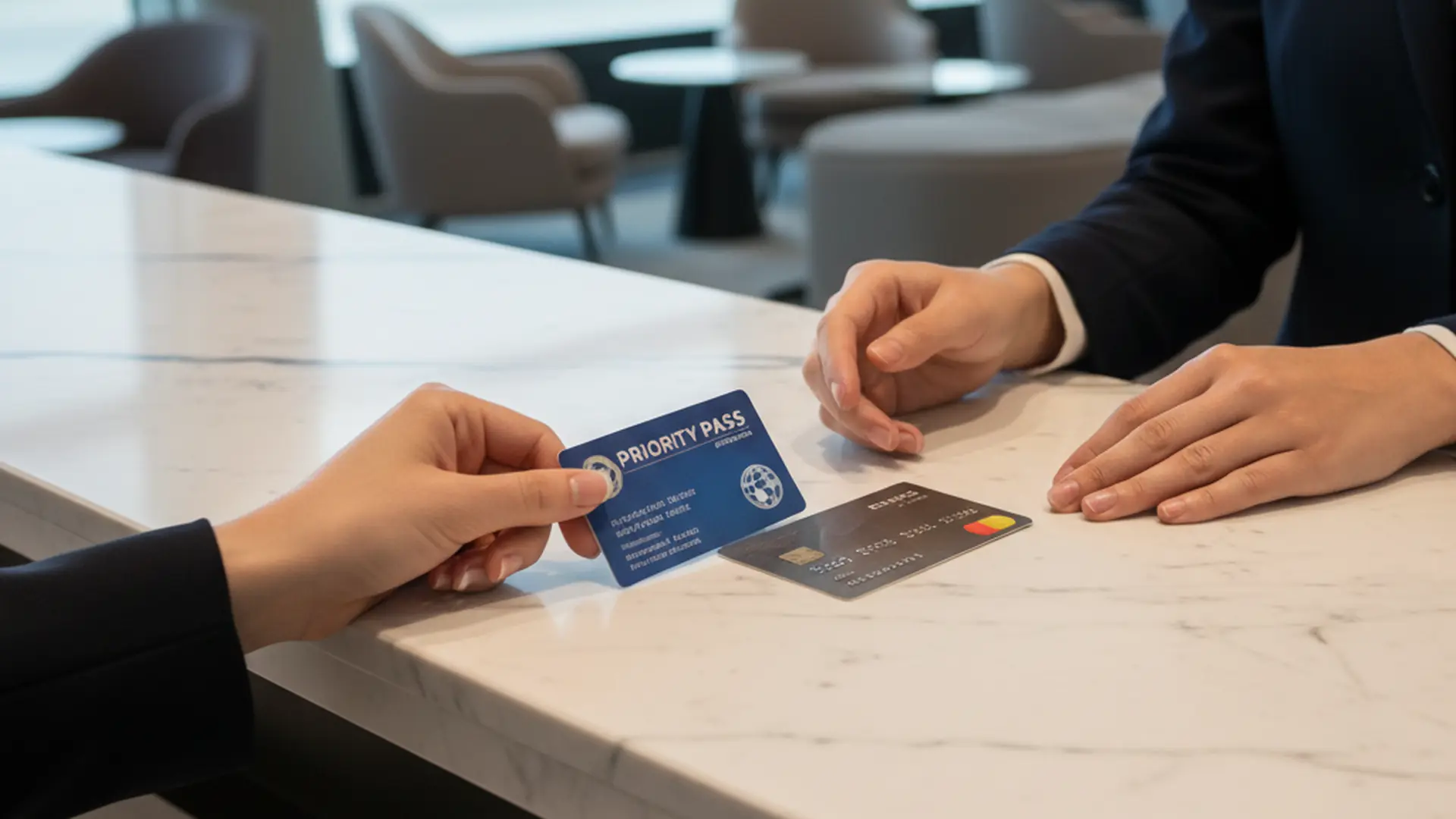
Priority Pass. The buffet of lounge access. It’s a third-party membership that gets you into hundreds of lounges worldwide. Pros: huge coverage, many small-airport lounges where the airline alliance lounges don’t exist. Cons: the lounges that accept Priority Pass are often the most crowded ones, because everyone with a fancy credit card has it. The “guests free” benefit varies by card too. Worth it if you fly internationally to varied airports. Not worth it if you’re a US domestic traveler at the same three hubs.
Premium credit card lounge access. Cards like the Amex Platinum, Chase Sapphire Reserve, Capital One Venture X give you direct access to networks (Centurion, Sapphire Lounge, etc) and often include Priority Pass on top. Pros: the card lounges are often nicer than the average. Cons: the annual fees are not trivial. The card has to do other work for you — points, hotel credits, insurance — to make the math work. The lounge alone doesn’t justify a $695 annual fee.
Just paying day passes. Most major lounges sell single-visit access for somewhere between $35 and $75. If you only fly internationally a few times a year, this is the most honest math. You pay the day you actually need it, you don’t pay annual fees on something you visit twice.
What I do now: my premium credit card covers most of what I need, the Priority Pass that comes with it backs me up at smaller airports, and once or twice a year I pay a day pass when I’m somewhere neither covers. Three layers, no annual lounge subscription.
The Cards I Actually Use (And Why)
I’m not going to make this a credit card review article. There are a thousand of those. But to be clear about my own setup so you can adapt:
- One premium card for international travel — gets me Centurion access, Priority Pass, and a few other things I value (insurance, hotel credit)
- One mid-tier travel card with no foreign transaction fees, used for smaller charges abroad alongside my the apps I actually use on every work trip like Wise
- No third premium card. The fees stack up faster than the benefits
The trap to avoid: collecting cards because each one promises something. After three premium cards, the annual fees become a meaningful expense. The point isn’t to maximize lounge access. The point is to make travel less awful for the trips you actually take.
Lounge Etiquette Nobody Mentions
A few things that took me years to learn:
Don’t camp. Some travelers settle in for four hours, take three plates of food, and treat the lounge like their home office. The lounge isn’t a co-working space. If your flight is in two hours, you don’t need to be there for the full two.
Don’t bring guests as a flex. If your card lets you bring a guest in, that’s great. But three guests, all loud, eating most of the food, isn’t a flex — it’s the reason the next person walks in and finds nowhere to sit.
Tip the bartender if there is one. The drinks are technically free. The person making them isn’t.
Use the shower if it’s there. First time I figured out that my Star Alliance Gold status came with shower access in major hubs, my long-haul travel got 10 times better. Most people don’t even ask. The receptionist will hand you a key, towel, and toiletries kit if you do.
The Underrated Alternative: Pay-Per-Use Lounges and Sleep Pods
The most useful lounge category I almost never see talked about: the small “everyone can pay” lounges that exist in many international airports. They’re not part of any airline or credit card network. You walk up, pay $25-50, get access for a few hours.
I’ve used these in Bogota, in Athens, in Hanoi. Each time, the lounge was nicer, quieter, and less crowded than the “premium” lounge five gates down — because nobody had paid to be there with a free card.
In Bogota specifically, the small pay-per-use lounge cost me $30 and had a real shower, a quiet booth I could take a video call from, and food that wasn’t reheated for the eighth time. The Priority Pass lounge across the terminal had a 30-minute wait at the door and a sad chicken pasta. I picked the $30 option for the next two trips through the same airport.
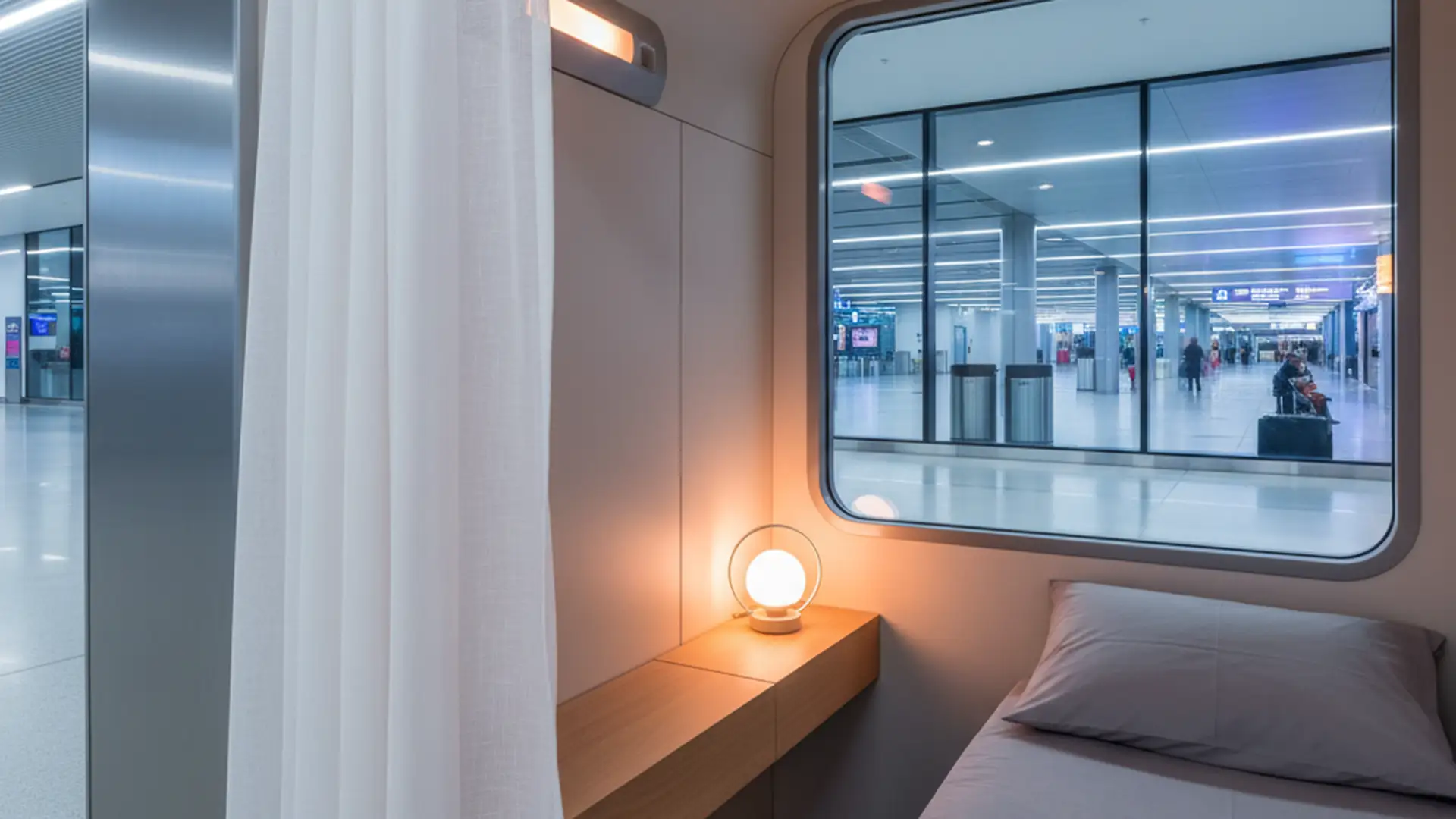
The same is true of sleep pods. There’s a small chain that runs them in places like Heathrow, Atlanta, and a few Asian airports — Yotel, Minute Suites, that kind of thing. A bed for two hours costs about the same as a lounge day pass. If you have a 6-hour layover and you can sleep, the bed is dramatically more useful than another bagel.
I used a Yotel-style cabin at Singapore Changi during a 7-hour overnight layover. Three hours in a real bed, then a shower, then back to the gate. I boarded the second flight feeling like a person again instead of someone who’d been awake for 22 hours. The cabin cost less than the day pass for the airline lounge, and I’d argue it was worth four times as much.
When I Skip the Lounge Entirely
The honest list of when I just walk past:
- Domestic 90-minute layovers — see above
- Late-night arrivals where I’d rather get to the hotel and crash than spend an hour in a lounge first
- Crowded hubs where I know the lounge will be packed and the gate area is calmer
- Trips where I have actual work to do that needs more focus than a lounge will provide
- Airports where the food airside (real restaurants) is significantly better than the lounge buffet — Singapore, Tokyo Narita, parts of Madrid
The pattern: the lounge is a tool. Sometimes I need the tool. Sometimes the gate is fine. Knowing the difference saves me money, but more importantly saves me from making the airport feel like I’m always supposed to be doing something.
One more skip rule I’ve added in the last year: if the trip is short and I’m flying home that same evening, I just don’t go. The lounge before a 4 PM domestic flight when I’ll be home for dinner is wasted on me. I’d rather grab a coffee, walk a bit to stretch my legs, and board on time. Saving the lounge “for when I really need it” is part of how I keep it useful — instead of treating it like a habit I have to feed every time I’m at an airport.
The Bigger Point
I used to think lounge access made me a “real” business traveler. Then I realized that the most experienced travelers I knew — colleagues who’d been doing this for 20+ years — barely used lounges at all. They had their own quiet airport rituals: a specific corner of a specific terminal, a specific cafe, a specific routine. The lounge was a backup, not the destination.
The thing that actually makes you a competent traveler isn’t access to the lounge. It’s the part that comes before that — the part where you’ve already eaten, charged your devices, hydrated, and finished the work calls before security. If you’ve done all that, the lounge is just a slightly nicer place to wait. If you haven’t, the lounge can’t fix it for you.
This is the same reason I’ve moved most of my pre-trip prep into the night before, with a hard 24-hour pre-flight checklist. Once that’s done, what happens at the airport is just execution. And once execution is calm, the lounge becomes optional.
That’s the whole verdict. Lounges are sometimes excellent. Often unnecessary. Always less important than actually preparing for the trip — which includes showing up rested, fed, and ready to sleeping on planes without pills instead of needing the lounge to medicate the chaos.
Use them when they fit. Skip them when they don’t. Don’t pay annual fees for the feeling of belonging.

Title: The booking site that almost cost me a marriage
Lounges save you a few hours. Cheap booking sites can ruin a whole trip. Here’s the bigger play.
Inside:
- The OTA disaster that broke me
- When third-party booking sites still work
- My direct-booking checklist for hotels and flights
When a lounge is worth it (and when it’s a trap)
| Situation | Worth it? | Why |
|---|---|---|
| Long international layover (4+ hrs) | Yes | Shower, real meal, charging, quiet workspace. Made my second legs significantly less brutal. |
| Early departure (before 7 AM) | Yes | Often the only reliable real coffee and hot food before the airline gets going. |
| Delays and weather chaos | Yes | A lounge agent rebooked me during a Charlotte snowstorm in 10 minutes while the gate had a 90-person queue. |
| Short domestic layover (under 90 min) | No | You burn ~35 minutes getting in and settled, leaving ~20 minutes of actual rest. Just wait at the gate. |
| Crowded hub in peak season | No | It becomes the gate plus a buffet, often louder and more cramped than a quiet gate. |
| Late-night arrival | No | Get to the hotel and rest. The lounge is wasted. |
- Sleep pods beat day passes for long layovers. Yotel or Minute Suites run about $25-$50 for 2-3 hours. At Singapore Changi I slept 3 hours, showered, and boarded feeling like a person again.
- Pay-per-use lounges can beat the branded ones. A $30 lounge in Bogota with a shower, quiet booth, and fresh food beat the crowded Priority Pass option with a 30-minute door wait.
- The lounge alone doesn’t justify a $695 card. The card has to do other work for you. Don’t stack annual fees for the feeling of belonging.
FAQ
Is a Priority Pass actually worth it for business travel?
It covers hundreds of lounges worldwide and shines at varied international and small airports. The catch: it’s bundled with so many credit cards that the lounges get crowded, and guest policies vary. In some cities a non-branded pay-per-use lounge for $25-$50 is quieter and better.
Should I get an Amex Platinum just for the lounge access?
No. The lounge alone doesn’t justify a $695 annual fee. The card has to do other work for you, such as travel insurance, hotel credit, and a real network like Centurion. I run one premium card, one mid-tier no-foreign-fee card, and occasional day passes so I’m not stacking fees.
How much does a one-time lounge day pass cost?
Branded lounge day passes run roughly $35-$75 per visit, which makes sense if you only fly internationally a few times a year. Non-branded pay-per-use lounges often run $25-$50 for a few hours and are frequently quieter than the airline or credit-card lounges.