

Short answer: I don’t book through the cheapest travel site anymore. I use the OTA to find a hotel, then book direct on the hotel’s own site, and I always book flights straight with the airline. When it works, the cheap site saves you 5%. When it doesn’t, you can lose the whole trip. Direct booking means someone actually answers when things go sideways.
I once saved $40 on a hotel by booking through a “discount” travel site. That savings cost me three hours, a customer dinner I missed, and a phone call home that I still wince about.
The Trip That Broke Me
Munich, October 2022. I had a one-night stay before a customer meeting the next morning, and I’d booked through one of those “save 30% on hotels” sites because it showed a number I liked.
I landed at 9 PM, grabbed a cab to the hotel, walked to the front desk with my booking confirmation pulled up on my phone, and watched the receptionist’s face do the thing receptionists do when something is wrong but they’re trying not to show it.
“I don’t see this booking, sir.”
What followed was 90 minutes of phone calls. The booking site’s “24/7 customer service” answered after 22 minutes on hold. The agent told me they’d “look into it.” The hotel had no record of my reservation under any name combination they tried. My credit card had been charged 11 days earlier — that I could prove. But there was no room reserved.
By the time the issue got escalated, the hotel was sold out. I ended up in another property 20 minutes away, paid out of pocket because the original charge wouldn’t refund for “5 to 7 business days,” and missed the early-evening drinks with the customer team I was supposed to meet the next day. I was supposed to spend an hour with them building rapport before the formal meeting. Instead I showed up at 9 AM the next morning, jet-lagged, having slept four hours, with no rapport built.
The deal didn’t fall through. But it didn’t move forward either, which was just as bad. Six weeks later I had to fly back. The “savings” had cost me a second flight, a second hotel, and a few hundred dollars worth of my own time.
That’s when I stopped booking through the cheapest travel site. Not because they’re all scams — most aren’t. But because the failure mode is asymmetric: when it works, you save 5%. When it doesn’t, you can lose the entire trip.
How OTAs Make Money From Your “Savings”
Online Travel Agencies — Booking.com, Expedia, Hotels.com, Agoda, the dozens of others — make money in three ways, and only one of them is good for you.
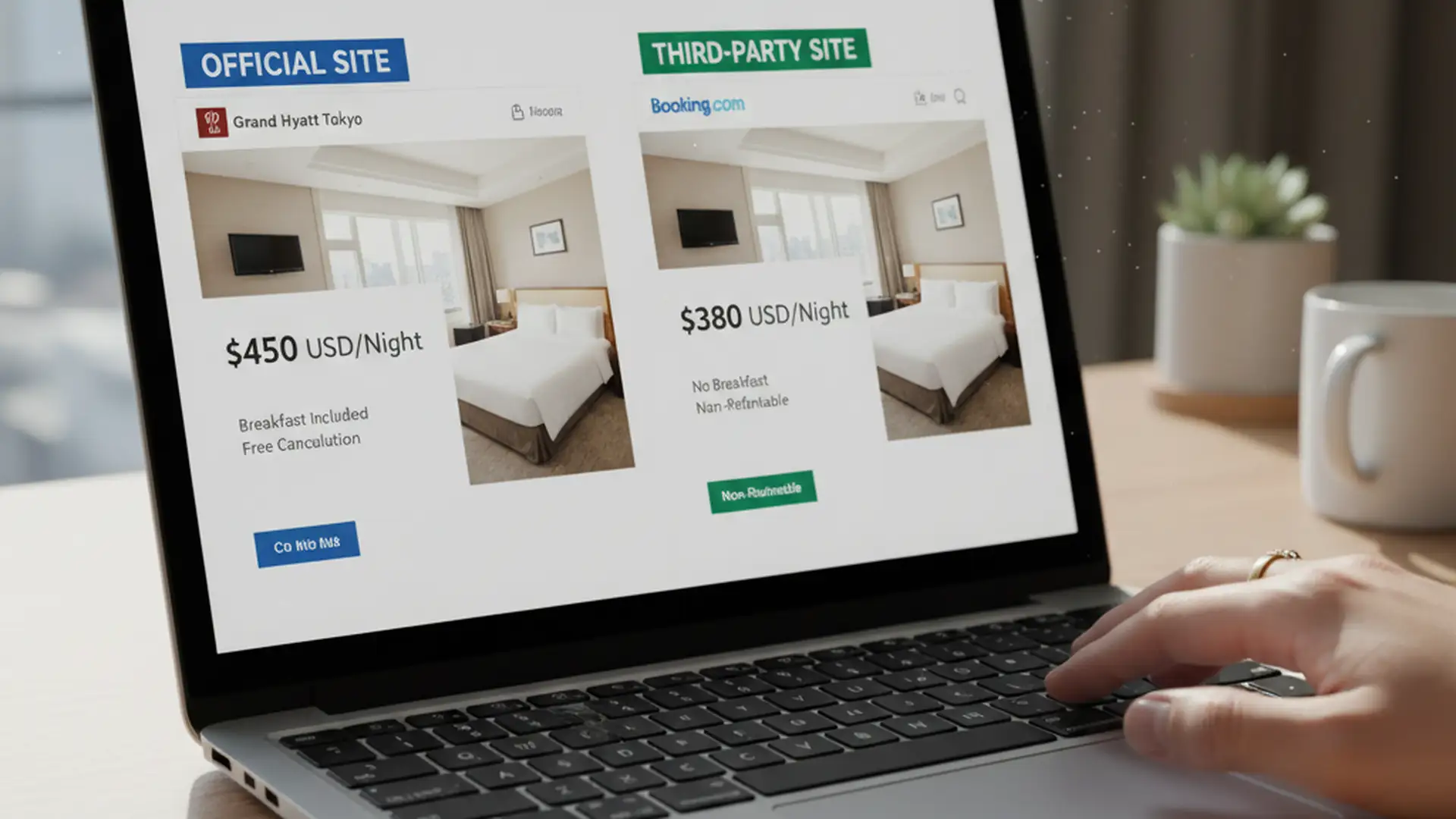
1. Volume rebates from hotels. The biggest sites negotiate bulk rates with hotel chains. Sometimes they pass that on as a small discount. Sometimes they don’t, and the “discount” is just a fake higher reference price.
2. Markup on bundled services. The “free breakfast included” hotel deal that costs $30 more than the room without breakfast — and breakfast at the hotel is $18.
3. Holding your money longer. The OTA charges you on booking. They pay the hotel after your stay. The float between those two events is real money for them, and you’re financing it.
The first one can occasionally be a real deal, especially in low season at independent hotels that don’t have great direct websites. The other two are how they keep the lights on.
Once you understand that, you stop seeing them as a discount engine. You start seeing them as a search engine — and that changes how you use them.
When I Still Use OTAs (the Narrow Window)
I haven’t quit them entirely. I use them in three specific cases:
1. To find a hotel in a city I don’t know. Booking.com’s filters and reviews are excellent for narrowing down options in a city like Lisbon or Bangkok where I have no preferred property. I treat it like Yelp for hotels — I find what I want, then I bounce out.
2. For independent boutique hotels with no real direct site. A small inn in rural Italy might not have its own functional booking system. The OTA is the practical way to book it. I’ll pay the markup because the alternative is a phone call in a language I don’t speak.
3. For one-off properties at the edge of my loyalty program. If I’m in a city for a single night and there’s no Marriott property nearby, I’ll book whatever’s closest through an OTA rather than detour 40 minutes to keep my points game alive.
That’s it. Every other case, I book direct.
My Direct Booking System for Hotels
The system is simple, and it’s saved me more headaches than any travel hack:
Step 1: Find the hotel using whatever tool — OTA, Google Maps, recommendation from a colleague.
Step 2: Open the hotel’s own website. Search the same dates.
Step 3: Compare. The hotel’s site usually matches or beats the OTA price by a few dollars. If the rate is identical, the direct booking still wins because of what’s about to come.
Step 4: Book direct, with the hotel’s loyalty program — even if I have basic status.
The reasons this works:
- The hotel knows you booked with them. If anything goes wrong, they fix it. They don’t punt to an OTA call center.
- Most chains have a “best price guarantee” — if you find the same room cheaper on a third-party site within 24 hours of booking direct, they’ll match it and often credit you extra points.
- You earn loyalty points and night credits. OTA bookings rarely earn either.
- You’re more likely to get an upgrade, late checkout, or a small extra at check-in. The hotel has more incentive to take care of a direct guest than a discount-site guest who isn’t coming back.
This is also why I picked one airline and one hotel chain after years of trying to chase the best deal everywhere. The math of consolidation works in your favor when you’re not splitting your spend across five different programs.
Airline Direct: Yes, Always
Same logic, more important. Airlines have even less patience for third-party bookings.
If a flight gets canceled and you booked through Expedia, the airline desk will help you, but slowly, because you’re not their customer in the system. They have to coordinate with the OTA, the OTA has to coordinate back, and the whole thing takes longer.
If you booked direct, the agent at the gate or on the phone has full authority. They rebook you, they refund you, they move you to another flight on a partner airline if needed.
I learned this in Frankfurt during a cancellation. Three of us at the desk: a guy with an Expedia booking, me with a direct airline booking, and a third traveler with a partner airline booking. I was rebooked in 8 minutes. The Expedia guy was still arguing 40 minutes later.
The price difference, when there even is one, is usually $5 to $20. Not worth the gamble.
The Hotel Loyalty Math (Without Being Annoying About It)
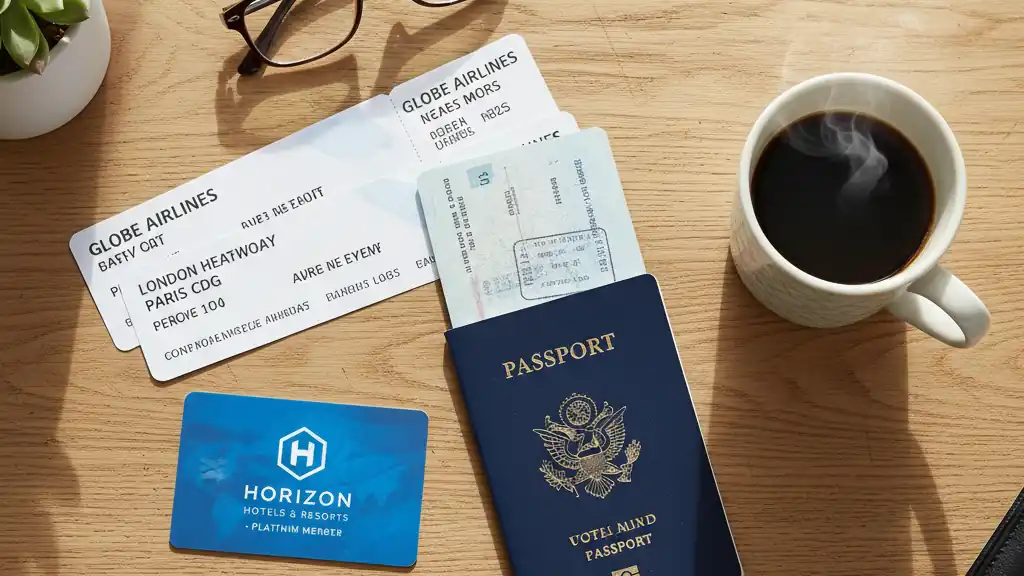
Here’s the thing nobody tells you about hotel loyalty programs: they don’t really pay off until your second year.
Year one: you book your trips, you earn points slowly, you stay at the hotels, you don’t get many perks.
Year two: you’ve reached basic status, you start getting upgrades occasionally, late checkout becomes the default, the front desk knows your name on the second visit.
Year three: the upgrades become routine, the points pile up, and a free family weekend somewhere starts to look realistic.
If you switch chains every year because one of them had a 10% better deal, you never get past year one. You just keep restarting at zero.
This is the simple argument for picking a chain and sticking with it, even when another chain looks slightly cheaper for a specific trip. The compounding doesn’t kick in until you commit. And once it does, the value is real — both in points and in how the hotel treats you.
When I Use a Travel Agent (Yes, Still)
This part surprises people, but I still use a travel agent for two specific kinds of trips: complex international bookings, and any trip where my wife is coming.
The agent costs me about $50-75 per booking. She doesn’t beat the price I could find online. What she does is take the work out of my hands. For a five-city European trip with three flights and four hotels, the time she saves me is worth ten times what I pay her. She also catches issues — visa requirements, layover-too-short risks, hotel locations that look fine on the map but are actually in the wrong neighborhood — before I’d notice them.
For solo two-day work trips, I don’t use her. The trip is simple, I have systems, the booking is 10 minutes of work. But for anything bigger, the agent is back in the loop.
Travel agents aren’t dead. They’re just rebranded as “concierges” or “travel advisors” now, and they make their money on the part of the trip where complexity is high enough that DIY isn’t fun anymore.
The 4 Questions I Ask Before Every Booking
This is the actual checklist that runs in my head before I hit confirm:
1. Who do I call if something goes wrong? If the answer isn’t “the airline directly” or “the hotel directly,” that’s a signal to stop and reroute the booking.
2. Will I earn loyalty credit on this booking? If no, the booking has to be either dramatically cheaper, or the only option in that location.
3. What’s the cancellation policy? Non-refundable rates save 10-15%. They’ve cost me real money on three trips that got moved or cancelled. Now I almost always pay the slightly higher refundable rate.
4. Have I booked this exact property/airline before, and was it fine? If yes, I trust the pattern. If no, I read 10 minutes of reviews before I commit. Not 3 hours. Ten minutes.
Four questions. Maybe 90 seconds of thinking. They’ve prevented every booking-site disaster I’ve had since Munich.
The Mistakes I Still Make
Honesty: I haven’t completely fixed myself. I still occasionally book a “deal” that turns out to be more trouble than it’s worth. Last year, a “great” car rental rate in Lisbon turned out to require a 45-minute shuttle from the airport to a parking lot in an industrial zone, where the car had a quarter tank of gas and a small but real dent the agent didn’t note before I drove off.
I still over-trust new OTAs that look slick. I still occasionally hit “book” before reading the small print. The system isn’t a guarantee. It just lowers the rate of disasters from “every other trip” to “once every couple of years.”
Combined with the apps I trust on every trip and a calm understanding of when the lounge math actually pencils — and that’s a different conversation entirely about lounge access calculus — direct booking is the one habit that protects the most.
The Peace of Mind Argument
If I had to pick one reason for booking direct, it wouldn’t be the price. It wouldn’t be the points. It wouldn’t even be the upgrades.
It would be the peace of mind on the night the trip goes sideways.
Because trips do go sideways. Not often, but enough that the system has to be built for the bad night, not the good one. A typical week in business travel is uneventful — flights leave, hotels check you in, taxis show up. The day everything is fine, the booking method doesn’t matter at all. You’d save a few bucks on Expedia and never know the difference.
The trip that matters is the one where your flight is canceled, the rebooking is messy, the hotel has overbooked, and you’re trying to get help in a country where you don’t speak the language. On that trip, direct beats third-party every single time, because the people answering the phone work for the same company that took your money. They have authority, they have records, and they actually want you to come back.
OTAs don’t care if you come back. There are millions of you. The hotel chain you’ve stayed at six times this year does care. So does the airline that’s seen your loyalty number on every booking for three years. That relationship — built quietly over many small bookings — is the thing that pays out when you need it.
When the flight is delayed, when the hotel says they don’t see your booking, when the rental car place has lost your reservation — the difference between a direct booking and an OTA booking is whether you’re in a 5-minute conversation or a 90-minute multi-party negotiation. After a 12-hour flight, that difference is enormous.
The $40 isn’t worth it. It was never worth it. I just had to learn that the hard way once, in a Munich hotel lobby at 11 PM, on the phone with a customer service line that wasn’t really helping anyone.
Now I just book direct. The trips are calmer. The deals are usually equivalent. And the disasters are rare enough that I’ve stopped budgeting for them.

Title: The lounge verdict, honest
Direct booking saves the trip. The lounge question is what to do with the hours between. Here’s the math.
Inside:
- When lounge access actually earns its cost
- When it’s a polite trap
- The underrated pay-per-use alternative
Key takeaways
- Use the OTA as a search tool, not a checkout. Treat Booking.com, Expedia, Hotels.com and Agoda like “Yelp for hotels,” then book on the hotel’s own site. It usually matches or beats the OTA price by a few dollars.
- Book flights direct with the airline, every time. The price gap is usually $5 to $20, and when a flight cancels the airline agent has the authority to rebook you fast. I was rebooked in 8 minutes in Frankfurt while the Expedia guy was still arguing 40 minutes later.
- The “savings” can cost you the trip. My $40 discount in Munich turned into a second flight, a second hotel, and a few hundred dollars of my own time when the hotel had no record of the booking.
- Pay the refundable rate. OTA non-refundable deals save 10-15%, but I now almost always pay the slightly higher refundable price.
- Pick one hotel chain and stick with it. Loyalty compounds: slow points in year one, basic status in year two, routine upgrades by year three. Switching every year resets you to zero.
- A travel agent still earns the $50-75. For complex international trips, they catch visa requirements, layovers that are too short, and hotels in the wrong neighborhood.
FAQ
Is it cheaper to book a hotel direct or through a travel site?
In my experience the hotel’s own site usually matches or beats the OTA price by a few dollars. The cheap site might shave 5%, but you lose loyalty points, upgrades, and the one thing that matters when your reservation vanishes: a hotel that actually knows you booked with them.
Should I book flights through Expedia or directly with the airline?
Direct with the airline. The price difference is usually only $5 to $20, and it buys you an agent with the authority to rebook you when a flight cancels. I watched it play out at a Frankfurt desk: direct booking, rebooked in 8 minutes; Expedia booking, still negotiating after 40.
What should I check before I book a business trip?
Four questions: Who do I call if something goes wrong? Will I earn loyalty credit? What’s the cancellation policy? And have I booked this exact property or airline before and was it fine? If yes, I trust the pattern. If no, I read 10 minutes of reviews before I commit. Ten minutes, not three hours.