

Short answer: Start 24 hours out, not three hours out in a panic. Check documents first at T-24h, pack the bag once at T-20h and leave it alone, charge everything the night before, brief the family, lay out clothes, then do a final pocket-tap and house sweep before you go. Once the door shuts, you’re done worrying.
I forgot my passport at home once. The drive back from the airport was 47 minutes of silence and one quiet sentence from my wife: “You need a checklist.” She was right. Here it is.
Why 24 Hours Is the Right Window
Before I had a checklist, my pre-trip routine was about three hours long, mostly between dinner and bed, and powered by mild panic. I’d stuff a bag, half-charge my laptop, kiss the kids goodnight while still trying to decide whether to bring two ties or one, and end up awake at 1 AM mentally listing everything I might be forgetting.
Then came the passport incident.
I’d been in such a hurry that morning that I’d grabbed an old passport-shaped wallet I sometimes mistake for the real one, and didn’t realize until I was in the security line at the airport. By the time I got home, found the actual passport (in the kitchen drawer, where it had been since the last trip — my own fault), and got back to the airport, I had missed the flight by 18 minutes.
The 24-hour checklist below is what I built after that. Not 48 hours. Not 12. Twenty-four. The window’s important: long enough to fix anything that goes wrong, short enough that nothing on the list goes stale before you actually leave.
Here it is, by hour. I run it from the night before a morning flight, or the morning of an evening flight. Same beats either way.
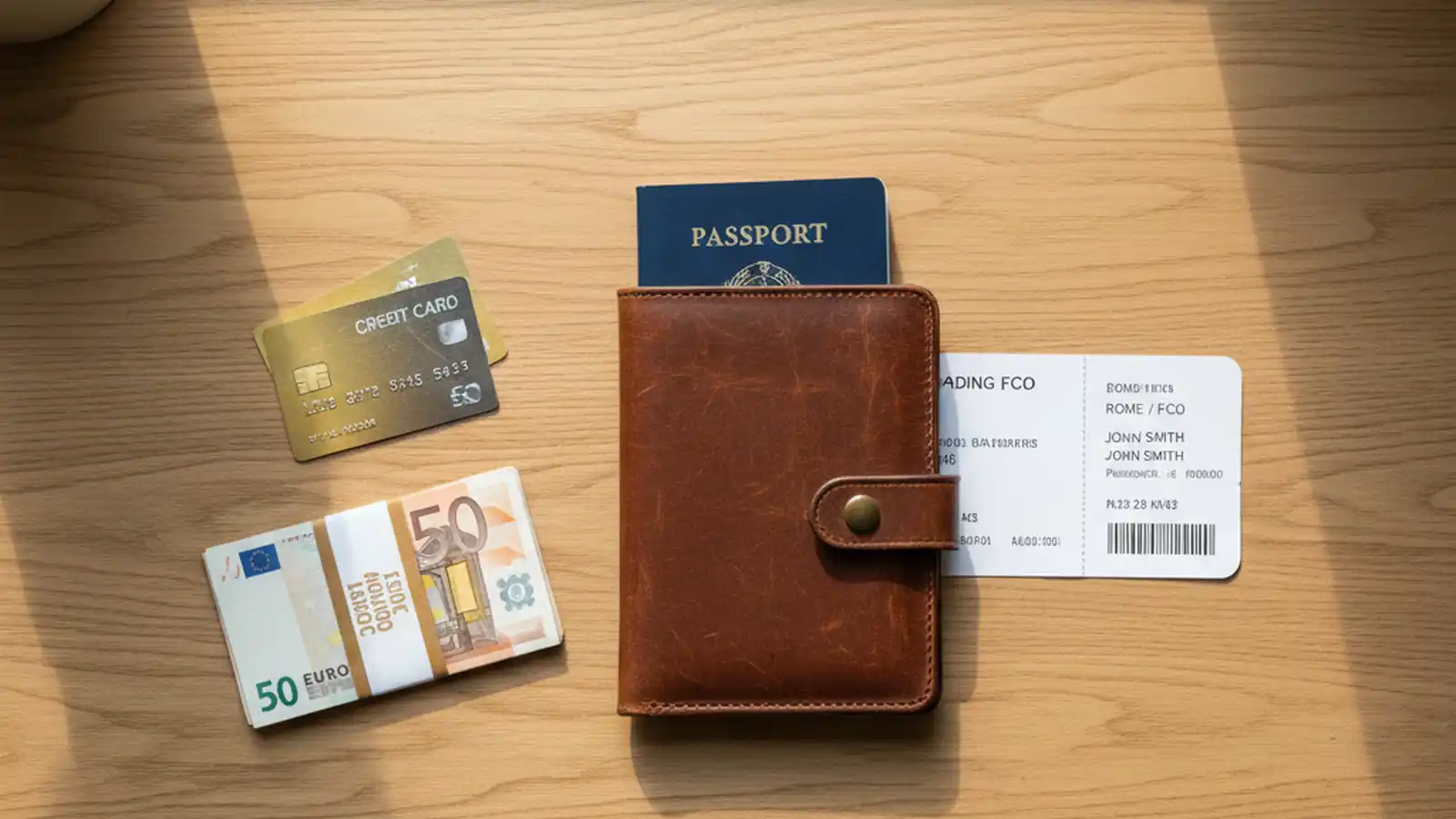
T-24h: Documents (Run Before Anything Else)
This is the only step where panic is allowed. If something is missing, you have most of a day to fix it. If you discover it at T-2h, you don’t.
What I check, every time:
- Passport in hand. Not “I think I know where it is.” Physically held.
- Passport expiry: at least 6 months past the planned return date. (I learned this the hard way trying to enter Brazil with 4 months left.)
- Visa: confirmed and either in the passport or printed in my folder, depending on the country. ESTA, ETA, or e-Visa screenshot saved offline on my phone.
- Driver’s license, in case the country I’m flying to lets me drive on it.
- Proof of vaccination if relevant — yellow fever certificates, COVID requirements when they re-emerge, etc.
- Boarding pass downloaded into my airline app. Printed if I’m flying through an airport that has been weird about phone-only passes (looking at you, certain regional airports in Latin America).
The rule: if anything on this list isn’t right at T-24h, fix it before going further. Don’t pack until documents are confirmed.
T-20h: Bags (Pack Once, Don’t Repack)
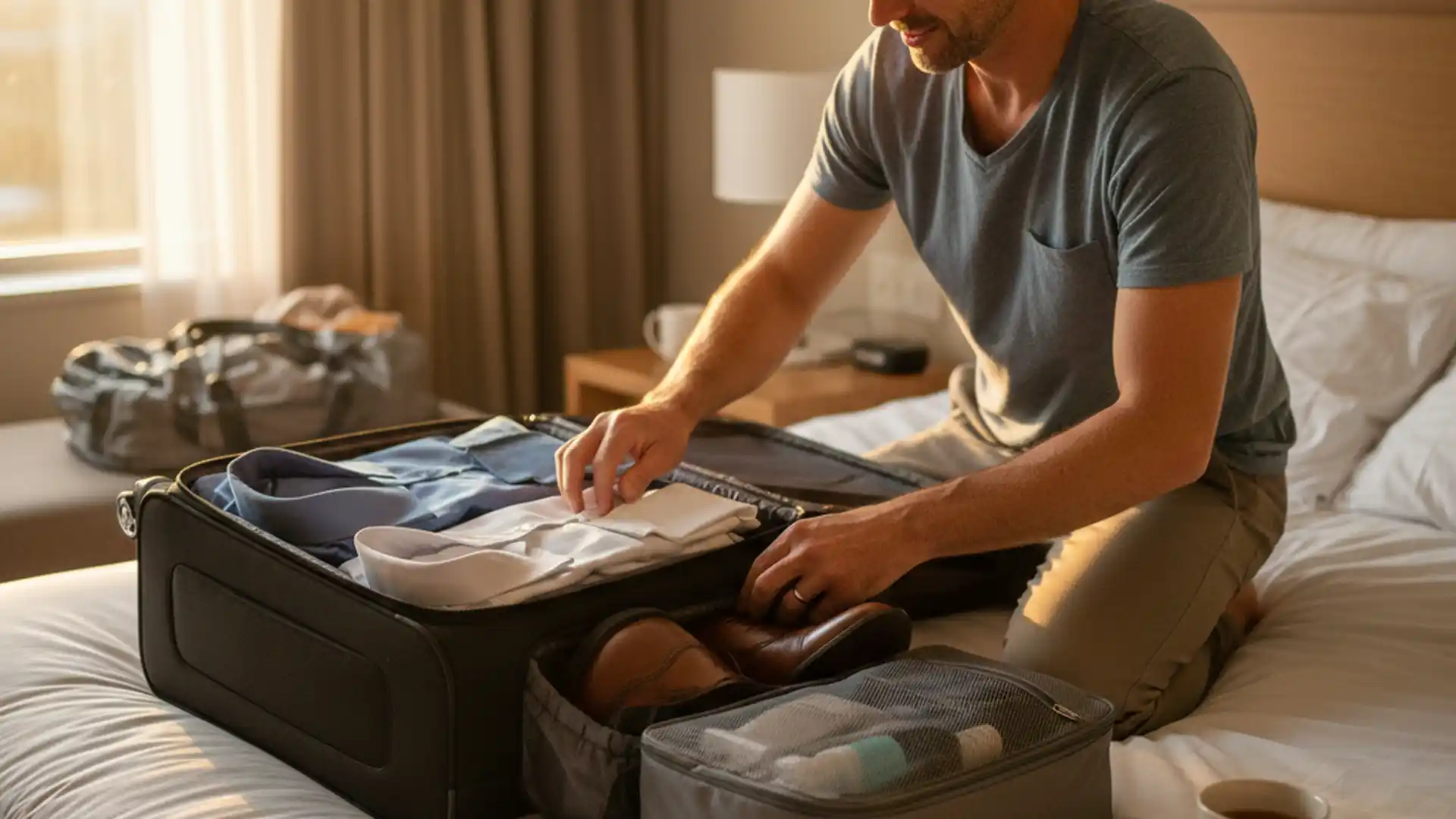
I do my packing in one go, around T-20h, then I leave the bag alone.
The reason: every time I open the bag a second time, I take something out and forget to put it back. The third time I open it, I’m reorganizing because I’m anxious. By the fourth time, I’ve moved my charger from the laptop sleeve into a side pocket and can’t find it the next morning.
So I pack with intent. Carry-on only on every business trip under 7 days. The contents:
- One suit (worn on the flight, or in a garment fold) plus one extra dress shirt
- Two casual shirts, one set of casual pants, one workout shirt + shorts
- Underwear and socks for the trip plus one extra of each
- One pair of dress shoes (worn), one pair of sneakers
- Toiletries packing cube — refilled and ready to go from the previous trip
- A second small packing cube with: chargers, adapters, a backup phone cable, USB-C extension
Toiletries deserves a note: I keep a permanently packed toiletries cube. It never leaves the suitcase. After every trip, I refill what’s low and zip it back up. This single habit has saved me more 4 AM bathroom raids than anything else on this list.
T-12h: Tech (Charge Everything to Full)
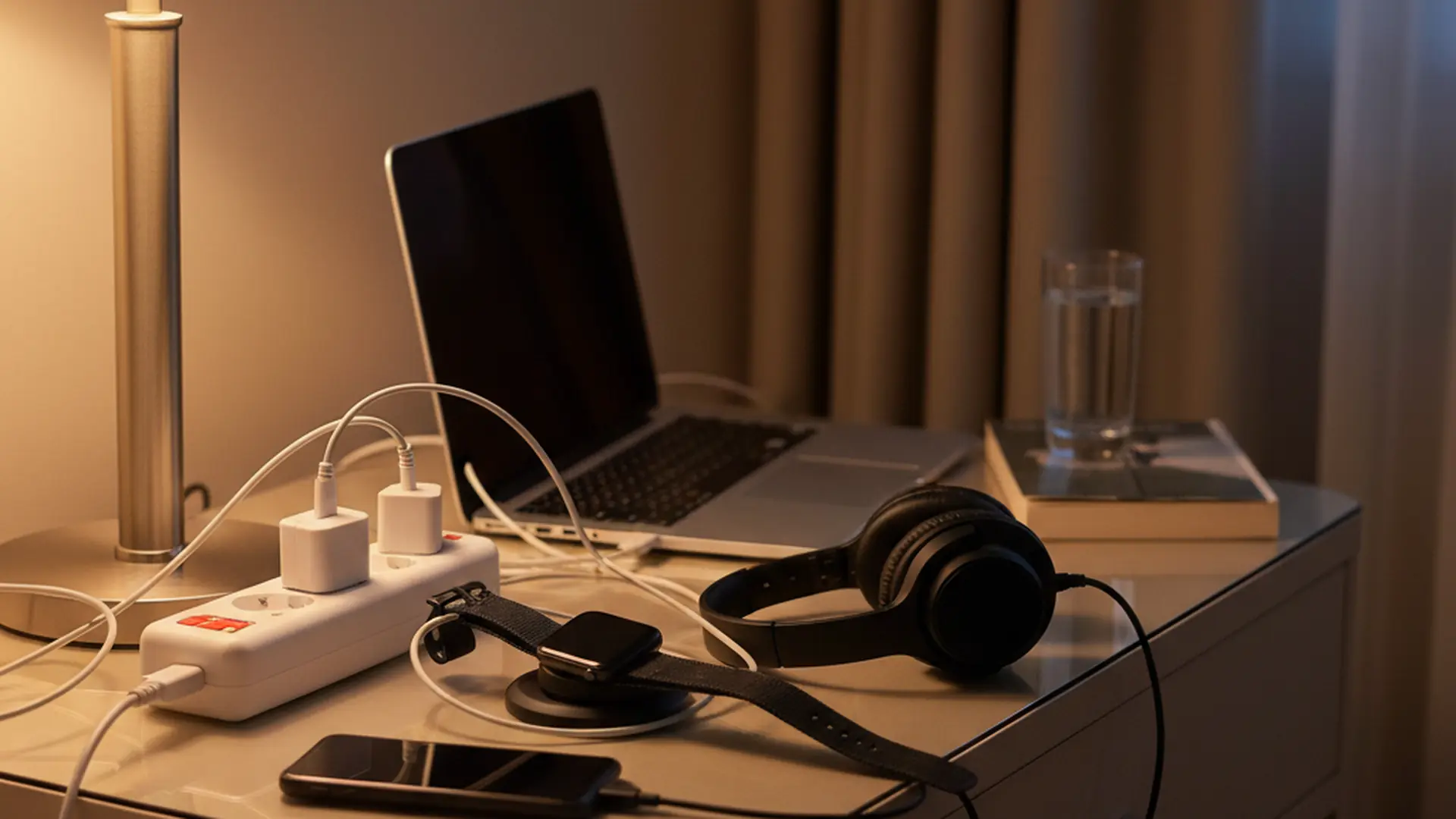
The night before, all my electronics get plugged in to charge to 100%. Phone, laptop, headphones, smartwatch, the small power bank I carry. All of them.
I also do these the night before, not the morning of:
- Download the offline map of the destination city in Google Maps (yes, I mention this in the apps I refuse to travel without)
- Activate the eSIM if I bought one for the destination
- Download three movies and one podcast onto my phone for the flight
- Sync my email and calendar one more time so they’re current offline
- Confirm my VPN works, since some destinations block specific tools by default
The reason this is at T-12h, not T-2h: morning Wi-Fi in my house is occasionally slow, and there’s no reason to gamble on it. The night before, when the kids are asleep and the apps have time, is when this works.
T-8h: The Family Brief
This is the step I used to skip and almost never mention in checklists, but it’s the one that has the biggest effect on whether the trip is calm or stressful.
For years, my version of “telling my wife about the trip” was a quick “I leave Tuesday, back Friday.” Then we’d both spend the week semi-confused: I’d assume she remembered the school pickup that I would normally do on Thursdays, and she’d assume I would handle the cable guy on Wednesday because I’d booked the appointment. Neither of those things would happen, both of us would feel mildly annoyed at the other, and the trip would take 30% more emotional toll than it needed to.
Before bed, my wife and I do a 5-minute review:
- What’s the trip — country, dates, hotel, key meetings
- What’s happening at home — kids’ schedules, school events, anyone we’re hosting, deliveries
- How and when we’ll talk during the trip (I cover the practicalities of this in calling home from a different time zone)
- What I need her to do that she might not know about — sign the school form, water the basil plant, etc.
Five minutes. Not a meeting. Just a brief. The point isn’t to coordinate everything; it’s to confirm we’re both holding the same map of the next week.
T-4h: Sleep, Hydration, Last Quiet Things
If it’s a morning flight, I’m in bed. If it’s an evening flight, I’m winding down — no work calls, no last-minute “let me just check this email.” Whatever didn’t get done by now isn’t going to get done well.
What I do in this window:
- Set my phone alarm and a backup alarm 5 minutes later. Once is not enough.
- Lay tomorrow’s outfit on the chair, including socks. Future-me at 4:30 AM is dumb and grateful.
- Drink a tall glass of water and set another bottle by the bed for the morning.
- Stop reading the news. Whatever’s happening in the world will still be there when I land.
This is also when I write a quick note in my phone with the hotel address, the meeting venue address, and the local emergency number. Not because I’ll forget where my hotel is — but because at 11 PM in a foreign city after a 14-hour flight, my brain might be too foggy to find it in three different apps.
I learned that one in São Paulo. I’d booked the hotel weeks earlier, the address was in the Marriott app, and when I got into the taxi at the airport at 11 PM, the app froze and refused to load. The driver was waiting. My phone was at 12% battery. I ended up describing the neighborhood to him in broken Portuguese until we figured it out. Now the address goes into a plain note, in plain text, before I leave the house. The note works whether the app does or not.
T-2h: The Final Walk-Through
Two hours before I leave the house — alarm done, breakfast done, bag waiting at the door — I do a 60-second mental sweep:
The “tap your pockets” routine. Phone, wallet, passport. Tap each. Don’t trust the bag; trust the tap.
The “thermostat, plants, lights” sweep. I’m gone for a week. The house should be set up to be quiet. Thermostat down a couple of degrees, last bit of laundry switched off, dishwasher running, coffee machine off.
The “what would 11 PM tonight need from me” check. Did I leave anything plugged in that I shouldn’t have? Did I leave a candle on after writing my goodbye notes? (No, I’m not that dramatic. But you get the idea.)
This whole walk-through takes 60 to 90 seconds. It catches the things that look fine but aren’t.
The Carry-On Six (What Stays in the Bag, Trip After Trip)
These six items live in my carry-on permanently. I don’t take them out between trips. I just refill what runs low.
- Toiletries cube — already mentioned, I refill it after every trip
- Backup charger and cable — separate from my main one, in case the main one fails or gets left in a hotel room
- Small first-aid kit — Advil, Imodium, band-aids, antihistamines. I’ve needed each of these on different trips. Together they weigh nothing.
- A folded reusable shopping bag — for laundry going home, for gifts I didn’t expect to be given, for the dirty shoes from a hike I didn’t plan
- An empty water bottle — fill after security, refill at the lounge or hotel
- One spare pen — for landing cards, customs forms, the surprising number of paper forms still required in some countries
That’s it. Six items. They’ve all earned their place by being needed at least three times in unpredictable moments.
The reusable bag in particular has saved me more than once. Two trips ago I bought my daughter a heavy ceramic mug from a market in Lisbon as a souvenir, and the only way I could get it home without it shattering was wrapping it in a sweater and bagging it separately. The empty water bottle has rescued me on long-haul flights when I didn’t want to ring the call button every two hours. The pen has saved me at customs in Mexico City, in Bangkok, and at a car rental counter in Denver where the agent kept handing me forms and gesturing for a pen I didn’t have.
Boring items, all six. But the boring items are the ones that solve the boring problems — and a boring trip is the goal.
What to Skip — Don’t Pack These
The other side of the checklist. The things I used to bring and have stopped bringing:
- “Just in case” books. I never finished one. The phone has a Kindle app.
- A second laptop charger. Bought one. Forgot it three trips in a row in the hotel outlet. Now I just take exceptional care of the one charger I bring.
- Workout gear “in case I have time.” If I have time, I’ll find shorts. If I don’t, the gear was a guilt-pack.
- A spare suit. One suit, worn, plus a backup shirt. Two suits is dad-overpacking.
- Cash in five currencies “for emergencies.” ATMs work. My card works. Cash hoards are for movie spies.
After the Door Closes
Once the front door shuts behind me, the checklist is done. I don’t run it again at the airport. I don’t reopen the bag at the gate. If I forgot something, I’ll figure it out in the city, where there are stores.
This is the most important rule. The checklist exists so I don’t have to think about packing anymore. If I keep relitigating it after the door closes, the whole point is gone — the calm I’m trying to bring to the trip turns back into the low-grade anxiety the checklist was supposed to fix.
The whole point of having a system isn’t perfection. It’s permission to stop worrying.
The first dozen times I ran this checklist, I still felt nervous. By trip 20 it was muscle memory. Now I do it in about 25 minutes of actual work, spread across an evening, and I leave the house calm. The kids barely notice the morning anymore — there’s no slamming drawers, no cursing in the bathroom. I’m just a guy carrying a carry-on out the door, kissing the family, and going.
That’s what the checklist gets you. Not a perfect trip. Just an exit you don’t have to recover from.
If you want the harder lesson behind why I built this system in the first place, it’s all in the time I forgot my passport at home — the trip that taught me a checklist isn’t optional once your work life starts to depend on it.

Title: The 5 apps that earned their spot
The checklist gets you out the door. These five apps keep the rest of the trip from falling apart.
Inside:
- What I open before takeoff and after landing
- The 3 apps I deleted after disasters abroad
- Why my hotel app is the most-used tool I have
Key takeaways
- Documents lead, T-24h. Hold the passport in your hand, confirm at least 6 months left past your return, save the visa or ESTA screenshot offline. Fix anything wrong here before doing anything else.
- Pack once at T-20h, then stop touching the bag. Reopening is how things get moved and forgotten. The toiletries cube lives in the suitcase permanently and just gets refilled.
- Charge everything to 100% the night before. Phone, laptop, headphones, watch, power bank. Download offline maps, movies, and sync email while the Wi-Fi still cooperates.
- The 5-minute family brief is the step that decides if the trip is calm. Dates, hotel, kids’ schedules, who handles what at home.
- Carry the same six permanent items every time: toiletries cube, backup charger and cable, small first-aid kit, folded reusable bag, empty water bottle, one spare pen.
- When the front door closes, the checklist is done. No re-checking at the gate. If you forgot something, the city has stores. A system buys you permission to stop worrying.
FAQ
Why 24 hours before the flight and not just the morning of?
Twenty-four hours is long enough to fix anything that goes wrong, but short enough that nothing on the list goes stale before you leave. The old way was a three-hour scramble powered by mild panic. This spreads the work across an evening, about 25 minutes total, so you walk out calm.
How much should I pack for a short business trip?
For trips under 7 days, everything fits in a carry-on: one suit plus an extra dress shirt, two casual shirts, casual pants, workout shirt and shorts, underwear and socks for the trip plus one, dress shoes worn, sneakers, a refilled toiletries cube, and a small cube for chargers and adapters. Skip the spare suit, second charger, and “just in case” gear.
What’s the one step people skip that matters most?
The family brief at T-8h. Five minutes before bed: trip dates and hotel, what’s happening at home, kids’ schedules, who covers what. Skip it and you get the classic mess where you assumed she had Thursday pickup and she assumed you had the Wednesday cable guy.