

I had been doing international business travel for six years when I left the house without my passport. The 47 minutes back home, in silence, taught me more about preparing for trips than the previous six years had.
The Morning I’d Done This Hundreds of Times
It was a Wednesday in 2019. I had a 9:55 AM flight to São Paulo from Miami, with a connection through Atlanta. I’d done this exact route — same airline, similar departure time — at least eight times that year alone.
The morning was the standard morning. Alarm at 4:45 AM. Quiet kitchen. Shower. Coffee. A quick check that my carry-on was at the door. A goodbye to my still-sleeping wife. Out the door at 5:15.
The drive to the airport is 35 minutes from our house. I parked in the long-term lot at 5:55. Took the shuttle to the terminal. Walked into the airline check-in area at 6:25, comfortable on time, mildly proud of myself for being early.
I walked up to the kiosk and started the check-in process. It asked me to scan my passport. I reached for the side pocket of my carry-on where my passport always lived.
It wasn’t there.
The 90 Seconds Where Reality Caught Up
I checked the other side pocket. Empty. I checked the front pocket. Empty. I checked the laptop sleeve. Empty. I unzipped the main compartment and started moving things around — clothes, charger, dopp kit, the magazine I’d grabbed at the last minute.
No passport.
I closed the bag. I stood there. I watched the kiosk timeout and reset. The passenger behind me politely asked if I was done. I stepped aside.
The realization came in stages. First: maybe I left it in the car. Second: no, I never put it in the car, it goes in the bag. Third: if it’s not in the bag, it’s at home. Fourth: home is 35 minutes away, and the flight is in 3.5 hours.
I had time. Just barely. If I left right now, drove home aggressively, found the passport on the first try, and made it back, I might still make the flight.
I called my wife. She picked up on the third ring, sleepy. I told her what happened. She paused. Then she said, in the calm voice she uses when something is wrong, “I’ll go look. Drive home. Keep the phone on.”
The Drive Home
The drive home was 39 minutes — slightly longer than usual because the morning rush was building.
I drove faster than I should have. Not dangerously, but with the kind of focused intensity that comes from knowing every minute matters and being unable to make any minute go faster.
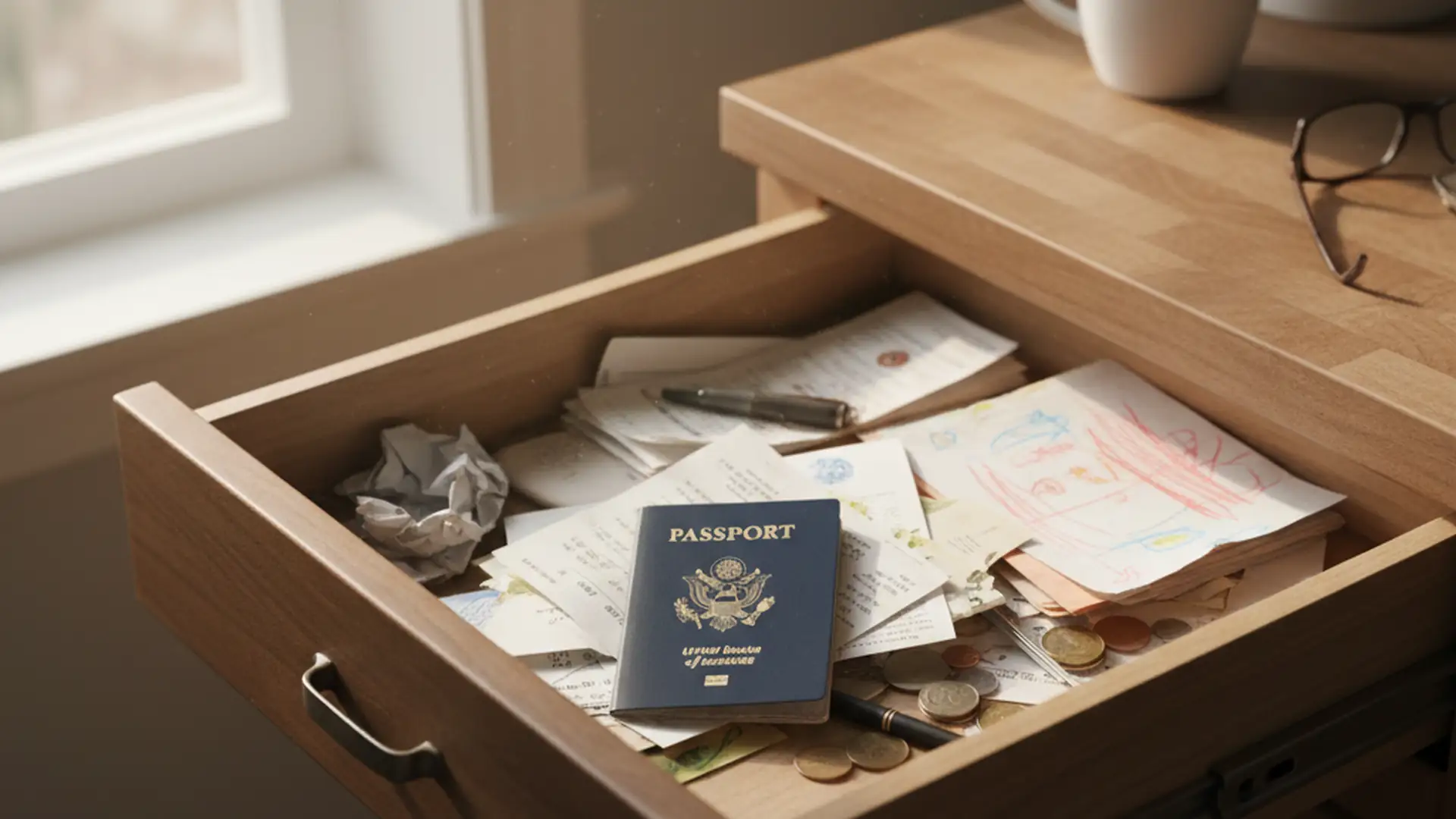
My wife found the passport in the kitchen drawer. She’d taken it out two weeks earlier when our older daughter had asked to see it for a school project. The passport had then sat in the drawer, behind some loose papers, since then. I’d assumed it was in the carry-on because it always was.
“Where exactly?” I asked.
“In the drawer next to the toaster,” she said. “Wedged behind the school stuff.”
I pulled into the driveway at 7:42 AM. She was at the door, passport in hand. She handed it to me without a word, kissed me on the cheek, and said: “You need a checklist.”
I drove back to the airport. The drive back was 42 minutes — traffic had thickened. I parked at 8:24. Got to the terminal at 8:36. Reached the check-in counter at 8:42. The agent looked at me, looked at her screen, and said the words I’d been dreading:
“I’m sorry, sir. Check-in for that flight closed two minutes ago.”
The Conversation I Had Next
I won’t pretend I handled this gracefully.
I asked the agent to call her supervisor. I explained the situation. I pointed out that the gate was a 4-minute walk and the flight wasn’t departing for another 73 minutes. I tried, gently at first and then less gently, to get her to make an exception.
She didn’t. She wasn’t being unkind. She was being correct. Airline check-in policies have hard cutoffs. Two minutes after meant two minutes after. The flight would push back from the gate without me.
The supervisor came over. The supervisor was firmer than the agent. The flight was closed. They could rebook me on a later flight, but it would require a fee and might mean missing my connection in Atlanta.
I rebooked. The next flight was four hours later. I’d miss my Atlanta connection. The next available São Paulo flight was the following morning, which meant I’d arrive a day late for a customer meeting that had been planned for six weeks. I’d have to email the customer explaining what happened, push back the meeting, and disrupt their schedule for everyone involved.
The fees and rebooking ate about $700. The customer rescheduled with grace. The trip itself happened, just a day late. The world went on.
What didn’t go on, in the same way, was my approach to packing.
The Drive Back to the Airport
While waiting at the airport for the rebooked flight, I had four hours to think. I sat in the food court, ate a bad bagel, and started writing in my phone.
What I wrote, more or less, was the first draft of what eventually became 24-hour pre-flight checklist. The mistake I’d made wasn’t bad luck. It was a system failure. I’d been trusting a habit — “the passport is in the bag” — without a verification step. The habit had worked for years. Until it didn’t.
Habits without verification are fragile. The system I needed wasn’t more discipline at the moment of leaving the house. It was a habit that included a verification step every time. Tap your pockets. Check the document. Don’t trust the bag.
I started writing rules. Twenty-four hours before the flight: confirm passport. Twenty hours before: pack the bag. Twelve hours before: charge everything. Eight hours before: brief the family. Four hours before: laid-out clothes and alarms. Two hours before: tap pockets, walk through the house, leave.
By the time my rebooked flight boarded, I had a draft of a checklist that I’ve used, in evolved form, ever since.
The Week That Followed
I made it to São Paulo a day late. The customer meeting happened. I came home a week later.
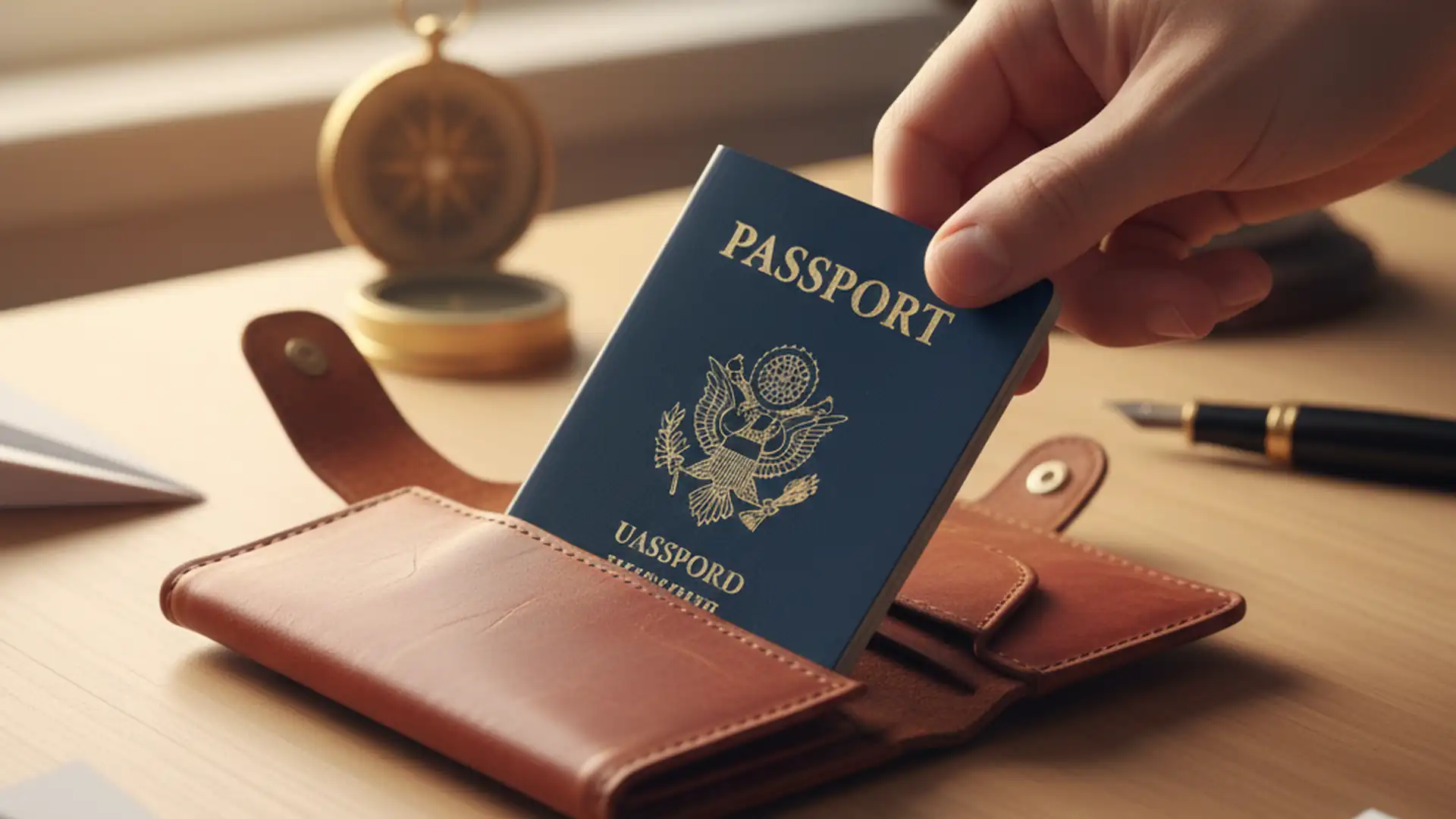
The first thing I did when I got home was make a small change to where the passport lived. It now lives in a specific drawer, in a specific spot, with a specific note. The note says: “Returns to carry-on the night before any trip.”
I also told my wife that any time the passport gets pulled out of that drawer for any reason, it has to come back to the same spot. Not “near” the spot. The spot. The school project pulled it out and the school project didn’t put it back. We agreed: the passport returns to its spot the same day it leaves.
That’s been the rule since 2019. The passport hasn’t been forgotten again.
What I Learned That Wasn’t Just About Passports
The bigger lesson wasn’t about the passport. It was about how I’d been treating preparation in general.
I’d been a competent business traveler for years. Eight or nine trips a year, all over the world. I knew the airports, the airlines, the customs queues. I felt experienced.
What that experience had given me was overconfidence. I’d been packing in the last three hours before a trip for years. I’d been trusting muscle memory for everything. I hadn’t built any kind of formal system because I’d never needed one.
The forgotten passport was the moment when “never needed one” stopped being true. I needed a system because muscle memory had failed at exactly the wrong moment. The cost of that one failure was higher than all the time I would have spent building a system over the previous six years combined.
This is the lesson that experienced travelers most often miss: the failure rate of muscle memory is low, but the cost of each failure can be high. A 99% reliable system is a 1% chance of disaster every trip, every year, forever. After enough trips, the disaster happens. The checklist takes that 1% to something much smaller.
The Checklist I Built
I won’t repeat the full content here — it’s in 24-hour pre-flight checklist. The short version:
- T-24 hours: documents (the most important step)
- T-20 hours: bags
- T-12 hours: tech and charging
- T-8 hours: family brief
- T-4 hours: sleep and quiet
- T-2 hours: final walk-through
The forgotten-passport scenario is specifically caught at T-24 hours. The first thing I do, the day before any trip, is physically hold my passport in my hand. Not “see it.” Not “know where it is.” Hold it. The act of holding it is the verification step.
The checklist isn’t long. It takes maybe 30 minutes of total work, spread across an evening. It catches the forgotten-passport scenario, the wrong-charger scenario, the empty-toiletries-bag scenario, and a dozen other small failure modes.
The Stories That Made Me Realize I Wasn’t Alone
After my passport story, I started asking colleagues if anything similar had happened to them. The stories came pouring out:
- A colleague who’d left her laptop at home and didn’t realize until she opened her bag at the airport
- A colleague who’d packed the wrong charger and discovered it in his hotel room in Bangkok
- A colleague who’d forgotten his prescription medication and had to navigate a foreign pharmacy in a language he didn’t speak
- A colleague who’d left his suit jacket on the bed at home and showed up to the customer meeting in a hoodie
- A colleague who’d brought the wrong currency to a country he hadn’t been to in a decade
Every single one of these is preventable with a checklist. Every single one had happened to someone I respected, who would tell you they were a competent traveler, and who learned the same lesson I had — sometimes more expensively.
The pattern: business travelers who haven’t been bitten yet are more confident than they should be. The ones who’ve been bitten are more disciplined than the rest. The bite is what teaches.
The Smaller Habits That Came From the Big Mistake
A few specific small habits I started after the passport incident:
- The “tap your pockets” routine. Phone, wallet, passport. Tap each before leaving the house. Don’t trust the bag.
- The passport home zone. Same drawer, every time, returned the same day it’s removed.
- The dual phone alarm. Two alarms, 5 minutes apart. The night-before-an-early-flight version.
- The night-before bag pack. No “I’ll pack in the morning.” The morning is for leaving, not for packing.
- The carry-on six. Six items that always live in my carry-on. They never come out. I just refill them.
These habits have prevented at least a dozen smaller mistakes since 2019. The passport incident was the catalyst, but the habits address the broader category of “small things that accumulate into trip-ruining mistakes.”
What I Tell Less Experienced Travelers
When colleagues new to international business travel ask for advice, I tell them this story.
The story isn’t really about the passport. It’s about the gap between feeling experienced and being prepared. Those are different things, and the difference becomes visible only when something goes wrong.
A new traveler is often more careful than they need to be. They build checklists, they double-check, they over-prepare. That’s a healthy place to start.
An experienced traveler often becomes less careful than they should be. They trust muscle memory. They pack in 30 minutes. They assume the patterns of the last hundred trips will hold for the hundred-and-first.
Sometimes they will. Sometimes they won’t. The cost of being wrong, once, is enormous.
The checklist isn’t for the new traveler. The new traveler will be careful anyway. The checklist is for the experienced traveler whose confidence has outpaced their reliability. That was me in 2019. I built the checklist because I had to. I’m grateful for it now in a way I wasn’t capable of being grateful for then.
The Bigger Idea
The forgotten passport cost me about $700 and a customer meeting and a long quiet drive home. It also gave me a system that has prevented dozens of smaller versions of itself in the years since.
The trade was worth it. I wouldn’t choose to relive the morning. I also wouldn’t choose to give up the discipline that came out of it.
This is the pattern I now see in many of my biggest lessons: the painful event teaches something durable. The painless ride teaches nothing. The trips that go well don’t change me. The trips where something goes wrong are the ones I rewrite my approach around.
For me, those events have included this passport story, the lost-luggage adventure in Munich (its own piece), and a few smaller disasters along the way. Each of them eventually became a habit that protects me on the next hundred trips.
The passport now lives in its drawer. The drawer rule is intact. The checklist runs every trip. And the morning of a flight, I tap my pockets without thinking — phone, wallet, passport — because the thinking already happened the day before. That’s the real fix. The thinking moves earlier. The morning becomes execution.
If you’re an experienced traveler who hasn’t been bitten yet, please build the checklist anyway. The bite is coming. The only question is when, and how expensive it’ll be when it does. Combined with simple defaults from the apps I refuse to travel without, the checklist gives you a real chance to never have a story as embarrassing as mine.

Title: Lost luggage in Munich (a 72-hour comedy)
Forgetting a passport is fixable. Lost luggage on day one of a customer trip is a different kind of comedy. Here’s the full story.
Inside:
- Why my bag flew to Stuttgart without me
- Three days in the same shirt, with workarounds
- The customer dinner I attended in a borrowed jacket