
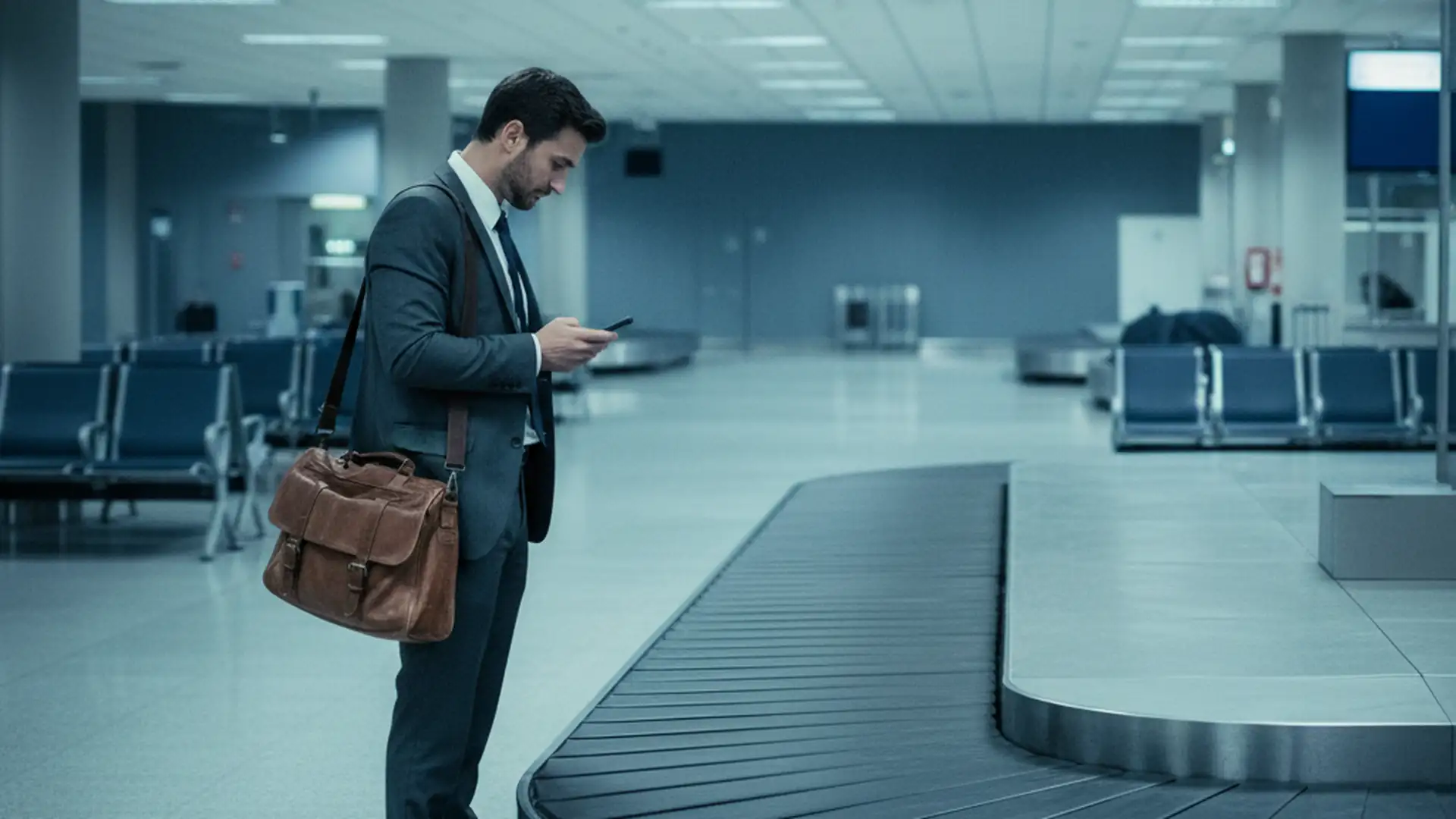
My checked bag went to Stuttgart. I went to Munich. Three days, four meetings, and one customer dinner unfolded in the same shirt, with a borrowed jacket, a hand-washed pair of socks, and a customer who never quite figured out why I looked the same in every photo. Here’s the full comedy.
Why I Was Even Checking a Bag
This trip was 2018, and at the time I was still in the bad habit of checking a bag for international trips. The trip was a week-long, multi-country swing — Munich, then Vienna, then Prague — and I’d convinced myself the carry-on couldn’t hold everything I needed.
I was wrong. It could have. I just didn’t want to do the work to make it fit.
So I checked a roller bag at Miami, took the long flight to Munich with my carry-on overhead, and arrived at MUC at about 8:30 AM on a Tuesday morning. I was tired but functional. I waited at the carousel.
And waited.
And waited.
The bags from my flight came out, slowly, one after another. I watched a Munich-bound family reunite with their suitcases. I watched two business travelers grab their roller bags and head out. I watched the carousel slow down and eventually go quiet.
My bag wasn’t there.
The Counter Conversation
I went to the airline’s lost luggage counter. There was a small queue. The woman ahead of me was distressed. The two men ahead of her were arguing. By the time I got to the counter, the agent had the practiced patience of someone who’d had a long morning.
I gave her my bag tag. She typed for a minute. She made a small “ah” sound.
“Your bag is in Stuttgart, sir.”
“Stuttgart.”
“Yes. It seems to have been put on the connecting flight that was originally meant to depart for Stuttgart. We will retrieve it and send it to your hotel.”
“When?”
“Tomorrow morning, most likely. Possibly the next day. We will message you.”
I paused. I had a customer meeting in 4 hours. Another at the end of the day. A customer dinner. I was wearing the clothes I’d flown in — a casual shirt, jeans, sneakers. The bag in Stuttgart had everything else: my suit, my dress shirts, my dress shoes, my toiletries, my phone charger, all my underwear except what I was wearing.
“Can I get a small reimbursement to buy a few essentials?”
“Yes, the airline will cover up to 200 euros.”
“Today?”
“Yes. Keep your receipts.”
I left with a small claim ticket, a Stuttgart confirmation number, and the realization that I now had four hours to make myself look like a presentable business traveler in a city I didn’t know, in a language I didn’t speak fluently, with 200 euros and the clothes I was wearing.
The Munich Shopping Spree
I took the S-Bahn to my hotel. Dropped my carry-on. Asked the front desk for the nearest department store. The receptionist, who would later become the unsung hero of this entire trip, suggested Galeria Kaufhof on Marienplatz — a 10-minute walk, large selection, would have everything I needed.
I walked. Found the store. Did the most efficient shopping of my life.
The 200-euro list:
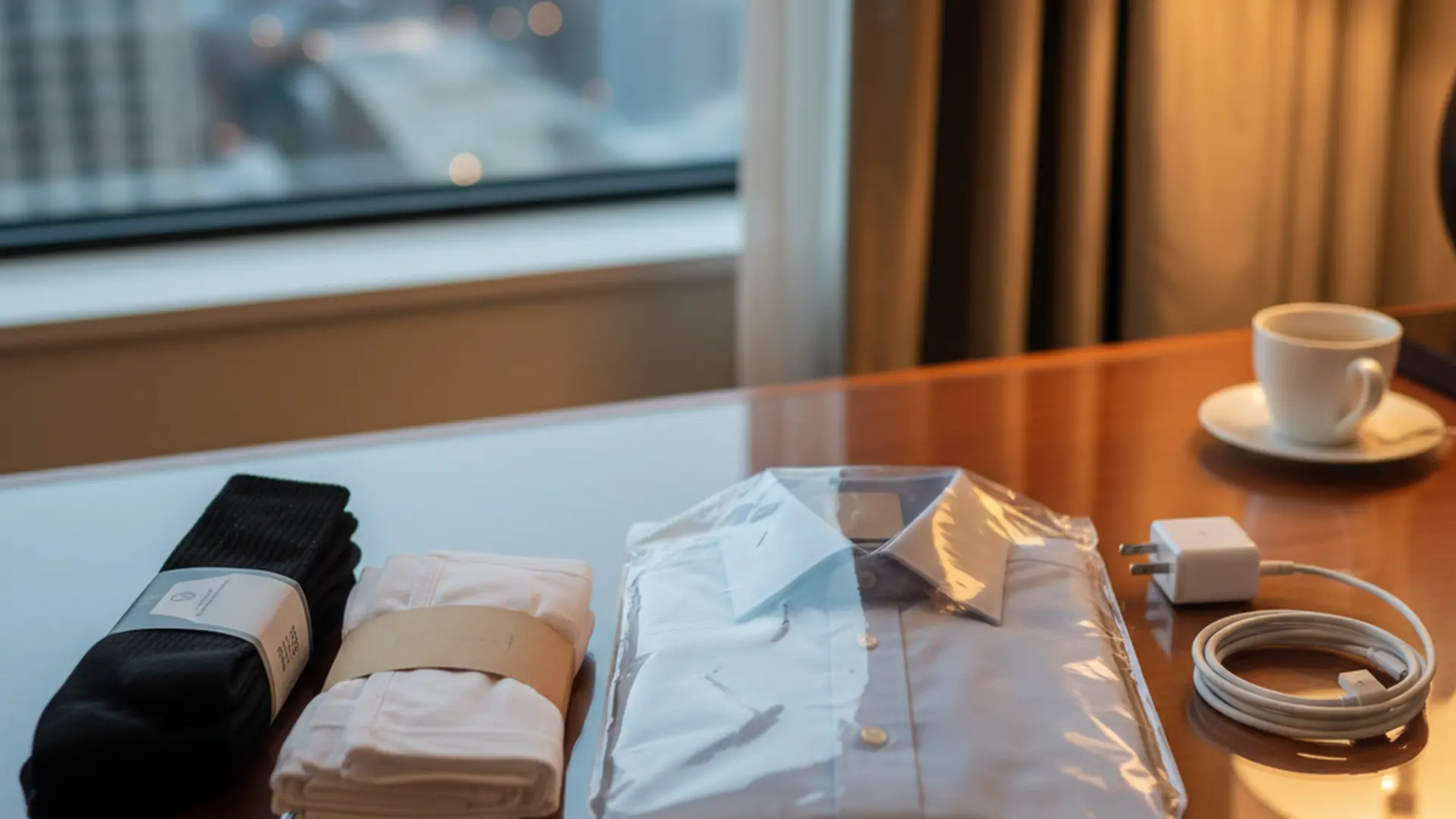
- One dress shirt (white, simple, 49 euros)
- Three pairs of underwear (a pack, 22 euros)
- Three pairs of socks (a pack, 14 euros)
- A travel toothbrush and toothpaste (8 euros)
- A small toiletry kit — deodorant, razor, basic stuff (35 euros)
- A simple tie (29 euros)
- A phone charging cable (15 euros)
Total: 172 euros. Within budget. The clerk packed it into a single shopping bag and wished me a “guten Tag” with the cheerful efficiency of a German retail worker watching a foreigner solve a problem in real time.
I went back to the hotel. Showered. Put on the new shirt and the new tie. Wore the same suit pants from my flight (jeans wouldn’t work for the meeting). Borrowed an iron from housekeeping to make the new shirt look less new. Combined the new tie with my casual blazer that had been in the carry-on. Walked to the meeting.
I made it. Five minutes early. The customer asked how my flight had been. I said, honestly, “interesting.” We had a good meeting.

The Customer Dinner Crisis
The first day’s meetings ended at 6 PM. The customer dinner was at 7:30. The dinner was at a moderately upscale Munich restaurant where I’d been told to wear a jacket.
I had my casual blazer from the carry-on. It would not pass as appropriate.
I called the front desk of the hotel. I asked, with the hesitance of someone making an unusual request, if there was any chance they could lend me a jacket. The receptionist — same one as before — said calmly, “let me see what we have.”
Twenty minutes later, she called my room. The hotel kept a small “lost and forgotten” closet of items left behind by guests, periodically donated to charity. They had a jacket that would probably fit me. Would I like to come down and see it.
I came down. The jacket was a navy blazer, a size too big in the shoulders, but otherwise functional. The receptionist held it up to me and said, in the perfect customer-service voice, “with the right shirt and tie, no one will notice.”
I borrowed it. I went to the dinner. I sat down opposite the customer with whom I was supposed to be building a relationship for a multi-year contract. He was wearing a perfectly tailored navy blazer. I was wearing a slightly oversized navy blazer with a brand-new shirt and a 29-euro tie.
The dinner went fine. The food was good. The customer was kind. I’m pretty sure he noticed the jacket sat on me weirdly. I’m pretty sure he chose, graciously, not to mention it.
Day Two: The Hand-Wash
The luggage didn’t arrive overnight. It also didn’t arrive the next morning. The airline’s app told me it was “in transit” — a phrase that I learned can mean anywhere from “on its way” to “we have no idea.”
I had a second customer meeting that morning. The same dress shirt I’d bought yesterday. I’d hand-washed it in the hotel sink the previous night, hung it to dry over the radiator, and now it was about 80% dry. I put it on slightly damp. Wore it to the meeting. By 10 AM the heat from my body had finished drying it. The customer was none the wiser.
Lunch. Afternoon meetings. By Wednesday evening I’d worn the same dress shirt twice, the same pants three times, and was officially out of clean underwear from the new pack (because I’d used one on each of the two days, which was correct math but didn’t account for the third day not yet started).
Bought another pack of underwear at a small shop on the way back to the hotel. Hand-washed everything washable in the sink. Hung it on the radiator. Went to bed in my carry-on T-shirt.

Day Three: Reunion at Last
The bag arrived Thursday afternoon. By that point I was checking out of the hotel in the morning to fly to Vienna. The bag and I crossed paths in the lobby like two travelers who’d had different but equally interesting trips.
I opened it on the floor of the hotel lobby — partly to confirm it was actually mine, partly because I was tired and didn’t care about decorum. Everything was there: my suit, the dress shirts I’d been desperate for, my dress shoes, my full toiletry kit, the chargers I’d partially replaced. Three full days of clothes I no longer needed for Munich, but very much needed for Vienna and Prague.
I repacked. Sent the receipts to the airline. Got reimbursed three weeks later for about 180 euros of the 200-euro emergency budget. Made my Vienna flight. Continued the trip. The customer in Munich never mentioned the borrowed jacket.
What I Did Wrong
The Munich disaster was avoidable. The mistakes I made:
1. Checking a bag. The trip was a week long, in moderate-weather European cities, with two customer meetings requiring a suit. A carry-on could have held everything if I’d packed properly. I checked because I was lazy. The lazy choice cost me a 72-hour disaster.
2. Putting essentials in the checked bag. Even when checking a bag, the essentials — toiletries, phone charger, one full change of clothes including dress shirt, dress shoes, basic toiletry kit — should always be in the carry-on. I’d had everything in the checked bag.
3. Not having backup chargers. One charger, in the checked bag. When the bag went to Stuttgart, I had nothing to power my phone with for the rest of the day. The 200-euro emergency budget bought another one.
4. Connecting flights with checked bags on tight transfers. The bag had been mishandled at the connection in Frankfurt. The original Frankfurt-to-Munich leg had a 90-minute connection. The bag missed it. The bag’s next available flight was to Stuttgart. The system recovered the bag eventually, but the chain of small bad luck was made possible by a tight connection plus a checked bag.
The Carry-On Rule I Now Live By
Since Munich, I do not check a bag on a business trip of less than 10 days.
The rule is absolute. The bag fits in a 22-inch carry-on. Everything I need for the trip lives in there. If something doesn’t fit, I leave it home.
The packing system that supports this:
- One suit, worn on the flight
- Two extra dress shirts
- Two casual shirts, one set of casual pants
- Underwear and socks for the trip + one extra of each
- One pair of dress shoes (worn), one pair of sneakers
- Toiletries cube, refilled before each trip
- Tech cube — chargers, adapters, backup cables
- One book or Kindle
That’s it. It fits. It works for trips up to 10 days. The 10-day-plus trip is rare enough that the occasional checked bag for those is acceptable.
The carry-on rule has saved me from at least four lost-luggage near-misses since Munich. Each time the airline has done something weird with my checked bag would-have-been-checked bag, I’ve watched it from a distance, in my seat at the gate, with my actual clothes in my actual overhead bin.
The Hotel Hero
The receptionist at the Munich hotel deserves a specific mention. She was kind, calm, and inventive. She suggested the department store, found the lost-and-forgotten jacket, and treated my disaster like a small problem to solve rather than a guest making her shift harder.
I tipped her well at checkout. I wrote a letter to the hotel manager praising her by name. I’ve written one or two paragraph reviews on TripAdvisor and Booking.com mentioning her specifically. Years later I went back to that hotel on another trip and was treated like a returning friend.
The hotel front desk is the most underrated resource in business travel. When something goes wrong — luggage, transport, a forgotten item, a need for a recommendation — the front desk often has the answer faster than any app, any travel agent, any colleague. The trade is to treat them like humans rather than service workers. The return on that small kindness is enormous.
This is the same lesson that turns up later in the kind of crisis that produced the hotel receptionist who saved my marriage story — the part of business travel that no app can replace.
The Bigger Idea
Lost luggage isn’t the worst thing that can happen on a business trip. It’s the most common thing that can happen, and it’s eminently survivable. The Munich disaster was bad mostly because I was unprepared for it.
The lesson, again: the disaster isn’t the failure. The disaster is the moment that exposes whether the system was built for it.
If your essentials are in your carry-on, lost luggage is annoying but not trip-ruining. If they’re in the checked bag, lost luggage becomes 72 hours of solving problems instead of doing the work you came to do. The difference is one hour of careful packing the night before.
Combined with the broader system from 24-hour pre-flight checklist and the small comforts of the apps I refuse to travel without, the carry-on rule is the difference between a trip you barely remember and a trip that becomes a story you tell at dinners for years. Munich was the second kind. I prefer the first kind. They’re more profitable.
Six years later, the navy blazer the hotel lent me has probably been donated to charity, replaced with another forgotten jacket from another lucky-or-unlucky guest. The Munich receptionist has probably been promoted. The customer I met that week is now a long-term partner, with whom I share the occasional polite reference to “that first dinner where you wore that jacket I’m pretty sure wasn’t yours.”
I never check a bag for that kind of trip anymore. The carry-on always travels with me. The system has held. The shirt I bought at Galeria Kaufhof, after eight years of weekly trips, is still in rotation. It outlasted the suitcase.

Title: The hotel receptionist who saved my marriage
Lost luggage is solvable. The 11 PM phone call from a sleepy spouse is a different kind of crisis — and a hotel front-desk story for the ages.
Inside:
- The night the front desk saved my evening
- Why the hotel staff are the most underrated people in business travel
- The small kindness that came back around years later