

It was 11 PM in Lisbon. My wife was crying on a phone call about something I couldn’t fix from 4,000 miles away. The hotel receptionist saw my face and quietly changed the night. Here’s the story of an unsung hero of business travel.
The Call I Wasn’t Expecting
I’d just finished a customer dinner in Lisbon. It was a Tuesday in 2021. The dinner had gone well. I was walking back to the hotel through Chiado, the warm air of a Portuguese June against my face, mildly buzzed and feeling competent.
The phone rang.
I saw my wife’s name on the screen. The time was 11:08 PM Lisbon, 6:08 PM home. Not a usual call time. Usually we’d talk in the morning, my time. But she’d been quiet on text all day, which I’d noticed but hadn’t pushed on.
I picked up. She was crying.
I won’t go into detail because the specifics are between us. The short version: something hard had happened with a family member that day. She’d held it together through dinner with the kids. She’d waited until the kids were starting to wind down. Then she’d called.
I needed to be a husband, on a phone call, in a city where I knew no one, walking down a Lisbon street at night, with no time and no privacy and an early customer breakfast meeting in 8 hours.
The Lobby
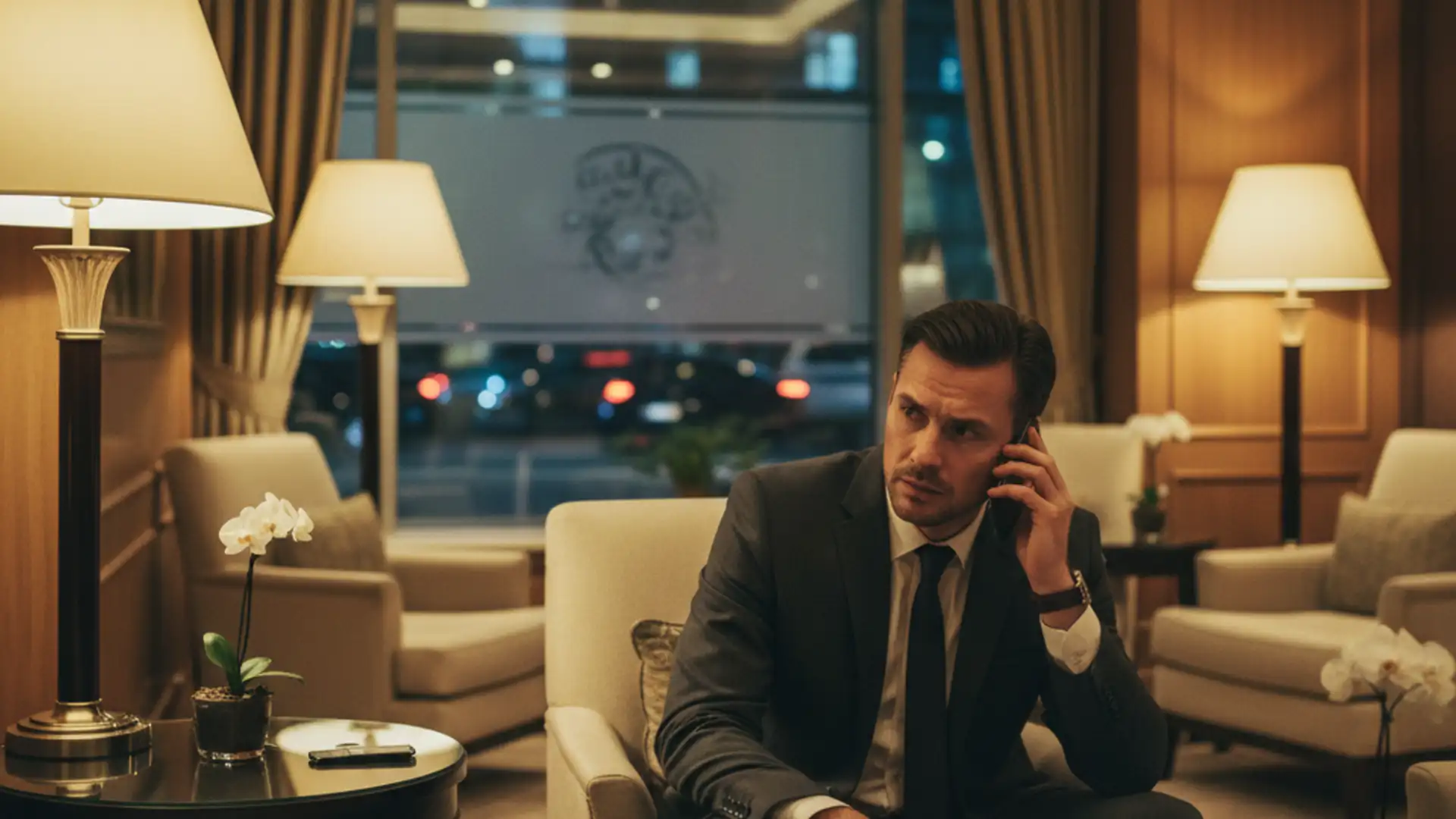
I got to the hotel about 15 minutes into the call. I walked into the lobby trying to keep my face composed, the phone pressed to my ear, my wife still talking, me mostly listening.
The lobby was small and quiet. Late evening, no one at check-in. The receptionist on duty was a woman in her late forties who had been there when I’d checked in two days earlier — a calm, attentive person with the kind of presence that came from doing this job for a long time and being good at it.
She saw me come in. She saw my face. She did the math instantly: a guest on a clearly difficult phone call, walking past the desk with no greeting, headed to the elevators.
I went up to my room. I sat on the edge of the bed. The call continued. My wife was working through what she needed to work through. I tried to be present. The room felt small and the bedside lamp was harsh and I was acutely aware of being far from home.
About forty minutes into the call, I heard a soft knock at the door.
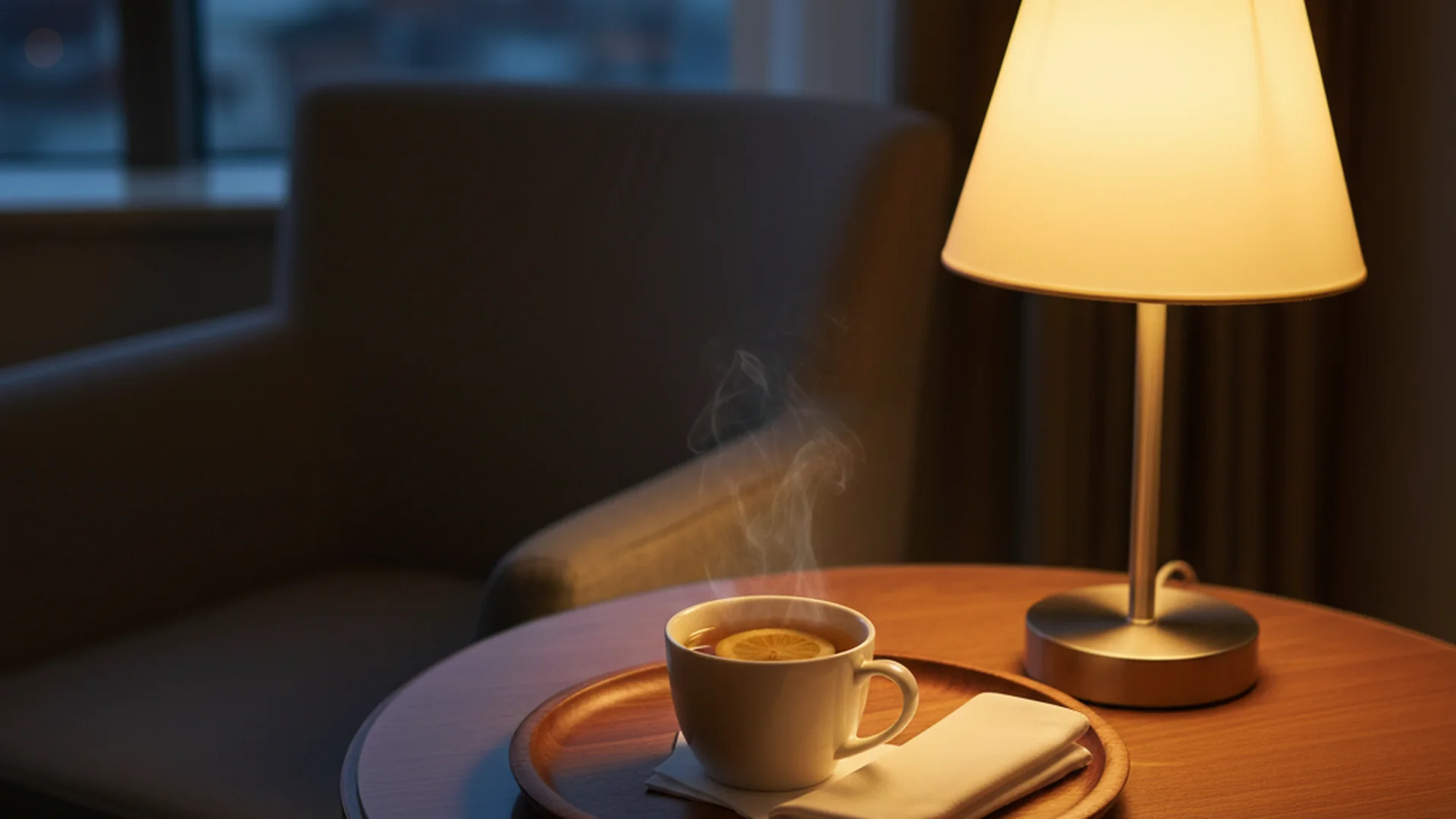
I told my wife to hold on. I opened the door. The receptionist was standing there with a small wooden tray. On the tray was a cup of tea, a small plate with two pieces of pastel de nata, a glass of water, and a folded napkin. She didn’t say anything. She just held the tray out to me, gave a small nod, and turned to walk back to the elevator.
I said “thank you.” She turned back at the elevator, said “take your time” softly, and left.
I closed the door. Brought the tray to the desk. Picked up the phone again.
“Sorry,” I told my wife. “Someone just brought tea.”
What She Did
I want to break down what the receptionist did, because the specifics matter.
She had no idea what was wrong. She had no information at all about my situation, just a face she’d seen on a phone call walking through a lobby. She didn’t ask. She didn’t pry.
What she did was take a small, kind action that didn’t require any explanation:
- Made tea (warm, calming, universally a small comfort)
- Added a local pastry (small gesture of place, no language barrier)
- Brought it to my door (didn’t make me come back to the lobby)
- Said almost nothing (didn’t make me explain or perform appreciation)
- Left immediately (gave me back the privacy I needed)
The whole interaction took ninety seconds. It changed the texture of the rest of the night. Something warm in a hotel room is different from something warm at home, but it’s still warm. The acknowledgement that someone in the building was paying attention to me as a person made the rest of the call feel less lonely.
I don’t know if my wife heard the receptionist’s voice through the door. I don’t know if the gesture was even visible to her. But the call shifted after the tea arrived. My voice softened. I had something to do with my hands. The hotel room became less hostile.
The Long Conversation
The call lasted almost two hours. We worked through what had happened. We made some plans. We agreed that I’d come home a day early if she needed it — I’d already started thinking about how to move my Wednesday meeting — but she said no, finish the trip, just call her in the morning.
By 1 AM Lisbon time we were both exhausted. We said goodnight. I slept poorly but I slept.
At 6:30 AM I got up, got ready, came down to the lobby for coffee before my breakfast meeting. The receptionist was no longer on duty — her shift had ended at 6 AM. The morning person was someone I didn’t know.
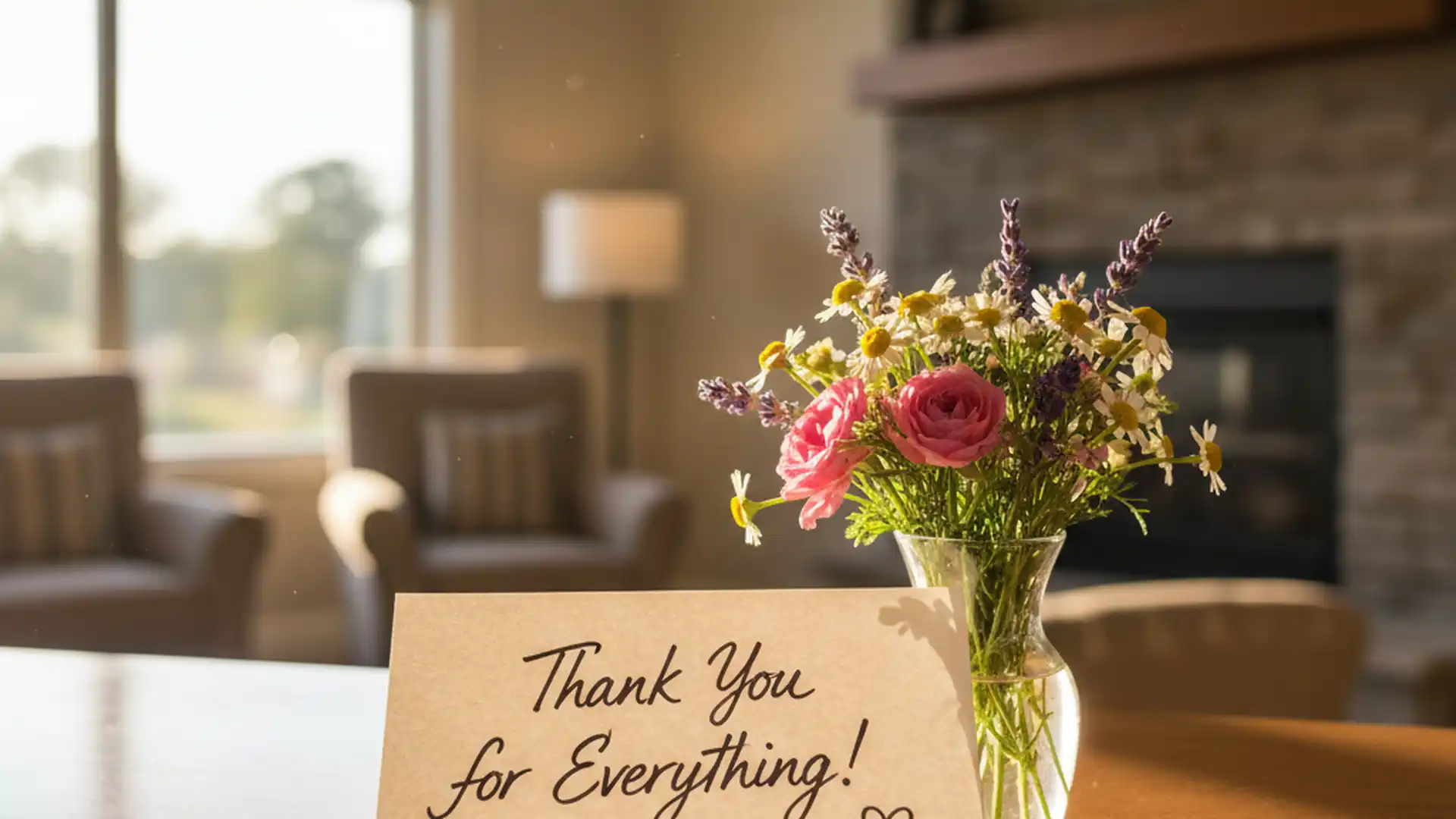
I asked at the desk if there was a way to leave a note for the night receptionist. The morning person said yes, of course. She handed me a sheet of hotel stationery and a pen. I sat in the lobby and wrote a short note thanking her by name. I left a 50-euro tip in the envelope with it. I asked the morning person to please make sure she got it.
The morning person nodded, slipped it into a small staff cubby behind the desk, and said “she will see it tonight.”
I went to my breakfast meeting. The day proceeded. I called my wife in the afternoon and she was steadier. The trip continued. The fire was contained.
The Pattern: Hotel Staff Are the Underrated Heroes
The Lisbon receptionist isn’t an isolated story. Over the years I’ve collected a quiet inventory of times when hotel staff have done small, perfect things during difficult moments:
- The Munich receptionist who lent me a jacket from the lost-and-found when my luggage was rerouted to Stuttgart (the full version is in lost luggage in Munich)
- A São Paulo doorman who, watching me struggle with a taxi driver who didn’t speak English, walked over and translated for five minutes without being asked
- A Tokyo concierge who, after I’d asked a small question about a dinner reservation, somehow ended up making three additional reservations for the rest of my trip without me asking
- A Bangkok housekeeper who left a small typed note in my room — in English — explaining that the streets near the hotel were closed for a parade that afternoon and offering a different route to my meeting
- A Mexico City receptionist who, when I mentioned offhand that my mother had been a tourist there in the 1970s, took the time to ask which neighborhood and recommended a coffee shop in that neighborhood I should visit while in town
None of these were heroic acts. All of them were small, attentive, and unprompted. The cumulative effect over years of business travel is that hotel staff have become — in my mind — the most underrated people in the business travel ecosystem.
Why the Hotel Front Desk Outperforms Apps
There’s a temptation to think that good apps and online tools have made hotel staff less necessary. They haven’t. They’ve changed what hotel staff do, but the value remains.
What an app can’t do:
- Read your face when you walk through the lobby
- Notice when something is off and act on it without being asked
- Translate, in real time, a conversation with a taxi driver
- Hand you a tray of tea at a moment of need
- Lend you a jacket from a lost-and-found
- Recommend the actual best taxi driver for a specific morning route
- Deal with a billing problem that the app’s chatbot wants to escalate
What a hotel staff member can do is treat you as a human being whose specific situation deserves specific attention. The app gives you efficient self-service. The hotel staff give you human-service when self-service can’t quite handle the situation.
The dependence isn’t symmetrical. Apps replace some functions hotel staff used to do (check-in via mobile, key cards via app, room service via screen). Hotel staff still do everything they always did when something matters. The line between those two has moved, but the human side has not been eliminated.
How I Treat Hotel Staff Now
The Lisbon experience changed how I interact with hotel staff. I’d always been polite. After Lisbon, I became deliberate.
The small things I now do consistently:
Use names. Hotel staff wear name tags. Reading the tag and using their name on a second interaction builds a small relationship. “Thank you, Maria” lands differently than “thank you.”
Tip generously and specifically. Not flashy, but appropriate. A meaningful tip at the end of a stay, plus smaller tips during the stay for specific kindnesses (the housekeeper who replaced the towels twice, the concierge who made the reservation).
Write notes for outstanding service. A handwritten note to the hotel manager praising a staff member by name. This often carries more weight than a tip — performance reviews and promotions can hinge on guest letters in many hotels.
Online reviews when warranted. A specific positive mention on TripAdvisor or Booking.com, naming the staff member, with details. Hotel managers see these. They matter.
Return to the same hotel when I can. The relationships compound across visits. The receptionist who lent me the jacket in Munich greeted me by name two trips later. The Lisbon receptionist — different staff schedule the second time, but the manager remembered me.
The cost of all of this is essentially zero. The return is the kind of human attention that has rescued me on more than one trip and could rescue you.
The Small Kindness That Came Back
About a year and a half after the Lisbon trip, I returned to the same hotel for a different customer engagement. Different time of year. Different room.
The receptionist who’d brought me the tea was on duty when I checked in. She recognized me. She didn’t say anything about the previous trip — that wouldn’t have been appropriate — but she gave a small smile and welcomed me back.
That evening she sent up a small plate of pastel de nata with a card that said, in careful English, “welcome back to Lisbon.” Nothing more.
That second small gesture made me feel like the hotel was an extension of home in a way I hadn’t expected. I’ve stayed at that hotel four times now. It’s my Lisbon default. Not because the rooms are the best in Lisbon. Because the staff treat me like a person who’s part of the building’s small ecosystem.
This is the same logic that runs through every relationship in business travel — the customers, the long-term colleagues, the airline staff who’ve seen you a dozen times. The relationships compound when you treat them as relationships, not transactions.
What I Tell New Travelers
When colleagues new to international business travel ask me what I wish I’d known sooner, the hotel staff piece is often near the top of my list.
The advice I give:
- Treat the front desk as a resource, not a service window
- Ask for things you’d usually figure out on your own — a reservation, a route, a recommendation. Hotel staff are usually delighted to help.
- Use names. Read the tag.
- Tip well at checkout. The night receptionist who saved your evening should hear about it.
- Write the manager. The note matters.
- Choose hotels you’ll return to. The compounding is real.
None of these are revolutionary. They’re just small disciplines that turn the hotel from a transactional place to sleep into a small, warm anchor in a city you don’t otherwise know.
Why This Matters More Than It Should
Business travel can be lonely. The good days are filled with meetings, the bad days are filled with logistics, and the in-between hours are spent in hotel rooms that aren’t yours, in cities where you don’t know anyone, doing the work alone.
The phone call from home — the kind of call that the Lisbon receptionist saw on my face — is one of the harder parts of that loneliness. Something is happening at home that you can’t fix from where you are. Your role is to listen, to be present, to be helpful from a distance. That’s a real demand on a tired traveler at the end of a long day.
The hotel staff aren’t there to fix that loneliness. But they can blunt it, in small specific ways, when they choose to. The Lisbon receptionist chose to. I’ll never fully know why she did. I just know that the night was easier because she did.
This is also why the broader work of calling home from a different time zone matters so much. The marriage is maintained at home and on the road, and the road version is harder. Anyone who helps you maintain it from a distance is doing real work.
The Bigger Idea
The story of the Lisbon receptionist isn’t a travel hack. There’s nothing actionable about it for the next traveler. You can’t replicate it on demand. You can only be open to it when it happens.
The lesson is the broader one: hotels are full of people whose job is to help you, but who can choose to do more than the job requires when the situation calls for it. They are human beings. They notice. They sometimes act. The trip is shaped, more than any app or system can shape it, by the people who staff the building you sleep in.
If you treat them like that — like the most important infrastructure of your trip — they’ll often respond by treating you the same way. The compounding works in both directions.
The Lisbon receptionist’s name was on her tag. She has been promoted in the years since. The hotel manager mentioned her in a thank-you reply when I wrote her up after the second visit. The story isn’t over for her. She’s somewhere in Lisbon right now, doing some version of what she did for me, for someone else, and they probably haven’t fully understood it yet either.
That’s the magic of small kindness. It accumulates. It travels with you. And on the night you most need it, sometimes it shows up at your door with a warm cup of tea and two pieces of pastel de nata, and asks for nothing in return.
Combined with the smaller, more practical work of maintaining yourself on the road — the apps I refuse to travel without, the workout, the calls home — the hotel staff are the human layer. They’re the part that the apps can’t replace. They’re the reason I keep going back to certain cities, even when other cities would be easier or cheaper.
The trip is the work. The people who staff the trip are what makes the work bearable. Tip them well. Use their names. Write the letter. They’ve earned it more than the rest of us know.

Title: The 6 useless things I always pack
The hotel staff save you in the moment. The carry-on saves you the rest of the time — even the items in it that don’t seem to make sense.
Inside:
- Why I pack a tie I’ll never wear
- The other 5 ‘useless’ items that have rescued me
- What I no longer pack and why