

Some of the things in my carry-on look pointless to anyone who watches me pack. They’ve all rescued me at least three times. Here are the 7 “useless” items I refuse to travel without — including the tie I haven’t worn since 2019.
The Tie I Haven’t Worn in Years
I haven’t worn a necktie to a meeting since 2019. Business attire has gotten less formal across most industries, dress codes have softened, and the customer who specifically wanted to see me in a tie is no longer doing business in my segment.
And yet, every trip, a folded blue silk tie lives in my carry-on. It’s been to dozens of countries. It has not, in those countries, been worn to a single meeting.
So why do I keep packing it?
Because of the night in Singapore in 2017 when a customer’s wife passed away the day before our scheduled dinner, and the dinner was reframed at short notice into a more formal “memorial gathering.” I attended. I wore the tie I had packed because I always pack one. Other Western colleagues, who hadn’t packed ties, felt under-dressed for the rest of the evening.
Because of the unexpected client funeral I had to attend in Bogota in 2018, with two hours’ notice, on the way to a flight home, where the only appropriate attire I had was the carry-on tie plus my work suit.
Because of the formal dinner in Tokyo in 2022 that the customer’s CEO showed up to unannounced, requiring a quick wardrobe upgrade in the lobby.
The tie has been needed maybe four times in seven years. That’s once every two years. The cost of carrying it: 30 grams, a tiny bit of bag space, and zero thought. The benefit when I need it: enormous.
This is the framing for everything below. The “useless” items in a carry-on aren’t useless. They’re insurance against rare but high-cost moments. The mistake is judging them by daily utility instead of cumulative trip-saving.
1. The Tie
Already covered. One tie. Folded. Lives in the suit pocket of the carry-on. Has rescued me four times in seven years.
If you don’t wear ties to meetings anymore, that’s fine. But the unexpected formal moment — funeral, memorial, a senior leader’s surprise dinner, a regulator’s office — happens. Having the tie in your bag means handling the moment without scrambling.
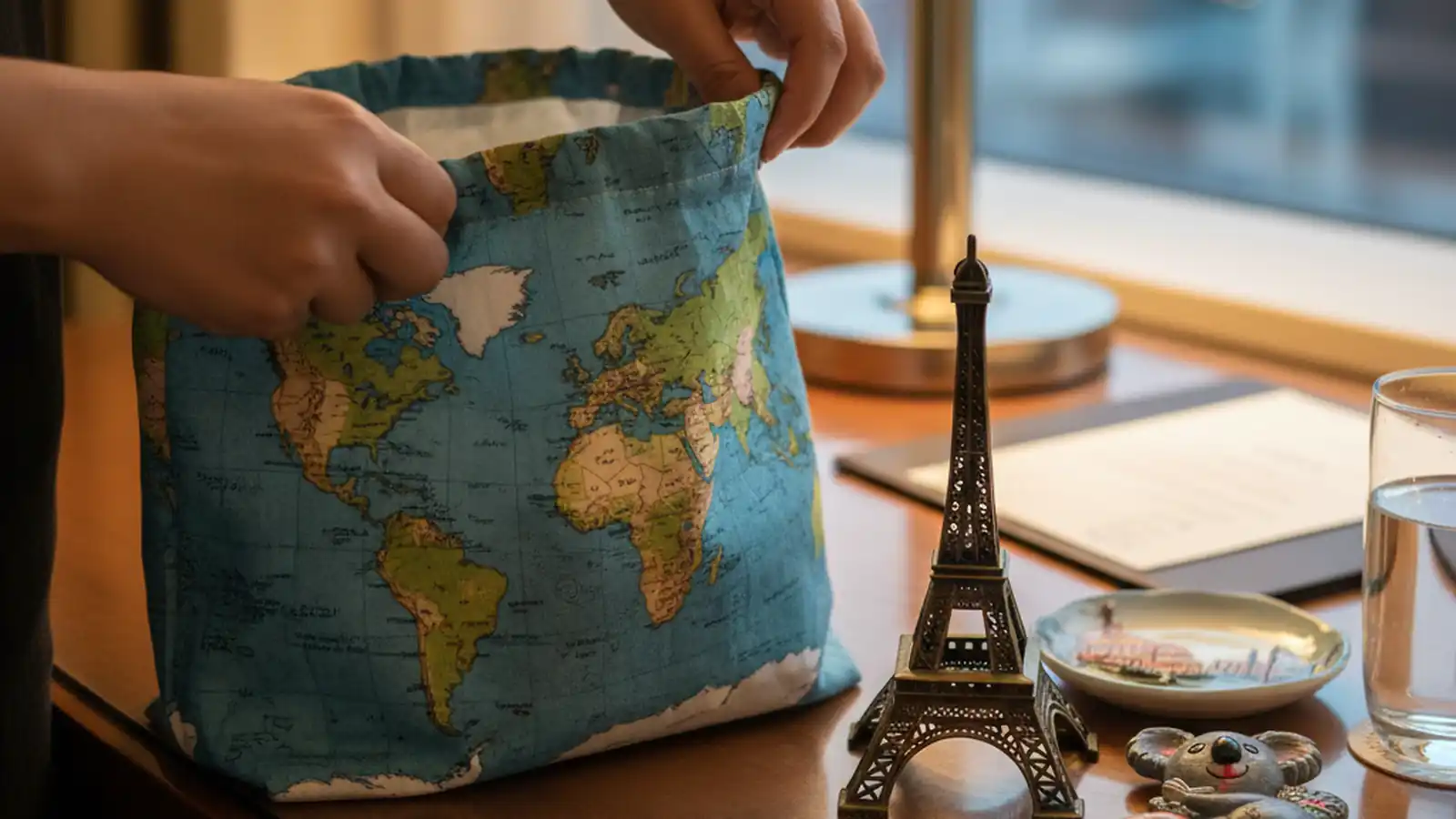
2. The Folded Reusable Shopping Bag
A folded nylon shopping bag, the kind that weighs 50 grams and folds into the size of a deck of cards.
It has rescued me when:
- I’ve bought too many things and needed to consolidate them at the airport
- A customer has given me a heavy gift I needed to carry separately
- I’ve gotten my dirty laundry separated from my clean clothes for the trip home
- I’ve bought a fragile souvenir that needed wrapping and isolation
- A surprise grocery run before a client dinner where I was bringing wine
The bag costs about $8. It has lived in my carry-on for years. It’s been used on a third of my trips. The cost of carrying it is essentially zero. The benefit when needed is real.

3. The Empty Water Bottle
An empty refillable water bottle. Goes through security empty, gets filled at a fountain after.
The savings:
- $5-7 per bottle of water at airports, a few times a trip
- The hassle of asking flight attendants for refills
- Plastic bottle waste
- Reliable hydration during long-haul flights, which matters more than most travelers realize
The water bottle has saved me real money over years of travel. More importantly, it has kept me hydrated on flights when the cart only comes by once an hour. The hydration is part of the broader system that makes the rest of the trip work.
4. The Spare Pen
A simple ballpoint pen. Lives in the front pocket of the carry-on. Cost: $3.
It has been needed:
- Filling out arrival cards on flights where the flight crew didn’t have enough pens
- Customs and immigration forms in countries where the kiosks don’t always work
- Signing for a rental car when the rental car desk’s pen had run out
- Writing down a phone number from a customer who didn’t have one to give me
- Quick notes during meetings when I forgot my main pen at the hotel
The pen is so cheap and small that I forget it’s there. Then I need it. And someone two seats away on the plane is asking around for one and I’m the only person who has it.
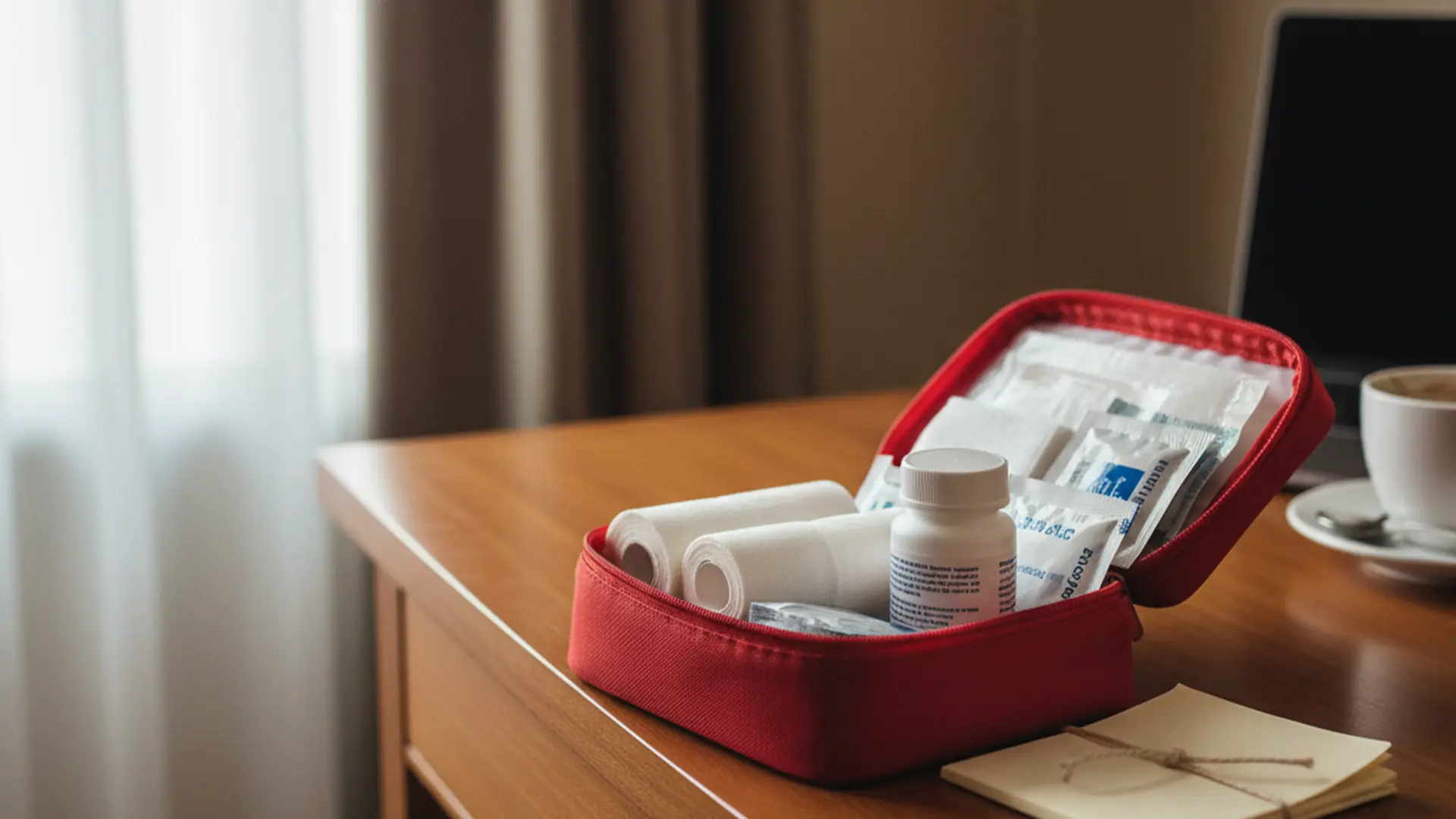
5. The Small First-Aid Kit
A small zippered pouch with:
- Advil or ibuprofen
- Imodium
- Antihistamines
- Band-aids of two sizes
- A small tube of antiseptic cream
- One small packet of electrolyte powder
Total weight: about 100 grams. Total cost: under $20. Lives in the toiletry section of the carry-on permanently.
I’ve needed each item at different times:
- Imodium in Bangkok at midnight when food poisoning hit before a 7 AM flight
- Antihistamines in Mexico City when an unexpected allergic reaction to something at dinner left me with a swollen lip the morning of a customer meeting
- Band-aids in Tokyo when new dress shoes shredded my heels by 11 AM and I had eight more hours of meetings
- Advil in Frankfurt for a stress headache that wouldn’t quit
- Electrolyte powder in Saudi Arabia in summer when the hotel air conditioning broke and I was dehydrated
Each item alone is unnecessary in 95% of trips. Together, the kit is needed in maybe 30% of trips. The hassle of finding any of these items in a foreign country, late at night, in a language you don’t speak, is real. Carrying the kit eliminates the hassle.
6. A Backup Charger and Cable
One spare charger and one spare USB cable, kept separately from the main one.
I’ve needed them:
- When my main charger failed in a hotel in Buenos Aires
- When I left my main charger plugged into a hotel outlet in Lisbon and didn’t realize until I was at the airport
- When my cable’s connector got bent and stopped working halfway through a trip
- When a colleague needed to borrow one for a meeting and I had a spare
Total weight: about 200 grams. Total cost: $25. The peace of mind of knowing the phone will charge overnight, no matter what, is worth more than the carrying cost.
One specific learning: keep the spare charger in a different bag pocket than the main one. If you put both in the same pocket, you can lose both at once. Mine lives in the laptop sleeve, while the main one lives in the toiletry cube.
7. A Small Pack of Tissues
A pocket pack of tissues. The kind that comes 10 to a pack.
I’d never thought of this as a useful item until a 2018 trip when:
- The bathroom in a small Mexico City restaurant had no toilet paper
- The same trip’s hotel room had run out of tissues just when I caught a small cold
- I spilled water on my pants 30 minutes before a meeting and needed something to dab them with
Total cost: $1 for a 10-pack. They live in the front pocket of the carry-on. They have rescued me on more trips than I can count, in small ways that don’t make for great stories but matter at the moment.
The Items I No Longer Pack
The mirror image: things I used to pack and have stopped.
A second pair of dress shoes. One pair, worn, plus sneakers. The second dress shoe never got used and weighed more than a kilo.
A “just in case” tie variety pack. One tie is enough. Three is overpacking.
A spare laptop charger. I bought one. Forgot it three trips in a row in hotel outlets. Now I’m careful with the one I bring.
A “good” book. The Kindle app does the same job at 0% of the weight.
A travel journal. Sounded romantic. Never wrote in it. Now I write occasional notes in my phone instead.
Cash in five currencies “for emergencies.” Cash hoards are for movie spies. ATMs work. Cards work. Wise works.
Workout shoes “in case I have time.” If I have time, I wear my sneakers. If I don’t, the workout shoes were a guilt-pack.
The pattern: the things I used to pack for “just in case” emotional comfort got removed. The things I now pack for “this has actually happened to me three times” stayed.
The Underlying Logic
The seven “useless” items above are united by one principle: they’re cheap to carry and expensive to need-and-not-have.
The math:
- Total weight of all 7 items: under 500 grams
- Total cost: about $80 the first time, then near zero ongoing
- Total carrying cost over 100 trips: minimal — a couple of inches of bag space
- Total benefit when needed: substantial — saved meetings, saved evenings, saved money on overpriced replacements
This is asymmetric in your favor. You pay a small predictable cost (a few hundred grams of bag weight) to avoid an unpredictable but potentially large cost (a meeting going badly because you couldn’t sign a form, a night of food poisoning unmedicated, a phone you couldn’t charge).
The only items that make sense to carry by this logic are the cheap, light, occasionally-essential ones. Heavy items that are never useful go. Light items that are sometimes essential stay.
How They All Live in the Bag
Practical organization, since the items are scattered:
- Toiletries cube: First-aid kit, tissues
- Suit pocket: Tie
- Tech cube: Backup charger and cable
- Front pocket: Pen, water bottle (empty)
- Internal pocket: Folded shopping bag
This is part of the broader system from 24-hour pre-flight checklist — toiletries cube refilled before each trip, tech cube reused trip after trip, items in consistent locations so muscle memory takes over.
The items don’t need to be re-purchased each year. The first-aid kit gets refilled. The tie gets cleaned occasionally. The shopping bag and water bottle and pen are essentially permanent passengers in my bag.
The Mistakes I See Other Travelers Make
Watching colleagues pack over the years, the patterns I see are:
Overpacking heavy “just in case” items. A second pair of shoes, three suits for a four-day trip, a spare laptop charger that lives in a different bag from the main one and gets forgotten. These add real weight and rarely get used.
Underpacking light “just in case” items. No first-aid kit, no spare pen, no backup charger, no water bottle. These weigh nothing and rescue trips repeatedly.
Treating the carry-on as a vacation bag. “Comfort items,” books they won’t read, fancy clothes for evenings they won’t have. The trip isn’t a vacation. The bag should reflect the work.
Repacking from scratch every trip. Friction. Slow. Items get lost between trips. The fix: a permanent carry-on setup that gets refilled rather than reassembled.
The carry-on is a system. Trips are easier when the system is built and maintained, not improvised every time.
The Bigger Idea
The “useless” items in my carry-on are the most important things in it.
The phone is essential, the suit is essential, the laptop is essential. Those are obvious. They’re the engine of the trip.
The tie, the pen, the tissues, the backup charger, the first-aid kit, the shopping bag, the water bottle — these are the safety net under the engine. They prevent the small, weird, low-probability moments from turning into trip-ruining ones.
Most trips don’t need them. The trips that do need them, need them badly. Carrying them costs almost nothing. Not carrying them and needing them costs real time, real money, or a real meeting.
Combined with the broader systems from 24-hour pre-flight checklist, the lessons of lost luggage in Munich, and the small comforts from the apps I refuse to travel without, the seven useless items become part of a quietly competent travel kit. Nothing fancy. Nothing show-off. Just a bag that’s ready for whatever the trip throws at it.
The tie hasn’t been worn in years. It’s still in my bag. It will still be in my bag the next trip, and the trip after that. And one of these years, in some city I haven’t been to yet, on some night I can’t predict, I’ll need it. And I’ll have it. And the moment will be small and quiet and not particularly memorable, except to me, who will know that the tie that costs nothing to carry has earned its place once again.
That’s the secret of the useless items: they earn their place by saving you in moments you don’t see coming. By the time you see the moment coming, it’s too late to pack for it. The carry-on has to be ready in advance. Mine is. Yours could be too. The bag of seemingly useless things is the bag I’d save first if I had to pick which of my belongings to evacuate. Everything else is replaceable. The carry-on, with its small hoard of forgotten heroes, is what makes the rest of the working life on the road actually work.

Title: The 5 apps that earned their spot
The ‘useless’ items in your bag are half the story. The apps in your phone are the other half — and the ones I deleted will tell you why.
Inside:
- What I open before takeoff and after landing
- The 3 apps I deleted after disasters abroad
- Why my hotel app is the most-used tool I have