

Short answer: To plan a bleisure trip, confirm what your company’s expense policy covers (usually the business flights and your work-night hotel), then book the personal extension yourself and pay the difference. Ask your boss in writing, frame it as zero extra cost to the company, tell your spouse honestly that it’s still part work, and book the work portion on policy with the personal nights as a separate reservation. Done in that order, nobody gets fired and nobody gets divorced.
The first time I tacked two days onto a Chicago trip, I didn’t tell anyone the plan in advance. My boss found out from the expense report. My wife found out from a hotel confirmation email. And I learned that “surprise” is the worst possible way to introduce the word “vacation.”
Heads up: some links below are affiliate links — I may earn a small commission at no cost to you. I only point you toward stuff I’d actually use.
This is the hub. If you’ve read my other bleisure posts and you want the actual operator’s manual — the order of operations, who pays for what, the exact words to type into the email — you’re in the right place. I’ve done this maybe forty times now. I’ve also done it wrong, which is how I know the order matters more than anything else.
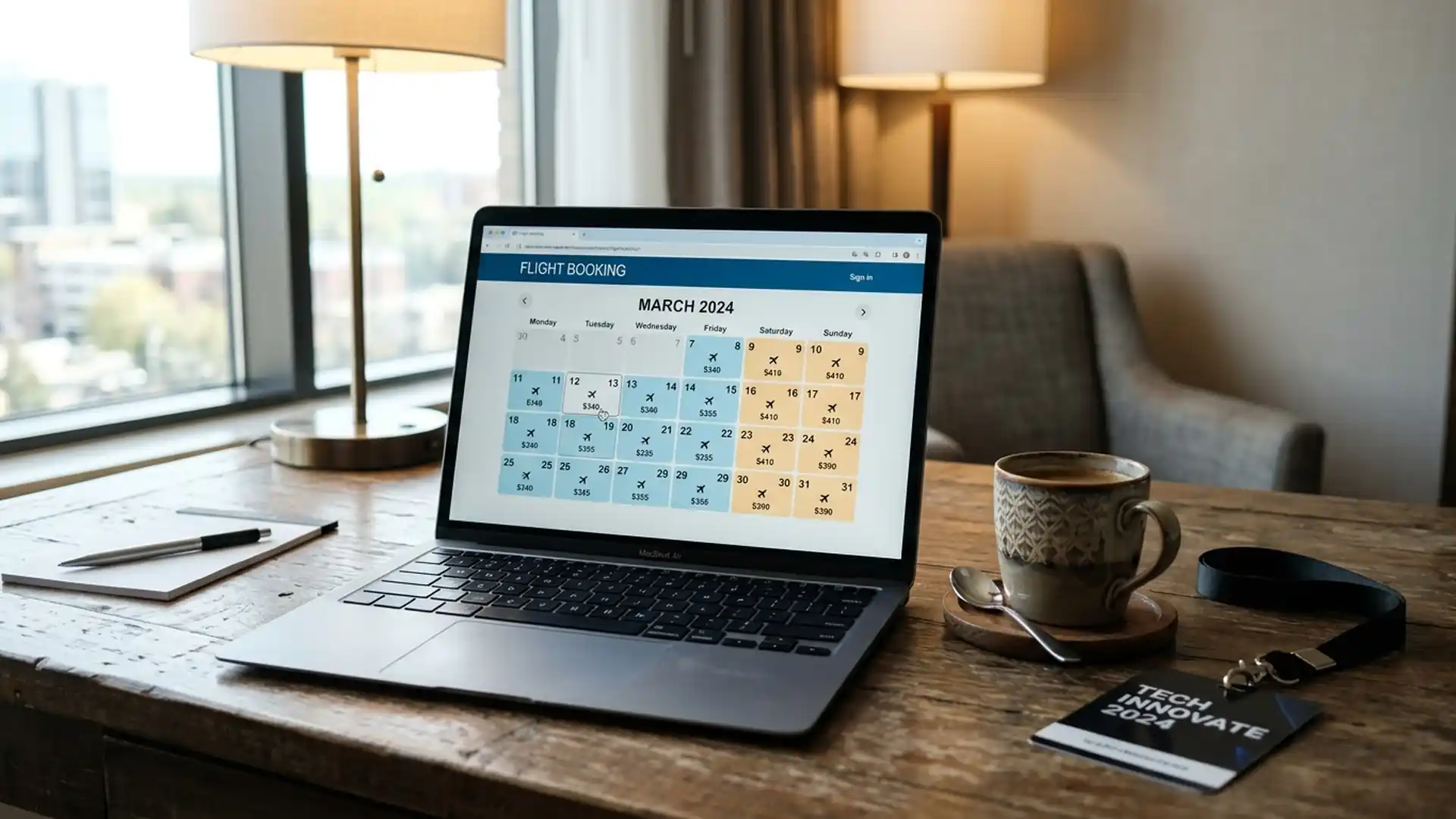
What “Bleisure” Actually Means (And Why You Should Care)
Bleisure is business plus leisure. You fly somewhere for work, then stay extra nights for fun — sometimes solo, sometimes with the family flown in to meet you. The word is ugly. The math is beautiful.
You’re not the only one doing it. As of 2026, industry surveys put the share of business travelers who’ve taken at least one blended trip in the past year north of 80%, and roughly two-thirds of corporate travelers say they already combine work trips with personal time (Navan, Perk, as of 2026 — confirm current figures at the source). About one in five companies now actively encourages it. Translation: your boss has almost certainly seen this request before. You’re not inventing anything weird, so stop acting like you’re asking to rob the place.
I covered my own version of this realization in why I started adding 2–3 nights to work trips. The short version: the company already bought the hardest, most expensive part of the trip — the flight. Letting that flight do double duty is the single highest-leverage move in family travel, and I was an idiot for not doing it sooner.
The Bleisure Playbook: 8 Steps in Order
Order matters. Do these out of sequence and you end up like me, explaining a surprise hotel email at the dinner table. Here’s the sequence that keeps you employed and married.
- Read the expense policy first — before you fantasize about beaches. Find the actual document. Look for the words “personal,” “leisure,” “blended,” or “extension.” Most policies say the company pays the business-only equivalent and you cover the rest. If there’s no policy, that’s not a green light — that’s a gap you fill with a clear email (step 3), not a hope and a shrug.
- Price the business-only trip first. Pull up what the flight and hotel would cost if you flew in, did the work, and flew straight home. That number is your baseline. Everything above it is yours to pay. Screenshot it. You’ll want the receipt when someone in finance asks why the dates look funny.
- Ask your boss in writing, framed around cost neutrality. Not “Can I take a vacation?” Instead: “The conference ends Thursday. I’d like to stay through the weekend on my own dime — same outbound flight you’re already booking, I’ll cover the extra nights and the return change. Zero additional cost to the company. Cool?” Written, specific, and it answers the only question your boss actually cares about: does this cost us anything or create any liability.
- Confirm the flight-difference rule. Here’s the trap. If your bleisure dates make the airfare more expensive than the business-only flight, you pay the difference — and most policies say you pay it at the time of booking (Routespring, as of 2026; confirm against your own policy). If the longer stay makes it cheaper — the classic Saturday-night-stay discount — the company keeps the savings. Know which way it cuts before you book, not after.
- Book the work portion on policy. Book the extension separately. This is the mechanical heart of the whole thing. Your work flights and work-night hotel go through your normal corporate booking tool or card. Your personal nights go on a separate reservation under your own card. Same hotel is fine and often cheaper — just split the booking so the billing is clean. When the expense report lands on someone’s desk, the business charges and the personal charges never touch.
- Handle the tax wrinkle if the company is paying anything personal. If you keep it clean — company pays business, you pay personal — there’s nothing to report. But if your employer covers a personal flight leg or a family member’s airfare, that can become taxable imputed income reported on your W-2 (IRS spousal travel guidance, as of 2026 — confirm with your own tax advisor). The clean split avoids this entirely. That’s a feature, not a chore.
- Brief your spouse honestly — it’s still partly work. More on this below, because it’s the step most guys fumble and the one that actually gets you divorced.
- Sort the kid logistics last, once the bones are locked. Flights, school calendar, who’s watching the dog. Don’t buy the kids’ tickets until steps 1–6 are confirmed. I’ve eaten change fees on optimism before, and optimism tastes expensive.
Who Pays for What: The Master Table
This is the table to screenshot. The governing principle across virtually every corporate policy I’ve read is simple: the company pays what it would have paid for a strictly business trip — not a dollar more. Everything past that line is yours.
| Item | Who pays | The rule (as of 2026 — verify your policy) |
|---|---|---|
| Round-trip airfare (business-only equivalent) | Company | Covered up to the business-only fare |
| Airfare difference from your dates | You | Often due at time of booking |
| Hotel — work nights | Company | Room + tax for required business nights only |
| Hotel — personal nights | You | Full cost, separate reservation |
| Meals — work days | Company | Per diem / policy limits |
| Meals — personal days | You | Not reimbursable |
| Family members’ flights & tickets | You | Always yours; company-paid = taxable income |
| Rental car / transit (personal use) | You | Not covered when unrelated to meetings |
| Travel insurance for the family leg | You | Worth every penny — see below |
The dad-math behind why those extra nights are still worth it even when you’re footing the bill is its own rabbit hole — I ran the numbers in the dad math of travel. Short version: when the flight’s already bought, the marginal cost of three more days as a family is shockingly low.

How to Ask Your Boss Without Sounding Like You’re Skipping Work
The mistake is asking for permission to relax. Don’t. You’re asking permission to reuse a flight they already bought and save the company a future trip. Frame it that way and the whole conversation changes.
Three rules:
- Lead with the work, end with the extension. “Conference runs through Thursday afternoon. I’ll be fully present for all of it.” Then the ask.
- Volunteer the cost split before they ask. “Personal nights and any fare difference are on me.” That one sentence kills most of the hesitation before it starts.
- Put it in writing and keep it short. Email, four sentences, easy yes. A wall of justification reads like guilt, and bosses can smell guilt.
If your job runs on dinners and back-to-back meetings, the real grind is the business part, not the extension. I’ve written plenty on surviving that side — see fly for work, stay for fun for the broader strategy of squeezing a real trip out of a work obligation.
How to Tell Your Spouse It’s Still Partly Work
This is where good men get themselves in trouble. You sell the family on “Daddy’s taking us to Japan!” and then vanish into a trade show for three days while everyone else is jet-lagged in a hotel room watching cartoons in a language they don’t speak. Resentment compounds faster than airline miles.
Be honest up front. The work days are work days. You’ll be gone 9 to 6, maybe later if there’s a dinner. The family fun starts after the conference badge comes off. If your partner knows that going in, the work days are a non-event. If they find out on day one, you’ve got a problem that no amount of sightseeing will fix.
And if part of the trip puts you in a wildly different time zone from home before the family flies out, just staying connected is its own skill. I learned that one the hard way too — it’s the whole subject of calling home across time zones. The marriage math is real, and the time-zone math makes it worse.
The best version of getting this right is the trip where I turned a three-day trade show into a thirteen-day family expedition — front-loaded the work, then handed the rest to the family. The full breakdown is in how I turned a 3-day trade show into a 13-day family trip to Japan. That post is the proof this playbook actually works.
Kid Logistics: The Part Everyone Underestimates
Adults can sleep on planes and shrug off a bad hotel. Kids cannot. A few rules I paid for the hard way:
- Fly the family in for the back half, not the whole thing. Don’t drag a six-year-old to a conference city to sit in a room while you work. Have them arrive as the work wraps up.
- Same hotel for the whole stay if you can swing it. Most business hotels handle leisure extensions and often discount longer stays (Engine, as of 2026). Split the booking to keep the billing clean while the kids never have to change rooms.
- Pack like a logistics officer. This is the one place I won’t compromise. Everything goes in packing cubes — one color per kid — which turns a chaotic family suitcase into something where you can actually find a clean sock at 6 a.m. And one good piece of carry-on luggage per person means no checked-bag roulette while a toddler melts down at the carousel.
The Booking Mechanics, In Plain English
People overthink this. It’s two reservations. That’s it.
- Reservation A — Work. Flights and work-night hotel, booked through your corporate tool or card, exactly as policy dictates. If your dates create a fare premium, you pay that premium now, on your own card, and you keep the receipt.
- Reservation B — Personal. Extra hotel nights, family flights, anything fun. Your card. Same hotel is fine — just a separate booking so the front desk bills two folios.
That’s the entire trick. Two clean reservations means a clean expense report, no awkward conversation with finance, and no imputed-income surprise come tax time. Anyone who tells you it’s more complicated than that is selling something.
Don’t Skip the Insurance
The moment your family is on the trip, the risk profile changes. A solo business traveler who gets food poisoning is an inconvenience. A kid who needs a doctor in a foreign country with no coverage is a whole different category of bad night.
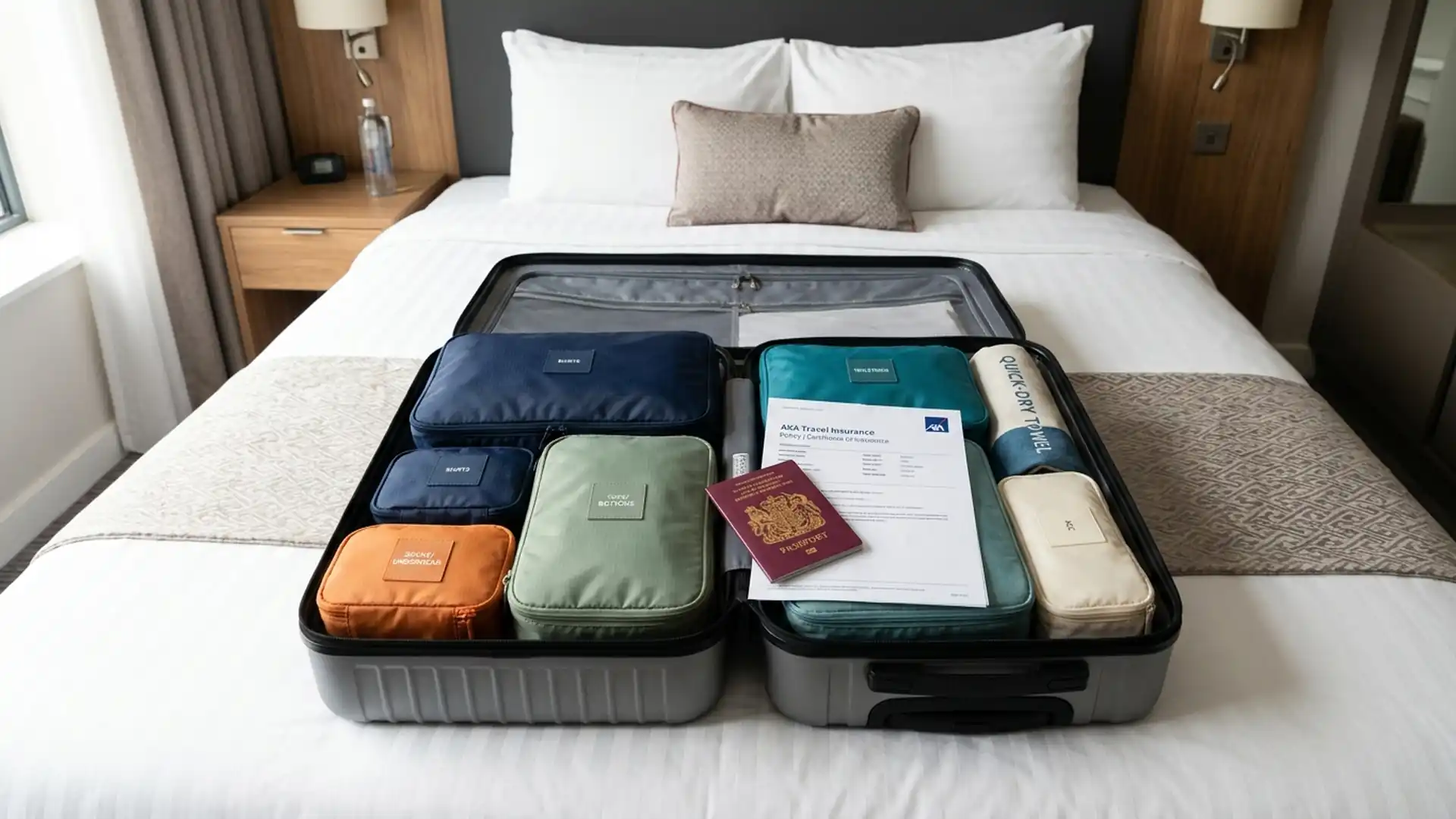
The personal leg of a bleisure trip is exactly the scenario travel insurance like SafetyWing exists for — your corporate travel coverage almost certainly stops at the business portion. I made the full case in why travel insurance is every dad’s secret weapon. Buy it for the family days. It’s the cheapest peace of mind in the entire trip, and the one expense I’ve never once regretted.
Book It: Turning the Plan Into a Trip
- Flights & hotels for the extension: I price the extra nights on Trip.com and cross-check flights on Aviasales.
- Family stays: a whole apartment on Vrbo beats booking two hotel rooms.
- Things to do with the kids: tours and tickets on GetYourGuide.
FAQ
Can I extend a business trip for personal travel?
Yes — and most companies allow it as of 2026, with roughly one in five actively encouraging it. The standard arrangement: the company pays the business-only portion (flights and work-night hotel) and you pay for personal nights, family flights, and any fare difference your dates create. Confirm your specific expense policy and get the extension approved in writing first.
Who pays for the extra nights on a bleisure trip?
You do. The governing principle in nearly every corporate policy is that the company pays what it would have paid for a strictly business trip and not a penny more. Extra hotel nights, personal meals, and family tickets are all on you. Book them as a separate reservation to keep the billing clean.
Do I owe taxes if my employer pays for any of the personal portion?
Potentially. If your employer covers a personal flight leg or a family member’s airfare, that benefit can be treated as taxable imputed income reported on your W-2 (per IRS spousal-travel guidance, as of 2026 — confirm with your tax advisor). The clean fix is to keep the split strict: company pays business, you pay personal, nothing to report.
Should I book the work flights and the personal extension together?
No. Book the work portion on policy through your corporate tool or card, and book the personal extension separately on your own card — even at the same hotel. Two reservations means a clean expense report and no awkward conversation with finance.
How do I ask my boss without sounding like I’m slacking off?
Lead with the work, keep it in writing, and volunteer the cost split before they ask: “The conference runs through Thursday — I’ll be fully present. I’d like to stay the weekend on my own dime, same flight you’re already booking, zero extra cost to the company.” A short, specific, cost-neutral ask is an easy yes.