

Short answer: Most countries require your passport to stay valid for at least 6 months beyond your travel dates — and the airline checks this at check-in, before you ever reach immigration. So if you have 4 months of validity left, a desk agent in your home airport can deny you boarding, no refund, no sympathy. The big exceptions: the Schengen Area asks for 3 months beyond your departure, and a handful of countries (Canada, Australia, the Bahamas) only need the passport valid on the day you arrive. As of 2026, rules still vary by destination, so always confirm on the destination’s official government site before you book.
I learned this watching a guy named Dale unravel at a Newark gate. Dale had a passport with five months left, a connection to São Paulo, and the confidence of a man who’d never been told no. The agent told him no. Brazil wanted six months. Dale did not have six months. I watched him do the math three times, like the calendar might blink first. It didn’t. He flew home. I flew to Brazil. I have never forgotten his face.
Heads up: some links below are affiliate links — I may earn a small commission at no cost to you. I only point you toward stuff I’d actually use.
The Day I Almost Became Dale
A year after Dale, it was my turn to sweat.
I was booked to Bangkok for a vendor meeting — the kind of trip where missing day one means missing the whole point. I’d renewed my passport “recently.” In my head, recently meant a year ago. In reality it meant eight years and ten months ago, which left me about seven weeks of validity on a passport heading to a country that wants six full months.
I didn’t catch it. My checklist caught it. Twenty-four hours out, grinding through the boring pre-flight ritual my wife forced on me, I hit the line that says “check passport expiry against destination rule.” I almost skipped it. It looked like a one-liner. It wasn’t.
I pulled up Thailand’s entry requirements on the official site, counted backward from my return date, and felt my stomach drop into my shoes. Seven weeks. Thailand wanted twenty-six. The trip was dead unless I could fix a passport overnight.
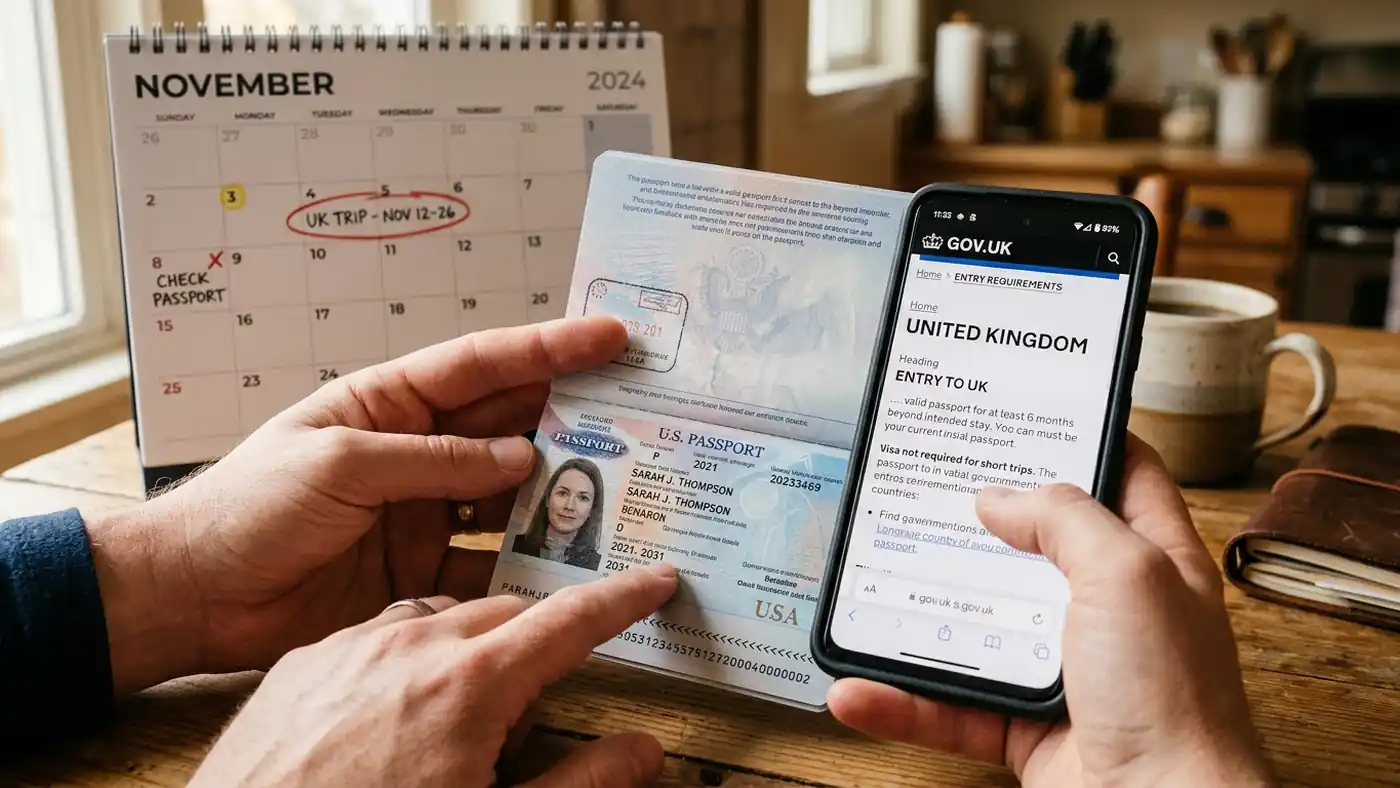
I couldn’t, not overnight. But because I caught it a day early instead of three hours early like Dale, I had options: an expedited renewal, a passport-agency angle, and a rebooked flight three days later that didn’t cost me the meeting. Dale found out at the gate. I found out at my kitchen table. That’s the entire difference, and it’s the whole reason this post exists.
Why the Airline — Not Immigration — Is the One Who Stops You
Here’s the part most people get backwards. They picture a stern border officer in the destination country flipping to the photo page and shaking his head. That can happen. But it’s almost never where the rejection actually lands.
It lands at your airport, at the check-in desk, before you’ve even cleared security.
Airlines are on the hook to fly you back if a country refuses you entry. So they’re motivated to refuse you first. Their systems run your passport against the destination’s validity rule the moment you check in. If you don’t clear it, the boarding pass simply doesn’t print. Put bluntly: if your passport doesn’t meet the requirement, the airline can refuse you boarding at the point of origin — long before you reach Schengen or wherever you’re headed.
So the “6-month rule” isn’t really a border-control rule you can argue your way past. It’s a boarding rule enforced by a contractor with zero incentive to give you a break. You don’t get to plead your case. The system already decided.
The Country-Rule Reference Table (Examples — Always Verify)
This is the part to screenshot. But read the disclaimer first, because I mean it: these are examples of how the rules are structured, accurate as of 2026. Entry rules change with zero notice, and exceptions hide inside them. Before you book, pull up the destination government’s own page (or the U.S. State Department country page) and confirm your specific situation.
| Validity rule (example) | Example destinations | What it means in plain English |
|---|---|---|
| 6 months beyond travel dates | Thailand, Singapore, Indonesia, Malaysia, UAE, India, Brazil, and most of Asia, the Middle East & Africa (roughly 70+ countries) | Count six months forward from the day you’ll leave. Less than that, no boarding. |
| 3 months beyond departure | Schengen Area (France, Germany, Italy, Spain, Greece, Netherlands, etc.) | Three-month buffer past your planned exit. Fixed amount — same for a 3-day or 3-month trip. |
| Valid for the duration of stay only | Canada, Australia, the Bahamas, Bermuda, Colombia (examples) | Passport just needs to be valid while you’re there. The most forgiving tier — but still verify. |
| Extra: blank pages required | India (2 fully blank pages), plus many African nations | Validity isn’t enough — you also need empty visa pages or you’re turned away. |
| Extra: 10-year issuance rule | Schengen Area | Passport must also have been issued within the last 10 years. Old renewals with extended dates can fail. |
That India “two blank pages” line trips up more business travelers than the validity rule itself. You can have a passport valid for nine more years and still get stopped because it’s stamped full. And only fully blank pages count — endorsement pages don’t. Check the pages, not just the date.
The Schengen 10-year rule is the other sneaky one. Some older passports were issued with extra months tacked onto the expiry. Schengen ignores the bonus months — if the issue date is more than 10 years back, those extra months don’t count. Two separate tests, both have to pass.
The Pre-Trip Passport & Visa Checklist
Run this the moment a trip gets booked — not the night before. Renewals take weeks, and weeks are the one thing a gate agent can’t give you.
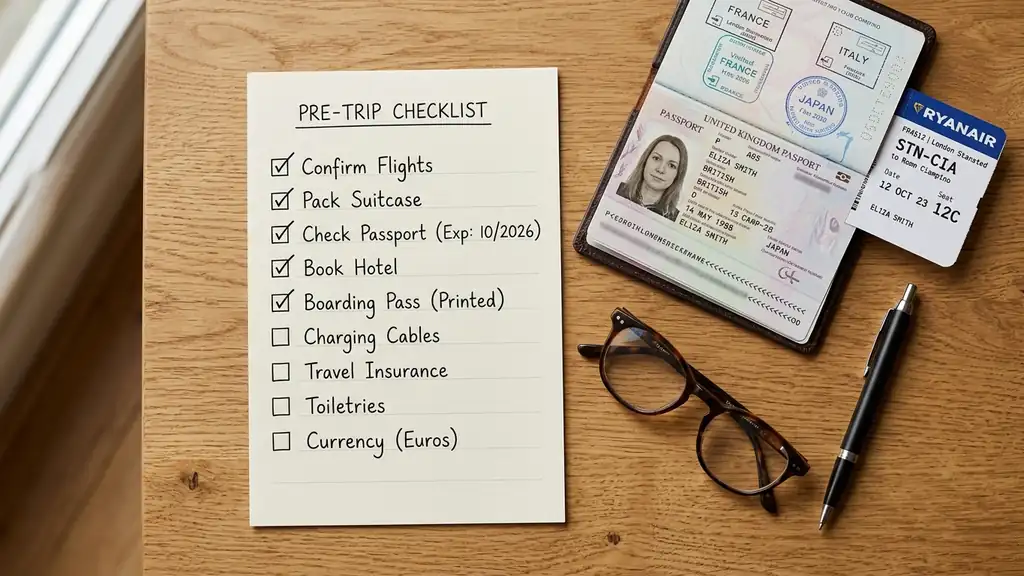
- Find your passport’s expiry date. Physically open it. Don’t trust your memory — mine was off by seven years.
- Find your return date, then count the buffer forward. Six months past return for most of Asia/Middle East/Africa; three months past departure for Schengen.
- Look up the destination’s official rule. Government site or State Department country page. Not a random blog. (Yes, including this one — verify me.)
- Count your blank pages. You want at least two fully blank ones for stamp-happy countries.
- Check the visa pathway (next section). Visa-on-arrival, e-visa, or ESTA/ETA — they are not the same and have different lead times.
- Confirm the issue date if you’re headed to Schengen — under 10 years old.
- If anything’s tight, renew now. As of 2026, routine U.S. renewal runs about 4–6 weeks of processing plus up to 2 weeks of mailing — call it 8–10 weeks door to door. Don’t gamble on the low end.
- Re-check 24 hours before as part of your 24-hour pre-flight checklist. This is the catch-net that saved my Bangkok trip.
Visa-on-Arrival vs. E-Visa vs. ESTA/ETA — The 90-Second Version
These get jammed together in people’s heads, and they shouldn’t. Getting the wrong one is its own way to get stranded.
- Visa-on-arrival: You get the visa at the destination airport after you land. Convenient, but you can still be denied boarding at home if your passport validity is short — the airline checks before you ever reach that arrival counter.
- E-visa: You apply online before you fly and travel on an approved document. India’s e-visa is the classic example. Apply with lead time — “instant” is a marketing word, not a guarantee.
- ESTA (USA) / ETA (Canada, UK, the EU’s upcoming system): Not full visas — they’re travel authorizations for citizens of visa-waiver countries. Quick online forms, usually approved fast, but required, and tied to a valid passport. Skip it and the airline won’t board you.
The common thread: every one of these assumes a passport that clears the validity rule. The visa is the second lock. Validity is the first. You need both open.
Who Should Do What — The Decision Block
Match yourself to a row and act today, not in panic-mode at the gate:
- Passport expires within 9 months and you travel internationally at all → Renew now. You’ll almost certainly trip a 6-month rule on some trip this year. Stop reading, go book the renewal.
- Trip booked, validity is tight (under 8 months at return) → Pay for expedited renewal. As of 2026 it’s an extra $60 over the standard fee, plus about $22 for faster return shipping, dropping the total to roughly 6–7 weeks door to door. Worth every penny against a dead trip. (Confirm current fees on the State Department site before you pay.)
- Trip is inside 3 weeks and your passport’s short → You need an in-person passport-agency appointment or a reputable expedited-passport service. This is the emergency lane. (Expedited-passport service — sponsored placeholder.)
- Plenty of validity, frequent flyer → You’re fine on validity. Spend the energy on speed instead: Global Entry at $120 for 5 years (it includes TSA PreCheck) pays off the first time you skip the customs line coming home.
The Two Cheap Things That Make This Whole Headache Smaller
Validity is the big risk. But two small buys take the friction out of everything around it.
First, an RFID passport holder. Not because skimmers are a daily threat — because it keeps your passport, boarding pass, and a spare pen in one place you can find without dumping your bag at the desk. A passport you can locate in two seconds is a passport you actually check before a trip. Mine lives in the same jacket pocket every flight.
Second, if your validity is genuinely short and the trip is close, a real expedited-passport service can shave weeks off the timeline versus the standard mail-in route. The numbers move, so confirm current processing windows and fees on the official State Department site before you pay anyone. (Sponsored placeholder — terms change, verify before purchase.)
And while you’re squaring away travel admin, know your back-end rights too. As of 2026, the U.S. DOT requires automatic cash refunds when an airline cancels or significantly changes a flight and you decline the rebooking — that’s a passenger right, separate from any insurance. On flights departing the EU (and flights into the EU on EU-based carriers), EU261 can owe cash compensation of roughly €250 / €400 / €600 by distance for cancellations and long delays inside the airline’s control (verify exact thresholds before you claim). None of that helps if you’re denied boarding for a short passport, though. That one’s on you to catch early — pair this with a trusted-traveler setup and you’ve covered both the front door and the back door of a trip.

FAQ
How much passport validity do I need to travel internationally?
It depends on the destination, but the safe default is six months of validity beyond your travel dates. Most of Asia, the Middle East, and Africa — roughly 70-plus countries as of 2026 — enforce a 6-month rule. The Schengen Area asks for 3 months beyond departure, and a few countries like Canada and Australia only need it valid at entry. Always confirm the specific rule on the destination’s official site before booking.
What is the six-month passport rule, explained simply?
It means your passport must remain valid for at least six months after your planned departure from the destination country. So if you fly home on December 1, many countries require your passport to be valid through at least June 1 of the next year. The airline checks this at check-in and can deny boarding if you fall short — you usually never even reach immigration.
Can I travel with less than 6 months left on my passport?
Sometimes — it entirely depends on where you’re going. Countries like Canada, Australia, the Bahamas, and Bermuda generally only require your passport to be valid at the time of entry (verify current rules). But for any country enforcing the 6-month rule, less than six months means you risk being denied boarding. When in doubt, renew before you fly. It’s cheaper than a missed trip.
How long does passport renewal take in 2026?
As of 2026, routine U.S. passport renewal runs about 4–6 weeks of processing time, plus up to 2 weeks for mailing — roughly 8–10 weeks door to door. Expedited service costs about $60 extra and runs 2–3 weeks of processing, or roughly 6–7 weeks total with mailing. Faster return shipping adds around $22. These windows shift with demand, so check the official State Department processing-time page before you rely on a date.
Does the 6-month rule apply to kids’ passports too?
Yes. Validity rules apply to every traveler regardless of age. And in the U.S., passports issued to children under 16 are only valid for 5 years (16- and 17-year-olds get the full 10), so a young kid’s passport expires faster and catches families off guard. Check every passport in the group — not just yours — well before the trip.