

Short answer: Frankfurt is better than its reputation. Skip the corporate hotel restaurant and walk fifteen minutes in any direction. Grab lunch at the Kleinmarkthalle (open Monday through Saturday), then cross the Main to Sachsenhausen in the evening for apple wine and green sauce at an old tavern. Meetings start on time here, so eat well between them.
Frankfurt has a reputation problem with American business travelers. After a dozen visits, here’s why I keep coming back — and where to actually eat between meetings, drink real apple wine, and find the city behind the airport.
The Frankfurt Reputation Problem
Frankfurt is one of those cities that American business travelers tend to apologize for visiting. “I’m just transiting through Frankfurt” or “I have a one-day meeting there, then I’m going to Berlin.” The implication is that Frankfurt itself isn’t worth time.
This is wrong, and the reason it’s wrong is interesting.
Frankfurt is the financial capital of Germany. It’s a serious business city, with serious business people, who do not generally market themselves to tourists. The city has a small old town, a big new town, the European Central Bank, the second-busiest airport in Europe, and almost no Disneyland-style attractions. If you arrive looking for the German equivalent of Paris or Rome, you will leave disappointed.
If you arrive looking for excellent food, walkable neighborhoods, a beautiful river, the densest cluster of museums in Germany, and one of the best apple wine cultures in Europe, you will leave a fan.
I’ve come to genuinely look forward to my Frankfurt trips. The city rewards travelers who don’t try to make it something it isn’t. Below is the playbook I’ve built over a dozen visits.
Where to Stay
Frankfurt’s geography is friendly to business travelers. The city is small, walkable, and well-connected. The neighborhoods I rotate between:
Westend. Quiet, leafy, residential. Older buildings, classic feel. Walking distance to most central business areas. My default for a relaxed working trip.
Bahnhofsviertel. Around the main train station. Has a reputation for being a bit rough in spots but has changed in the last decade — many excellent restaurants, very convenient for transit, walkable to the financial district. I’ve stayed here multiple times without issue.
Innenstadt / Altstadt. The old center. Convenient for visiting the historic core (Römerberg, the cathedral, etc.). A bit touristy but pleasant.
Sachsenhausen. Across the Main river from the financial district. The home of Frankfurt’s apple wine culture. Best for a leisure-leaning trip, less convenient for business meetings.
For a working trip, I default to a hotel in or near Bahnhofsviertel — close to transit, close to the financial district, and (despite the reputation) full of excellent restaurants and bars.
Where to Actually Eat
The single most important Frankfurt insight: skip the restaurants in the corporate hotels. Walk fifteen minutes in any direction.
The food map I’ve assembled:
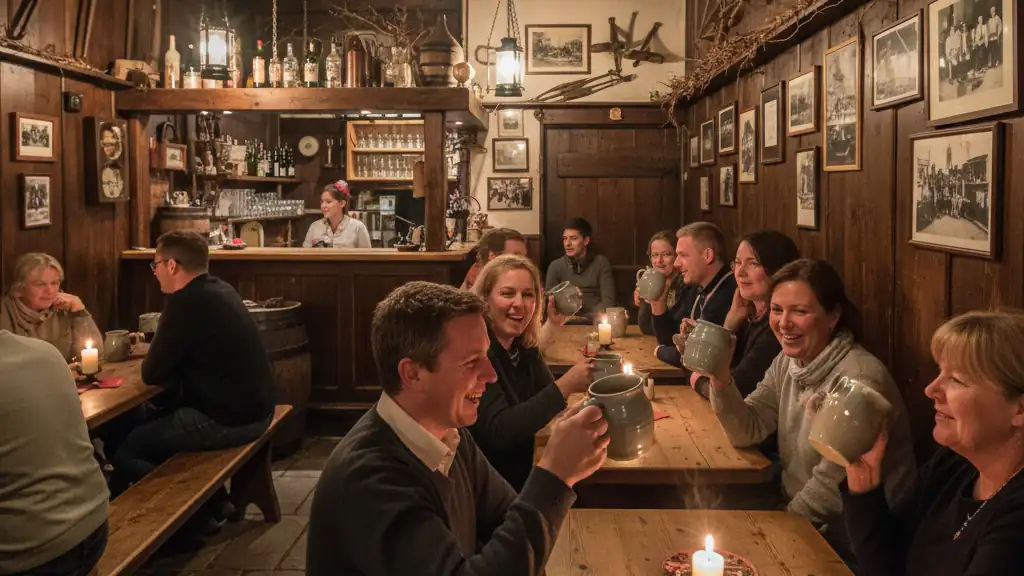
Sachsenhausen apple wine taverns. The Apfelwein (apple wine) culture is one of Frankfurt’s defining experiences. Small, local taverns serve apfelwein from blue-and-gray ceramic jugs (Bembels), along with hearty German food — schnitzel, handkäse mit musik (a regional cheese with onions), and Frankfurter green sauce (a herb sauce served over potatoes and eggs). Specific places worth trying: Atschel, Apfelwein Wagner, Atschel-Wirtschaft. Pick the one with the longest line on a Friday night and that’s your spot.
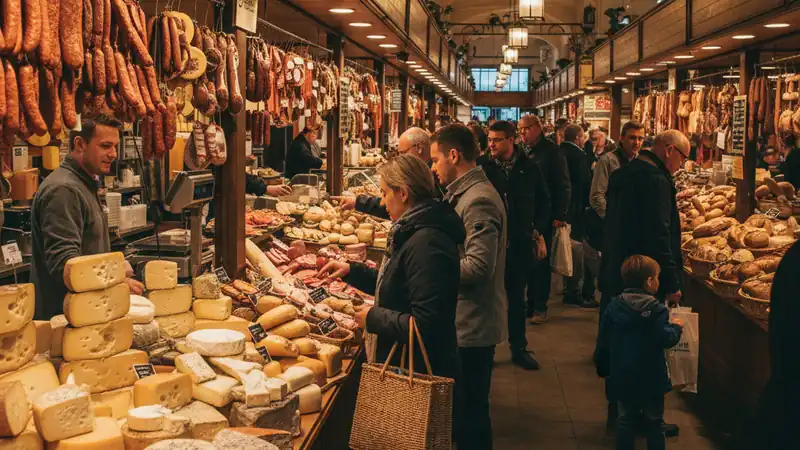
Kleinmarkthalle. The indoor market in the city center. Open Monday through Saturday. Great for lunch — sausages, breads, cheese stalls, fresh fish. Eat at the counters, drink a glass of wine standing up at one of the stalls. This is a Frankfurt experience worth setting aside an hour for.
Bahnhofsviertel restaurants. Despite the area’s mixed reputation, the food scene here has become excellent. Vietnamese, Indian, Korean, Italian — all in walking distance of the train station and in the price range of a working dinner.
Berger Strasse and Bornheim. A neighborhood east of the center, more residential, with a strong local food scene. A 10-minute U-Bahn ride. Worth a dinner if you have a free evening.
What I avoid: the chain restaurants on Zeil (Frankfurt’s main pedestrian shopping street). Functional, not memorable.
Apple Wine: The Frankfurt Drink
Apfelwein is unique to Frankfurt and a few neighboring areas. It’s a tart, slightly sour, low-alcohol fermented apple beverage that locals drink the way Bavarians drink beer. The first sip almost always disappoints American visitors. The fourth sip, paired with the right food, starts to make sense.
The basics:
- It comes in a Bembel — a ceramic jug, traditionally blue and gray
- You pour it into a Geripptes — a ribbed glass
- It’s about 5-7% alcohol, similar to beer
- It’s traditionally drunk in Sachsenhausen taverns alongside hearty food
- Locals sometimes mix it with sparkling water (sauer gespritzt) or apple juice (süß gespritzt) — both are acceptable, neither is “tourist behavior”
The first time I tried apfelwein I thought it was an acquired taste I wouldn’t bother acquiring. By trip three, sitting in a tavern with a bowl of green sauce and potatoes, I’d come around. Now it’s part of how I mark a Frankfurt trip — at least one Sachsenhausen evening with a Bembel on the table.
Getting Around
Frankfurt has the kind of transit system Germans are good at — clean, on time, easy to navigate.
- S-Bahn and U-Bahn. Suburban and metro lines. Cover most of the central city. Buy single tickets or a day pass at the machines (in English).
- Trams. Connect neighborhoods nicely. Slower than the U-Bahn but pleasant.
- Walking. Most of central Frankfurt is walkable. From Bahnhofsviertel to the Römer (old town) is 20 minutes on foot.
- Taxis and Uber. Both work. Reasonably priced.
- The airport. 12 minutes by S-Bahn from the central station. The S8 or S9 lines.
One specific Frankfurt habit worth knowing: the airport is so close to the city that day trips work in both directions. I’ve had meetings in Frankfurt, taken the train to Heidelberg for lunch, and been back for an evening dinner. The geography helps.
The Frankfurt Working Day
Frankfurt business culture is the most German of German business cultures. The patterns:
- Meetings start on time. 9 AM means 9 AM, not 9:05.
- Direct communication is the norm. Disagreement is not personal.
- Lunch is often a quick affair — a sandwich at the office or a 45-minute lunch out — not a multi-hour event
- Dinner is more relaxed but rarely loud or extended past 10 PM
- Punctuality, preparation, and substance are rewarded above charm
If you’ve done business in the US, you’ll find Frankfurt familiar in many ways and refreshingly different in others. The substance lands faster. The small talk is shorter. The meeting often produces actual decisions in the room. This isn’t unique to Frankfurt — it’s broadly true across German business — but Frankfurt is where I most consistently see it. The broader pattern is in country-by-country etiquette cheat sheet.
The Saturday Morning Markets
If your trip stretches into a Saturday morning, this is the time when Frankfurt is at its best.
The Konstablerwache farmers’ market on Saturday mornings is one of the best in the city. Local produce, breads, cheeses, sausages. Open from about 8 AM to 5 PM. Walk through, buy a coffee and a pastry, watch families do their weekly shopping.
The Schillerstrasse market on Friday afternoons (similar feel) is also excellent.
The Kleinmarkthalle, mentioned earlier, is open Monday through Saturday — a year-round indoor version of the same energy.
The Saturday morning ritual is the part of Frankfurt that most reminds me why I like the city. Small. Calm. Real. Locally focused. Not performing for tourists.
The River Walk That Surprised Me
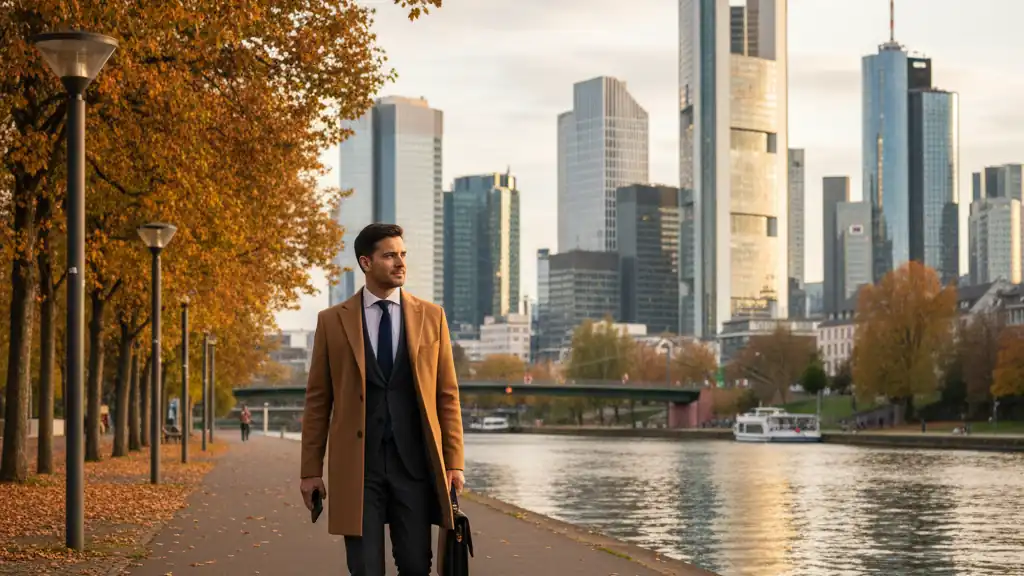
The most underrated Frankfurt experience, in my opinion, is the walk along the Main river.
From the financial district, you can walk down to the riverbank, cross the Eiserner Steg pedestrian bridge to Sachsenhausen, and walk back along the southern bank to one of the bridges that takes you back across. The full loop takes about 90 minutes, has views of the skyline, the museum row (Museumsufer), and a few of the old churches and squares.
I do this walk on at least one trip out of every two. It resets the brain after a long meeting day. It reminds me that Frankfurt has a physical beauty that the office buildings hide.
It’s also free, requires no planning, and works in almost any weather. The kind of “thing to do” that doesn’t show up on travel guides because it’s too obvious to mention.
Day Trips From Frankfurt
Frankfurt’s central location in Germany makes it an excellent day-trip base. The trips I’ve taken on extended visits:
- Heidelberg. 50 minutes by train. Picturesque, medieval, walkable. The single most recommended day trip from Frankfurt.
- Mainz. 30 minutes by train. Smaller, calmer, with a beautiful cathedral.
- Wiesbaden. 30 minutes by S-Bahn. A spa town with a different feel.
- Wine villages along the Rhine. Eltville, Rüdesheim, and others. Combine train and a short walk for a day in Riesling country.
- Cologne. About 90 minutes by ICE high-speed train. Ambitious but doable as a day trip.
None of these belong in a one-meeting trip. They’re for the trip with a free Saturday or Sunday tacked on.
What I Skip
The Frankfurt things I no longer try to do on a working trip:
- The “must-see” tourist sights. Goethe House, the Cathedral, the Römerberg square. Worth walking past. Not worth dedicated visits unless you have a half-day to spare.
- The shopping on Zeil. It’s the same brands you can find anywhere.
- Late nights in Bahnhofsviertel. Excellent earlier in the evening. After midnight it gets less pleasant.
- “Authentic” tourist tours. Frankfurt isn’t a tourist tour city. Walk it yourself.
A Sample Frankfurt Day
To make this concrete, here’s how I’d structure a single working day with one free evening:
- 7 AM. Walk along the river or in Westend. 30-40 minutes.
- 8 AM. Breakfast at a local bakery (Wackers, or any neighborhood Bäckerei). Real coffee, a pretzel or a slice of bread with cheese.
- 9-12. Meetings.
- 12:30. Lunch at the Kleinmarkthalle or a small restaurant near the office.
- 1:30-5. Meetings or work time.
- 6 PM. Walk across the river to Sachsenhausen.
- 7. Apfelwein and dinner at a tavern. Two hours. Good food, ceramic jug, calm conversation.
- 9. Walk back across the river. Bed by 10:30.
Eight working hours, three real moments — the morning walk, the market or local lunch, the Sachsenhausen evening. That’s a Frankfurt day done well.
The Bigger Idea
Frankfurt is the city American business travelers underestimate. The reason is a category error: people compare it to Berlin or Munich and find it lacking. The right comparison is to other modest, focused European business cities — Zurich, Brussels, Milan, Stockholm — and on that scale, Frankfurt holds its own.
The city rewards modest expectations and curiosity. If you arrive ready to walk along the river, drink some apfelwein, eat at the markets, and observe a small, quiet, well-run city doing its thing, you’ll come back wanting more.
I’ve done that. Twelve trips in, I look forward to Frankfurt the way I once only looked forward to Tokyo or Singapore. Different rewards. Same underlying skill: don’t try to make the city something it isn’t. Let it be what it is.
Combined with the broader habit of using the apps I use on every trip to keep the logistics simple, Frankfurt becomes one of the most predictable, pleasant business stops in my rotation. The opposite of the cities that demand constant adjustment.
And if you’ve appreciated the slow Sunday I described in Mexico City for the working dad — Frankfurt offers a similar deal in a very different package. Slow morning, real lunch, river walk, apfelwein evening. The format is the same. The flavor is German.
Don’t apologize for visiting Frankfurt. It’s one of Europe’s quietly excellent business cities. Use it well.

Title: Tokyo for the business dad
Frankfurt rewards modesty. Tokyo rewards structure — here’s how to do 24 hours there without burning out.
Inside:
- Where to stay if your meeting is in Marunouchi
- Lunch beats dinner — here’s why
- The 60-minute walks that reset the day
Key takeaways
- Don’t eat where you sleep. Skip the restaurants in the corporate hotels and on the Zeil shopping street. Walk fifteen minutes in any direction and you’ll do better.
- Lunch: the Kleinmarkthalle. The indoor market in the city center, open Monday through Saturday. Sausages, breads, cheese. A fast, real lunch between meetings.
- Dinner: cross the Main to Sachsenhausen. The home of Frankfurt’s apple wine culture. Apfelwein from a ceramic bembel in a ribbed geripptes glass, with schnitzel, handkäse mit musik, or Frankfurter green sauce.
- The airport is close. Twelve minutes by S-Bahn from the central station on the S8 or S9. The transit is clean and on time.
- Show up on time. 9 AM means 9 AM, not 9:05. Plan your meals around meetings that actually start when they say they will.
- For local flavor, ride out a stop. Bornheim and Berger Strasse, a 10-minute U-Bahn ride east, have a strong local food scene without the chain restaurants.
FAQ
Where should I eat lunch in Frankfurt between meetings?
The Kleinmarkthalle, the indoor market in the city center, open Monday through Saturday. You can grab sausages, breads, and cheese fast. The bigger rule: skip the corporate hotel restaurants and the chains on the Zeil, and walk fifteen minutes in any direction instead.
What food is Frankfurt actually known for?
Apfelwein (apple wine, 5-7% alcohol, treated the way Bavarians treat beer), schnitzel, handkäse mit musik, and Frankfurter green sauce, a herb sauce served over potatoes and eggs. You’ll find them in the apple wine taverns across the Main in Sachsenhausen.
How do I get from Frankfurt Airport to the city?
Twelve minutes by S-Bahn from the central station on the S8 or S9 lines. The S-Bahn and U-Bahn are clean, on time, and easy to navigate, so you rarely need a taxi or Uber for the basics.
📍 Part of: Business Travel City Guides.