

Short answer: For most short business trips abroad, an eSIM wins. As of 2026, a travel eSIM from a provider like Airalo costs a few dollars for a quick cross-border hop and around $35 for ~10GB across Europe, versus roughly $12 a day for carrier roaming and the genuine bureaucratic hassle of buying a local SIM. The catch: a data-only eSIM doesn’t give you a new voice number, so I run work calls over hotel wifi or WhatsApp and keep my real work number reachable for texts. Roaming still wins in exactly one case — a 2-3 day trip where you value zero setup over saving twenty bucks.
My roaming education came via a bill. One client trip to Frankfurt, pre-eSIM, I landed, ignored the carrier’s welcome text, and used my phone like I was home — maps, email, a couple of video calls. The bill was the kind of number you read twice and then stop chewing your sandwich. Pay-per-use international data is still about $2.05 a megabyte in 2026 if you don’t have a pass. A megabyte. I’ve made a lot of checklists since.
Heads up: some links below are affiliate links — I may earn a small commission at no cost to you. I only point you toward stuff I’d actually use.
What I Actually Use
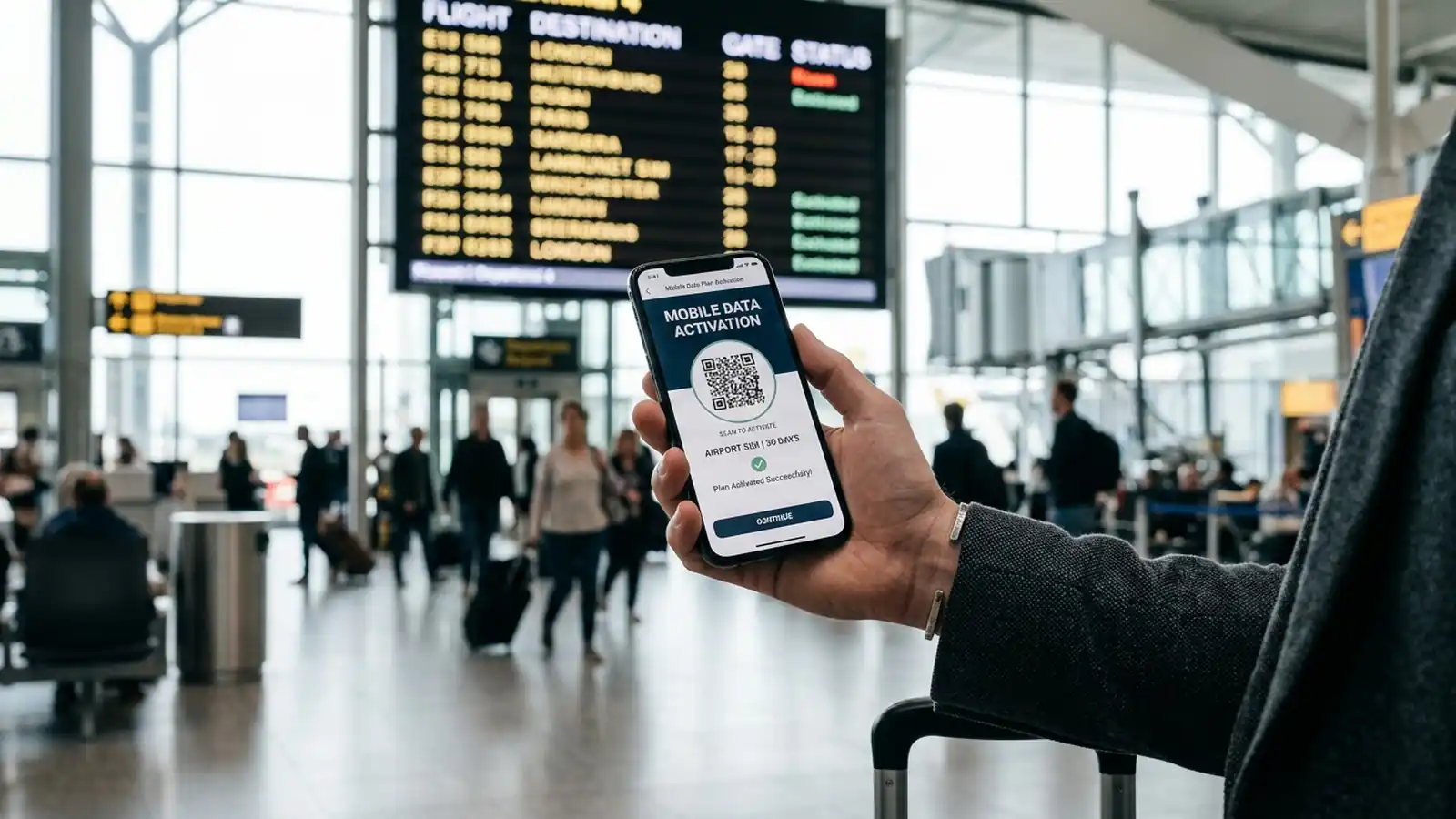
Here’s my real setup, not the theoretical best one. I buy an eSIM before I fly — usually the night before, on the couch, while half-watching something. I install it, leave it switched off, and turn it on the second the plane doors open. My work number stays on my physical SIM (or primary eSIM) set to “data off, roaming off” so texts and 2FA codes still reach me but nothing burns money.
Calls? Hotel wifi plus my laptop for scheduled meetings. WhatsApp or a regular call over the eSIM data for the quick “I’m in the cab, running five late” stuff. That’s it. No SIM-card shop, no passport photocopy, no new number to give thirty people.
I’ve bought an eSIM in an airport bathroom while waiting for a bag — QR code, ninety seconds, done. That convenience is the whole argument. I’ve also fumbled it: forgot to toggle data-roaming off on my main line once and ate a few dollars before I noticed. Two-minute fix, but it’s why I now do the toggle before I even board.
The Three-Way Comparison
Three real options, what they actually cost, and who each one is for. Figures below are verified as of 2026 — but pricing and plan terms change constantly, so treat these as a current snapshot and confirm on the official source before you buy.
| eSIM (Airalo / Holafly) | Carrier Roaming | Local SIM | |
|---|---|---|---|
| Rough cost | ~$4 for a 1GB short hop; ~$35 for 10GB Europe; ~$72.50 for 30-day unlimited | ~$12/day (AT&T, Verizon). T-Mobile is tiered: $10/day for 2GB, $50 for a 10-day/15GB pass, $75 for 30-day/30GB. Pay-per-use ~$2.05/MB without any pass | Cheapest per-GB in one country, but you pay in time and hassle |
| Setup speed | Minutes. Buy + install before you fly, flip on at landing | Instant — it just works the moment you land (sometimes too instant; auto-charges) | Slow. Find a shop, show ID, wait for activation |
| Coverage | Regional plans span dozens of countries on one eSIM | Your carrier’s partner networks; usually broad | Best local network — but only that country |
| Keep your number? | Data-only eSIMs: yes, your number stays reachable on your main line. No new voice number | Yes — same number, same plan, abroad | No — you get a new local number |
| Best for | Multi-country trips, week-plus stays, anyone who hates surprise bills | 2-3 day trips where zero setup beats saving $20 | Long stays in one country; heavy data; someone who wants a local number |
The numbers that matter: a week in Europe on roaming runs about $84 on AT&T or Verizon ($12 × 7). On T-Mobile, a 7-day trip lands you in the 10-day/15GB International Pass at $50 — cheaper than AT&T or Verizon for the week, but still pricier than an eSIM. The same week on an Airalo Europe plan with 10GB is roughly $35. That’s the gap. It’s not life-changing money on one trip, but multiply it by a year of travel and it buys a decent dinner or two.
eSIM: The Default Winner (With One Asterisk)
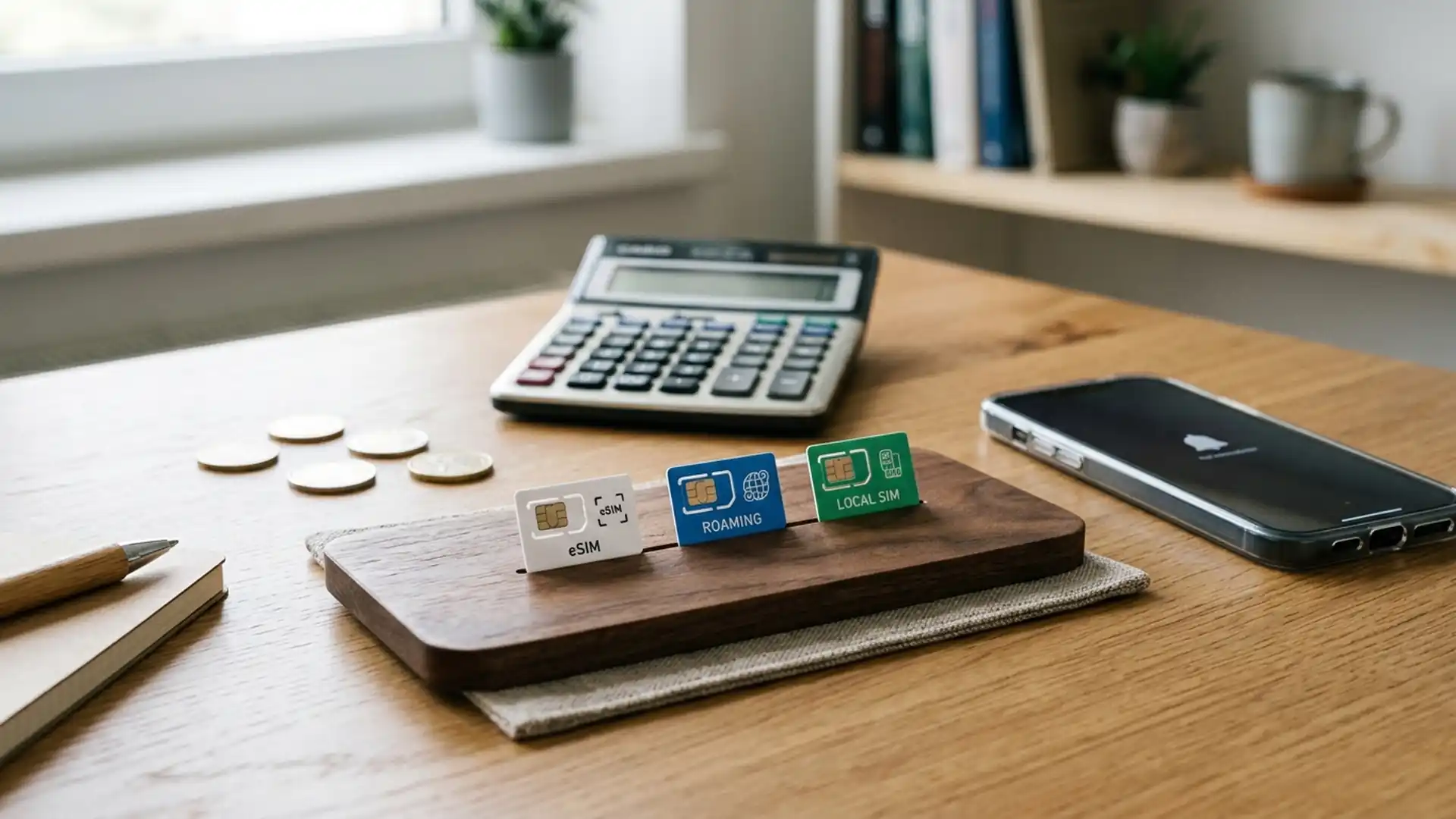
An eSIM is just a SIM card that lives in software. Most phones from the last several years support it — you scan a QR code and a second line appears, no tray, no tweezers, no losing the little plastic SIM in a hotel carpet.
Airalo is my default. Europe plans start around $4 for 1GB over a few days — perfect for a single-day cross-border meeting — and a 10GB regional plan covering most of the continent runs about $35. There’s even a 30-day “unlimited” option around $72.50 if you’re staying a while. Worth knowing: that “unlimited” tier is usually a fair-use deal — full speed up to a daily cap, then throttled — so confirm the exact terms before you treat it as truly bottomless. Important asterisk: Airalo’s standard plans are data-only. No voice number, no incoming SMS. You stay reachable through your normal line and make calls over WhatsApp or VoIP.
Holafly leans into unlimited data — its monthly plans run roughly $48 to $65 depending on the option. Worth knowing for 2026: Holafly’s newer unlimited plans (purchased November 2025 or later) can include a local phone number for the US, UK, or Canada — but read the fine print, because that number is for inbound SMS and VoIP calling only, not traditional incoming cellular calls. And you keep your real number on WhatsApp regardless. Verify the current terms on Holafly’s site before you count on the number feature; this stuff changes.
The asterisk on eSIMs generally: they hand you data, not a dial tone. If your job genuinely needs a working local voice line that rings, an eSIM alone won’t do it. For 95% of business travel — email, calls over wifi or WhatsApp, maps, ride apps, the boarding pass that won’t load — data is all you need.
Roaming: Lazy, Pricey, Occasionally Right
Carrier roaming is the path of least resistance. You land, your phone works, same number, nothing to set up. AT&T and Verizon both run a roughly $12-a-day pass. T-Mobile took a different route in 2026: instead of one flat daily rate, it’s tiered by trip length — $10 for a 1-day/2GB pass, $50 for a 10-day/15GB pass, and $75 for a 30-day/30GB pass, all with unlimited calling. T-Mobile also includes “free” slow data on many plans that’s fine for a WhatsApp message and useless for a map.
Two traps. First, the auto-activation: Verizon’s pass kicks in the moment you use your phone, so one reflexive email check at the gate charges you for the whole day. Second — and this is the one that nuked my Frankfurt budget — if you have no pass and just roam, you’re paying around $2.05 per megabyte. That’s the horror show. A few minutes of maps and email can run into real money fast.
When is roaming actually the right call? A 2-3 day trip. On a quick hop, two days of pass fees (~$24 on AT&T or Verizon, or $20 on a pair of T-Mobile day passes) is barely more than a cheap eSIM, and the zero-setup factor genuinely matters when you’re sprinting between meetings. I’ve eaten the roaming charge on a 48-hour trip on purpose and felt fine about it.
Local SIM: Cheap, But You Pay in Friction
A local SIM gives you the best in-country network and the cheapest per-gigabyte data. It’s the right move if you’re spending a month in one country, burning serious data, or you actually want a local number people can call.
The friction is real, though. Most European countries — Italy, Spain, Germany among them — require ID registration, usually a passport, to activate a SIM in-store. Germany has mandated it since 2017; Spain now generally wants a physical foreign passport from tourists. So your business trip now includes finding a carrier shop, queuing, handing over your passport, and waiting for activation. And you get a new number, which means anyone trying to reach your work line hits a wall. For a multi-country trip, a local SIM is the worst of the three. For a long single-country stay, it can be the cheapest.
The Travel Router Trick (Why I Pack One)
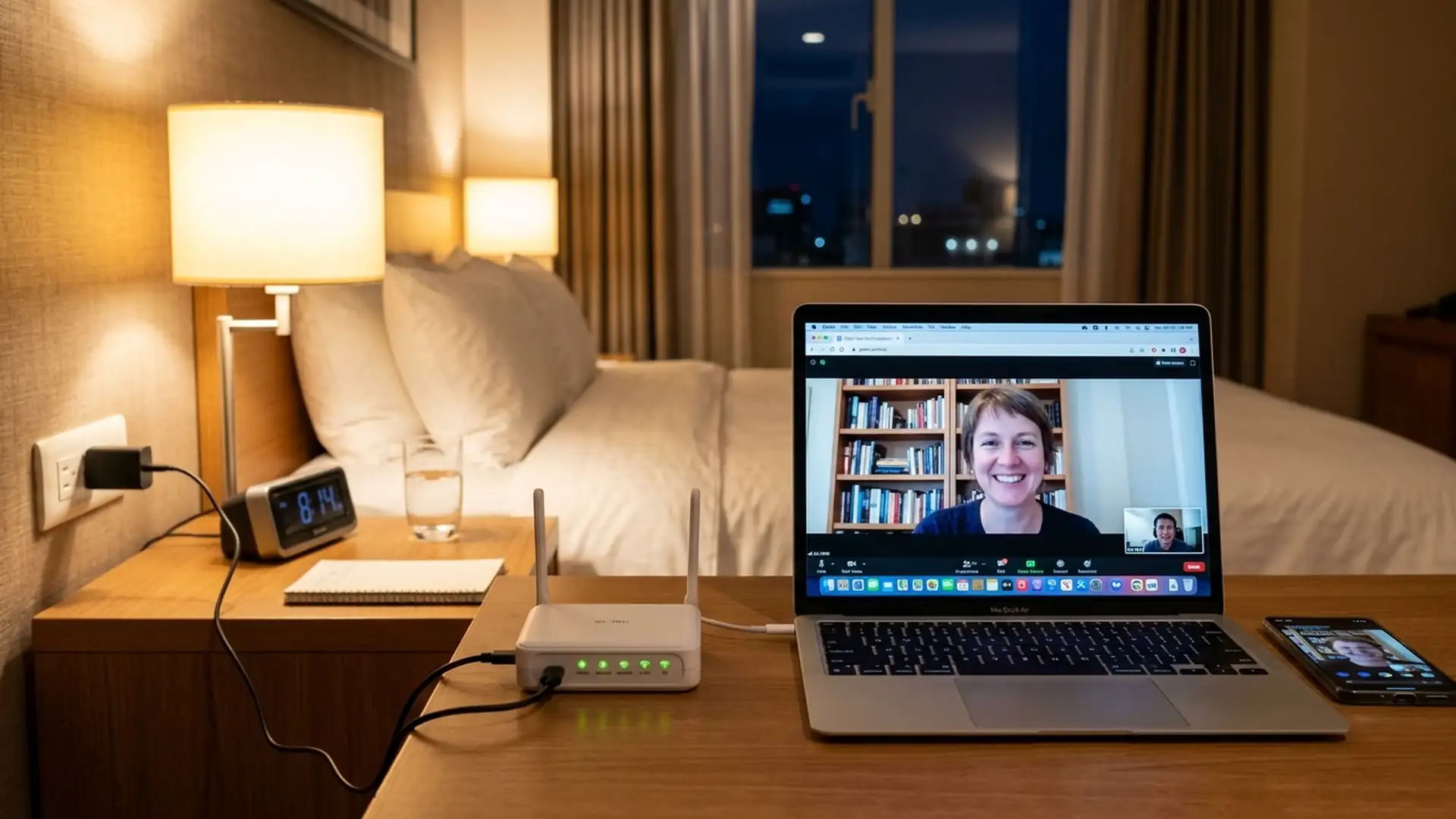
Here’s the move that ties it all together: I run a lot of work over hotel wifi to keep my eSIM data light, and a small travel router makes hotel wifi tolerable. A GL.iNet travel router logs into the hotel’s captive portal once, then broadcasts its own private network for all my devices. It isolates my laptop and phone from everyone else on the hotel network, lets me run a VPN, and — if hotel wifi is garbage — I can plug my eSIM-connected phone into it and share that connection cleanly.
The pocket-sized models are cheap and weigh almost nothing. It’s the least glamorous thing in my bag and one of the most used. If you want the broader kit, I keep a running list of cheap travel accessories under $50 and the business travel apps I actually use.
Which to Pick for Your Trip
A decision tree, not a coin flip. Match the trip to the option:
- One week in Europe, multiple countries: eSIM. Buy a 10GB regional plan (~$35), keep your work number reachable on your main line, run calls over wifi. This is the clearest win.
- A full month in one country: Local SIM if you’ll burn heavy data or need a local number and don’t mind the passport-and-shop routine. Otherwise a 30-day unlimited eSIM (~$72.50) for zero friction.
- A quick 2-3 day cross-border hop: Either a cheap short-hop eSIM (~$4) or just roam. On a 48-hour trip the cost gap is tiny and roaming’s zero setup is worth it.
- You absolutely need a ringing local voice number: Local SIM, or a Holafly plan that includes a number — but confirm exactly what “number” means (often inbound SMS + VoIP only) before you rely on it.
- You’re a light user who just needs maps and email: A small eSIM data plan every time. You’ll spend less than a couple of days of roaming.
Whichever you choose, decide before you fly — that goes on your 24-hour pre-flight checklist right next to charging the power bank.
FAQ
Is an eSIM cheaper than roaming for a week abroad?
Usually yes. As of 2026, a week of carrier roaming runs about $84 on AT&T or Verizon ($12/day), while on T-Mobile a 7-day trip falls into the 10-day/15GB International Pass at $50. A 10GB regional Europe eSIM from Airalo is roughly $35 — cheaper than all three. For a full week, the eSIM is meaningfully cheaper. The math only flips on very short trips. Prices change, so confirm current rates before you buy.
How do eSIMs work for business travel?
You buy a plan online, scan a QR code to install a second line on your phone, and switch it on when you land. The eSIM handles data; your normal line stays set to roaming-off so texts and 2FA codes still arrive without charges. You make calls over hotel wifi, WhatsApp, or VoIP. Most phones from the last several years support eSIM — check your model first.
Can I keep my work number on an eSIM?
Yes, with a nuance. A data-only travel eSIM doesn’t replace your number — your work number stays on your primary line and remains reachable for texts and apps like WhatsApp. The travel eSIM just carries your data. Only if you buy a plan that explicitly includes a new local number (like certain Holafly plans) do you get a separate number, and even then your original number stays yours.
Is roaming ever the better choice?
On a short 2-3 day trip, yes. The pass fees (~$20-$24 for a couple of days on a major carrier) are close enough to a cheap eSIM that the zero-setup convenience wins — your phone just works the moment you land, same number, nothing to install. The danger is roaming without a pass, where pay-per-use rates around $2.05/MB can produce a genuinely ugly bill.
Do I need a passport to buy a local SIM in Europe?
Often, yes. Many European countries — including Italy, Spain, and Germany — require ID registration, usually a passport, to activate a SIM card in-store. Travel eSIMs from providers like Airalo generally skip that registration for standard data plans, which is a big part of why they’re easier for business travelers crossing multiple countries.