

Short answer: The thing nobody warns you about in India is the head wobble — that side-to-side tilt that usually means “yes,” “I understand,” or “I’m with you,” not the disagreement your American brain instantly assumes. Past that, India runs on relationships before contracts, deference to the most senior person in the room, and a deep aversion to a flat “no,” so a soft “yes” can quietly mean “maybe” or “no.” Use your right hand for cards, food, and gifts, stick to titles until you’re invited not to, and slow down. The deal moves at the speed of trust, not the speed of your calendar.
My first meeting in Bengaluru, I asked the lead engineer if the timeline was doable. He wobbled his head. I assumed I’d offended him and started backpedaling. Turned out he’d been agreeing with me the whole time. I spent four minutes arguing with a yes.
The Head Wobble Isn’t a Trick. You’re Just Reading It Backwards.
Let me get the big one out of the way, because it scrambled my brain for three days straight.
The Indian head wobble — that smooth side-to-side rock — is not a “no.” It’s not confusion. It’s not the polite cousin of a shrug. As of 2026, the consensus across cultural guides and people who actually live there is that it most often means yes, I understand, okay, or I’m following you. Depending on context it can also do the work of “thank you,” a friendly hello, or plain acknowledgment. (Context carries a lot of weight here, so when it matters, just confirm with someone local.)
Here’s what tripped me. To an American, side-to-side is no, up-and-down is yes. India rewires that. The wobble travels sideways but carries the meaning of a nod. So when your counterpart wobbles mid-pitch, they’re not rejecting you. They’re nodding along.
My rule now: I stopped treating the wobble as data and started treating it as warmth. It tells me we’re in rapport. It does not, by itself, confirm a deliverable. For that you need actual words. Which brings me to landmine number two.

“Yes” Is the Most Dangerous Word in the Room
India is a high-context, relationship-first culture where a blunt “no” can feel rude — a way of making someone lose face. So instead of “no,” you’ll get “we’ll try,” “let me see,” “that should be possible,” or a warm, noncommittal “yes.” A real yes and a face-saving yes sound identical to an untrained ear. I have the bruises to prove it.
This is the same trap I wrote about in “yes” doesn’t mean yes across Asian business communication — India just speaks its own dialect of it. The fix isn’t to demand a hard commitment, which only nudges people into politer evasions. The fix is to make it easy for them to tell you the truth.
What works for me: ask how, not whether. “Walk me through how we’d hit the 15th” surfaces the problems that “Can you hit the 15th?” buries under a reflex yes. Then I shut up. After a soft yes, the silence does the work. The hesitation, the “but actually,” the small wince — that’s the real answer showing up a beat late.
10 India Business Etiquette Rules I Wish Someone Had Handed Me at the Gate
- Greet the most senior person first. Hierarchy is real and visible. In a room of five, find the senior-most person and acknowledge them before anyone else. Botch this and you’ve fumbled the room before you’ve opened your mouth.
- Lead with the title. Mr., Mrs., Dr., Professor, plus the surname — and keep it formal until you’re explicitly invited to a first name. Don’t go straight to first names because that’s how you do it back in Ohio.
- Namaste is always safe. A handshake is common in business, but a Namaste — palms together, slight bow of the head — never misfires. With women, let her extend her hand first; if she doesn’t, Namaste.
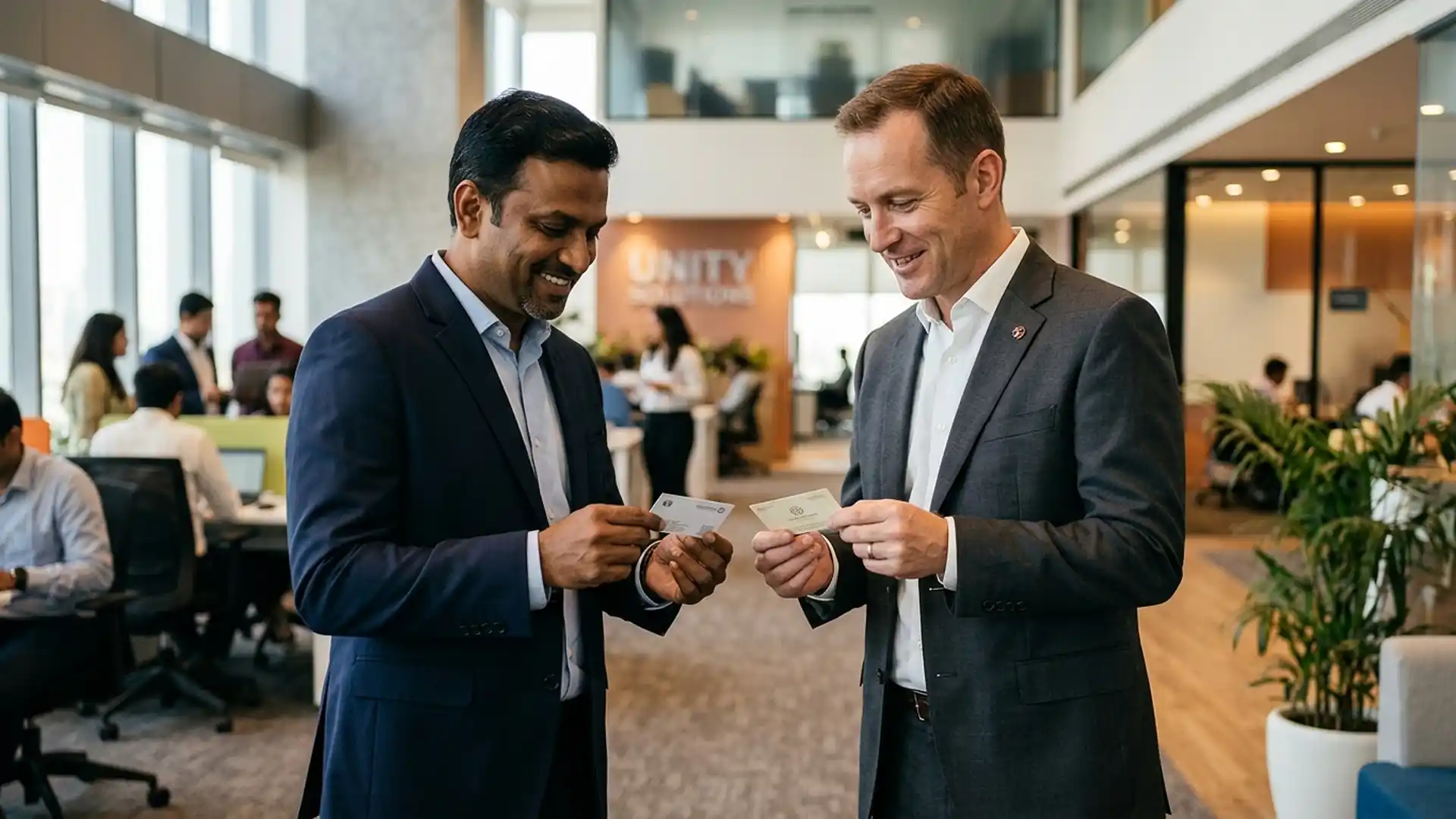
- Right hand for anything that matters. Business cards, gifts, food, handshakes. The left hand is traditionally considered unclean. Give and receive with the right hand or both — never the left alone.
- Treat the business card like a small ceremony. Offer with the right hand, receive with the right hand, and actually read it for a beat before putting it away — somewhere respectful, not your back pocket.
- Show up on time, expect to wait. You arrive punctually as a sign of respect. The meeting may still start late, and the first stretch is relationship-building, not agenda. Both things are true. Pack patience.
- Let the relationship come before the contract. Tea, family questions, small talk — that’s not a detour from the deal, it’s the foundation of it. Skipping it to “get down to business” reads as cold.
- Defer to the decision-maker, even when they’re quiet. The person who talks least may outrank everyone. Aim your key points, and your respect, upward.
- Don’t force a no out of anyone. Keep pressing for a hard commitment and you’ll just get politer non-answers. Ask open questions and read the hesitation.
- Mind the gift colors. Gifts aren’t expected at a first meeting but are welcome once a relationship forms. Wrap in bright colors; avoid black and white (mourning) and white funeral flowers like frangipani. Offer with the right hand.
The Do / Don’t Table I Keep on My Phone
| Situation | Do | Don’t |
|---|---|---|
| Walking into a meeting | Greet the senior-most person first; use titles + surname | Work the room left-to-right like a wedding line |
| Reading the head wobble | Take it as agreement and rapport; confirm specifics in words | Assume it means “no” and start backpedaling |
| Hearing “yes” / “we’ll try” | Ask “how would we do that?” and let silence work | Treat a soft yes as a signed commitment |
| Exchanging business cards | Use the right hand or both; read the card before pocketing it | Hand or take with the left hand alone |
| Gifts | Bright wrapping; offer with the right hand once rapport exists | Black/white wrapping, white flowers, or gifting at the first hello |
| Pace of the deal | Invest in tea, small talk, and repeat visits | Push for a same-day signature on relationship-first turf |
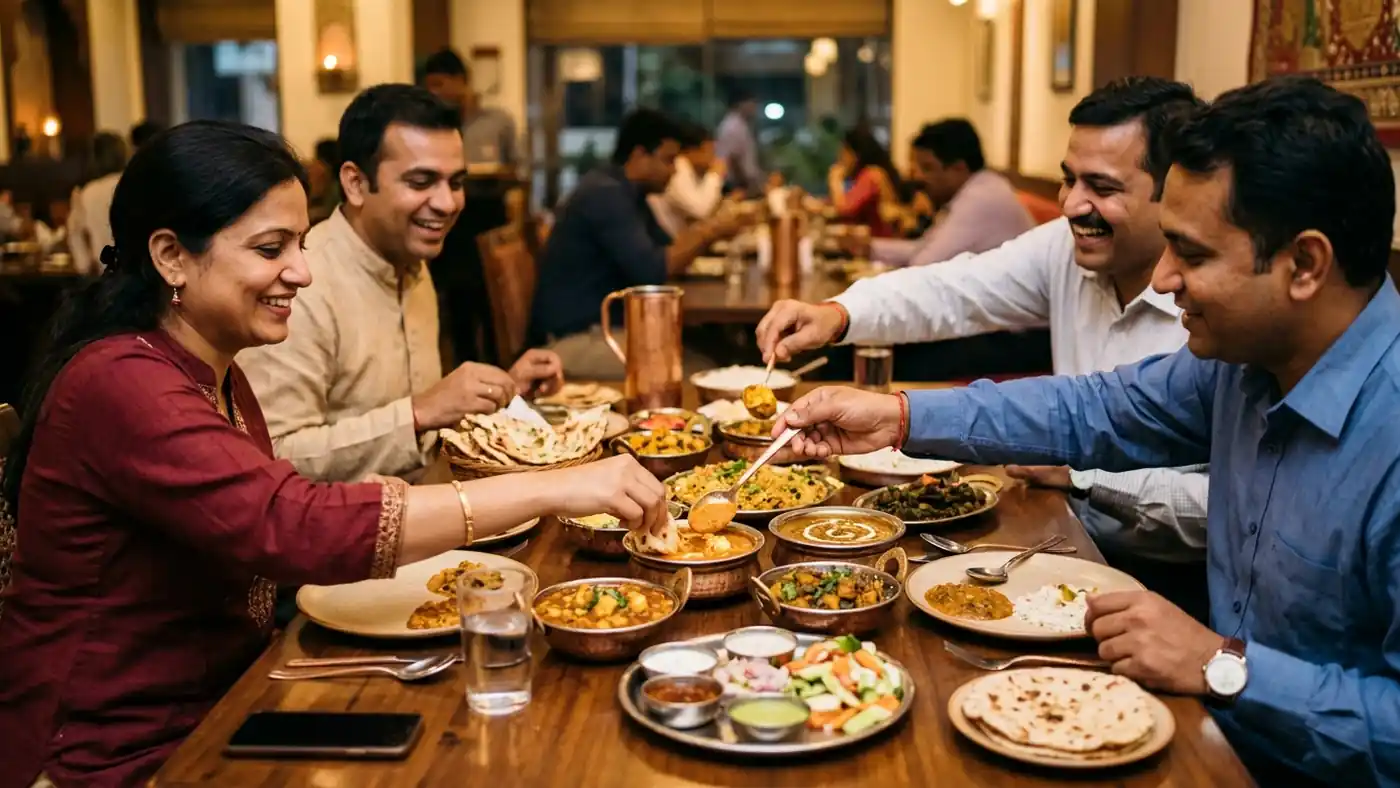
| At the dinner table | Eat and pass with the right hand; pace yourself | Refuse food flatly or wave it off with the left hand |
Vegetarian Dinners, Polite Refusals, and Not Insulting Your Host
India will feed you. Generously. Repeatedly. And a large share of the country is vegetarian — far more than most Western travelers expect — so the dinner you’re invited to may be entirely meat-free. That’s normal, not a shortage. (Surveys put self-identified vegetarians in the rough 20–40% range as of 2026; check current figures if you need a precise number, but the point stands: assume meat-free is on the table.)
The grumpy-dad reality: hospitality here runs hot, and a flat “no thanks” to food can land as a small rejection of the host. You don’t have to clean every plate, but you do have to refuse softly. I’ve botched this and I’ve fixed it, and the fix is the same playbook I laid out in my guide to handling dietary restrictions at a business dinner abroad: get ahead of it, frame it warmly, and never make the host feel they did something wrong.
What actually works for me in India:
- Flag restrictions early and gently. A quiet word to the organizer before the meal beats refusing dishes in front of the whole table.
- Accept a little of something. A small portion is the polite middle path. An empty plate can prompt a worried host to keep refilling, so pace yourself.
- Refuse with warmth, not a wall. “This looks wonderful, I’m completely full” beats “no.” Praise the food, blame your stomach, never the cooking.
- Use the right hand. Eating, passing, accepting — right hand. If you reach with the left out of habit, retrain it now.
- Don’t expect a drink. Alcohol isn’t a given at every Indian business dinner the way it is in Seoul or Munich, and several states restrict or prohibit it. Follow the host’s lead instead of importing your own ritual.
So is it rude to refuse food in India? Not if you do it gently. It’s rude to refuse coldly. See the FAQ — I get this question a lot.
Hierarchy and Deference: Find the Senior Person, Aim Everything at Them
American meetings flatten on purpose. We toss the floor around, we “want to hear from everyone,” we pretend the intern’s idea and the VP’s idea carry equal weight. India doesn’t perform that. Hierarchy is explicit, respected, and load-bearing, and junior people will visibly defer to seniors.
In practice that means three things. The most senior person gets greeted first and addressed most formally. Decisions tend to funnel upward, so the quiet one at the head of the table may be the only vote that counts — don’t read silence as disengagement. And you don’t put a junior counterpart on the spot in front of their boss; you’ll get a face-saving non-answer and you’ll have made them squirm for nothing.
This isn’t unique to India — I unpack the broader pattern in my international business etiquette cheat sheet and the deeper etiquette-by-country guide. But India is where deference is least optional. Respect the chain of command and the room loosens up. Ignore it and you’ll feel a chill you can’t quite name.
The Pace: Relationships First, Contracts Later
The hardest adjustment for me wasn’t the wobble or the cards. It was the clock.
India runs on relationship time. Deals move at the speed of trust, and trust gets built over tea, repeat visits, questions about your family, and a genuine willingness not to rush. Fly in expecting to close on day one because your calendar says so, and you’ll read the slower pace as stalling, get impatient, and torch the very relationship the deal depends on. I’ve watched it happen. I’ve done it.
That’s exactly why I started adding two to three nights to work trips. A compressed India trip is a contradiction in terms. Give it room — for the dinners that aren’t really about dinner, the second meeting that does what the first one couldn’t, and the buffer you’ll need when “we’ll start at 10” means 10:25 plus an hour of warm-up. The relationship is the work.
FAQ
Is it rude to refuse food in India?
Not if you refuse gently. India’s hospitality culture is intense, and a cold, flat “no” to food can feel like rejecting the host. Praise the dish, cite a full stomach, take a small portion if you can, and use your right hand. Refuse warmly, never bluntly. (Households and regions vary, so follow your host’s cues.)
What does the Indian head wobble actually mean?
Most often yes, okay, I understand, or I’m with you — and sometimes thank you or simple acknowledgment, depending on context. As of 2026 it reads primarily as agreement or rapport, not the disagreement a Westerner instinctively reads into a side-to-side motion. Confirm any concrete commitment in words, not gestures.
Why does “yes” sometimes mean “no” in India?
Because a direct “no” can cause loss of face, people often soften refusals into “we’ll try,” “let me see,” or a noncommittal “yes.” It’s politeness, not deception. Ask open “how would we do that?” questions and watch for hesitation to find the real answer.
Which hand do I use for business cards and gifts in India?
The right hand, or both hands — never the left alone, which is traditionally considered unclean. Receive a card with your right hand, read it for a moment, and store it respectfully. Offer gifts the same way, once a relationship has formed.
Do I need to bring a gift to a first business meeting in India?
No. Gifts generally aren’t expected at a first meeting but become welcome as the relationship develops. When you do give one, wrap it in bright colors, avoid black and white (associated with mourning) and white funeral flowers, and present it with your right hand.
How punctual should I be for meetings in India?
Arrive on time — it signals respect — but expect the meeting itself to start late and open with relationship-building before the agenda. Treat punctuality as your job and patience as the local reality, and build buffer into your schedule.