
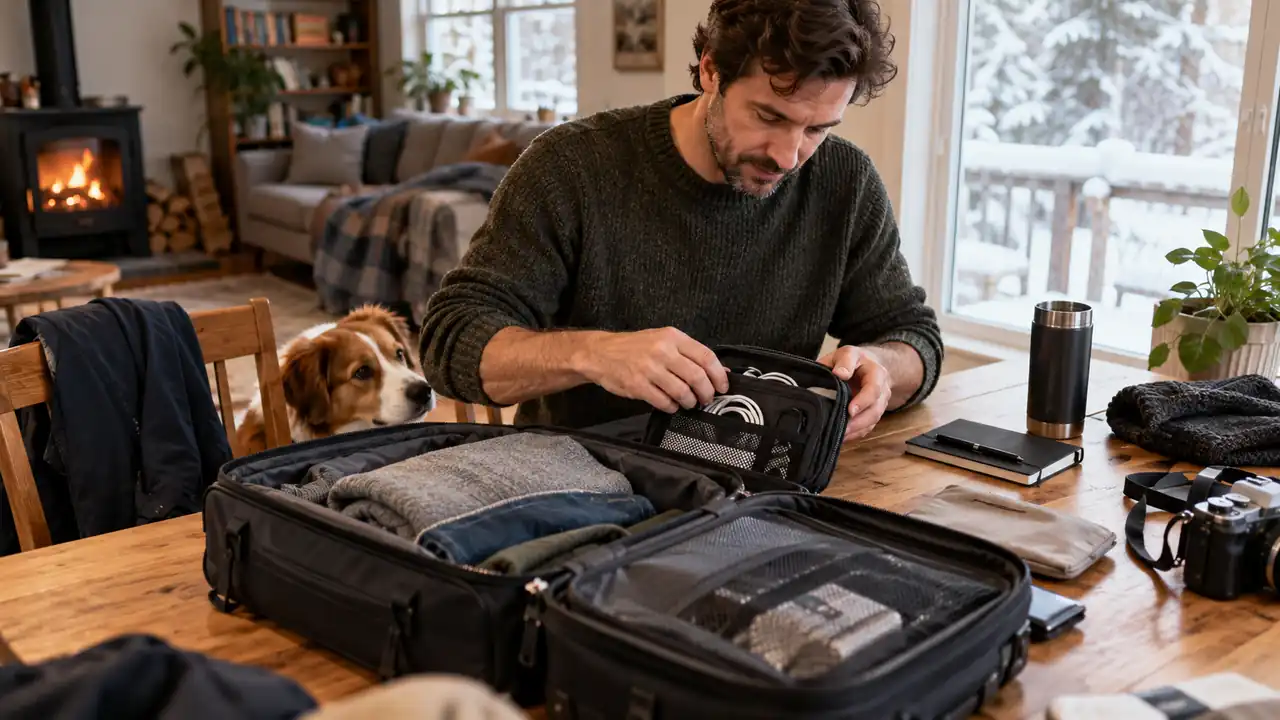
Some travel problems deserve research. Others deserve five minutes at the kitchen table and a decision to stop carrying the broken thing.
The charger that works only at a particular angle. The bag with the unreliable wheel. The saved hotel address from a trip two years ago. The passport you keep meaning to check. These are small annoyances until the first January departure turns them into a group project.
Between the final work trip of 2026 and the first one of 2027, I would give the travel system a quiet reset. Empty the bag, check the documents, test the kit, and sort the family calendar. Buy only what a real problem justifies.
This is not a challenge to become a more productive traveler. It is a way to make the next departure require less improvisation.
Empty the Bag Completely
Not the top layer. Everything. Open every pocket, remove the old receipts, and find out which objects have been traveling for months without a purpose.
Sort the contents into things you use, things you need for a particular trip, and things that have simply acquired residency. A spare adapter for a route you no longer fly may belong in a drawer. A dried-out pen does not belong anywhere important.
Clean the bag according to its care instructions and inspect zips, handles, wheels, and straps. Try the parts while the bag is empty and again with a normal load. A repair that is easy at home can become a nuisance on a station platform.
Check the personal bag too. It is often where small travel failures accumulate: damaged cables, old food, a nearly empty wash kit, and enough paper to suggest you have been conducting a private census.
Do not repack immediately. Let the empty space make the next set of decisions slightly less automatic.
Start With the Next Three Trips
Look at the likely destinations, trip lengths, and work requirements for the first part of the year. You do not need a perfect annual travel forecast. You need enough detail to separate routine kit from specialist items.
A two-night domestic meeting, a long international conference, and a family extension are different bags. Keep a small core ready, then add what each trip requires.
Write down the recurring annoyances from the last year. Be specific: “could not charge the laptop at the desk” is useful. “Need better travel gear” is an invitation to spend money without solving anything.
Choose the two or three fixes that would make the biggest difference. That may be replacing a cable, repairing a wheel, or moving the documents to a more accessible pocket. None needs an entire new equipment collection.
If your schedule is still uncertain, reset the basics and wait before buying route-specific items. The bag should serve the trips, not become a reason to invent them.
Check Documents While There Is Time to Act
Look at the expiry dates on passports and any other documents your likely routes require. Check the destination’s entry rules and the airline’s document requirements for your nationality and itinerary. Do not assume a passport is sufficient simply because it has not expired.
My guide to the passport-validity trap explains why the expiry date alone can be misleading. The requirement is destination-specific; “six months everywhere” is not a useful universal rule either.
If renewal may be needed, use the issuing authority’s current process and timing. For U.S. passports, start at the State Department’s official passport information. Children and adults can have different application processes, so check each family member separately.
Review any relevant visas, travel authorizations, and trusted-traveler memberships as well. Check official sources for what is required rather than relying on a reminder from an unfamiliar third-party website.
Store copies securely where appropriate and make sure emergency contacts know how to help if needed. A document check should improve access and security, not scatter sensitive information across every messaging app you use.
Test the Charging Pouch Like You Mean It
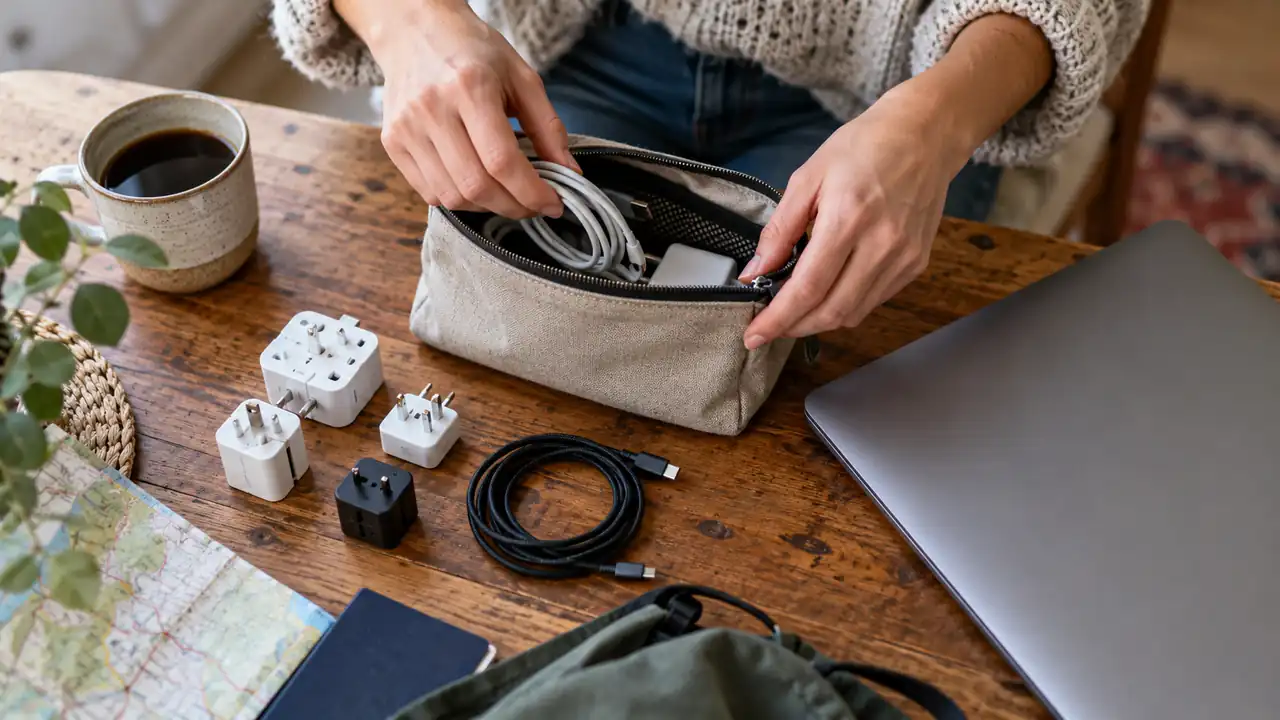
Plug in every cable and device you routinely take. Check that the charger actually provides what the device needs and that the connector is reliable. A cable that occasionally works is an item waiting for a worse occasion.
Remove duplicates that do not add useful backup. Two compatible cables may be sensible; six cables for devices you no longer own are a historical collection.
Check adapters against the next destinations and the equipment’s electrical requirements. A plug adapter changes the physical connection; it does not automatically make every device suitable for every supply. Read the device instructions and ratings.
Inspect batteries and power banks for damage and check the operating airline’s current rules before a trip. Do not bring damaged or recalled battery products. Keep the specifications available rather than relying on an unmarked device and a persuasive expression.
Put the pouch where you can reach it without emptying the bag. The best organization is the arrangement you can still use while tired, standing, and holding a coat.
Refresh the Wash Kit Without Building a Pharmacy
Check what has run out, leaked, or expired. Replace only what you use. A compact dependable kit is better than a collection of hotel bottles gathered in pursuit of an unclear savings target.
Keep necessary medication managed according to your own care plan, prescriptions, and destination requirements. Do not make travel changes to treatment on the basis of a packing article.
Check liquid restrictions for the actual route and airports before departure. Put products in suitable containers, close them properly, and think about what happens if a bag is inspected or turned upside down.
For winter trips, add the simple personal items you know help you stay comfortable. That might be lip balm, a familiar moisturizer, or an accessible warm layer. It does not require buying everything sold under the word “travel.”
Then choose a sensible restocking point. Replacing used items when you get home is easier than discovering the empty toothpaste tube the night before a January flight.
Clean Up the Digital Travel Desk
Open the airline, hotel, and booking accounts you actually use. Check that the contact information is current and that you can sign in using your employer’s approved security arrangements.
Update necessary apps through their official channels and confirm that important bookings appear correctly. Save the contact for your travel support team somewhere reachable without hunting through old email.
Remove outdated itinerary downloads you no longer need, while retaining records required for expenses or other legitimate purposes. Keep upcoming trip details organized by date so that an old confirmation cannot masquerade as the current plan.
If points, memberships, or credits matter to your travel, review their actual expiry and use conditions. Do not book an unnecessary journey simply to rescue something whose value is smaller than the cost of using it.
Check emergency contacts and the information the other adult in your family needs. The goal is that somebody can find the important details if you are unavailable, without needing access to your entire work account.

Close the Previous Trip Before Starting the Next
Submit the outstanding expense report using your employer’s rules, retain the required records, and resolve unclear charges while you can still remember them.
If a trip included personal nights or family spending, identify those costs accurately rather than hoping the next report will make the old one clearer. Ask finance about any uncertain item. A short question now can prevent a long correction later.
For a disrupted journey, follow up on unresolved baggage reports, refunds, or insurance claims through the appropriate provider. Check the relevant deadlines and evidence requirements. Do not let an old claim remain permanently represented by a screenshot on your phone.
Keep a brief note of the final outcome and store it with the trip records. You should be able to tell whether something is finished without reconstructing the entire conversation.
This is administrative work, and it is not glamorous. It is also lighter to carry once completed.
Reset the Home Routine as Well
The travel bag is only half the departure. Look at school dates, family commitments, and the first likely work trips together. Put uncertain dates in as uncertain rather than letting tentative plans quietly become promises.
Agree who handles the practical tasks while you are away and what needs arranging in advance. If the family may join a trip, discuss the work portion honestly before calling it a holiday.
Set up a realistic way to stay in touch. Avoid promising calls at times when you will be in meetings or the children will be asleep. A smaller dependable commitment is more useful than an enthusiastic daily plan you cannot keep.
Leave the day before departure less crowded if possible. A ready bag should buy time at home, not create space for one more late work commitment.
For the final run-through before each trip, keep the 24-hour pre-flight checklist. The year-end reset fixes the recurring problems; the checklist handles the particular departure.
Stop When the Useful Work Is Done
There is a point where resetting the kit becomes shopping for a different personality. You do not need to become the traveler in an advertisement, with matching everything and no visible responsibilities.
You need reliable documents, a bag you can carry, equipment that works, and a plan the family understands. Fix those things, leave the rest alone, and enjoy the days before the next trip.
January will provide enough fresh complications. There is no need to pack the old ones on purpose.
A Reset You Can Finish in One Sitting
If the whole job feels large, give it a defined session rather than waiting for an empty weekend. Put the bag, documents, and charging pouch on a table and work through them in order. Keep a short follow-up list for anything that needs another person or a replacement part.
Start with the bag inspection. Remove rubbish and things that no longer belong, identify repairs, and set aside the route-specific items. You should be able to see what your everyday kit actually contains.
Next, check the document dates and the likely next destinations. Do not try to solve a renewal during the same session if it requires more information. Record the official next step and a realistic date to do it, then put the documents somewhere secure.
Test the charging kit while you sort the wash bag. Make two small lists: replace and restock. A list containing one cable and a refill is a successful result. Resist expanding it into a shopping project because the gear websites have suggested that your life could be improved by another pouch.
Open the upcoming travel calendar and remove or correct anything outdated. Check that the family sees the same dates you do. If a trip is tentative, mark it clearly and agree when you expect to know more.
Finish by choosing the permanent places for the core kit. The charger should return to the charging pouch. The document holder should return to its secure location. The spare winter items can stay together until needed. The exact arrangement matters less than using it consistently.
Put the follow-up list somewhere you already review. A repair note hidden inside the broken suitcase is unlikely to acquire management attention. Complete the small tasks before the next booking turns them urgent.
Then stop. You have learned what is ready, what needs attention, and what can stay home. The reset has done its job when packing for the next journey becomes a short set of additions to a reliable core. It does not have to produce a beautiful photograph or an entirely new travel identity.
Leave yourself one useful reminder for after the first January trip: empty the bag, replace what ran out, and note the one thing that still irritated you. A small repair made repeatedly is more effective than an annual promise to become organized.
The Last-Day Checklist
Use the 24-hour check for the next departure, once the recurring annoyances are fixed.