
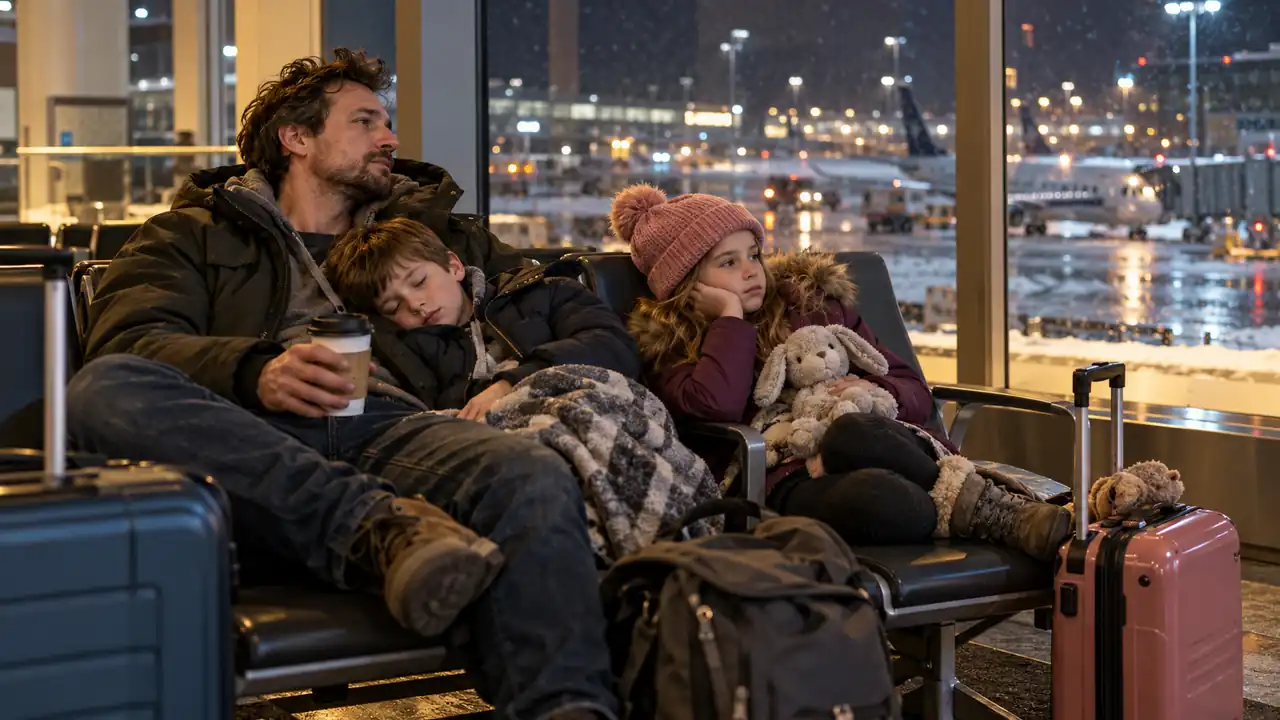
The flight is cancelled. The next useful option is tomorrow. Your phone is losing charge, your child is asking whether the airport has beds, and the departure board is still displaying a confidence nobody else in the building possesses.
This is the point where I would stop trying to save the original evening. That evening has left. The job now is a workable night and a clear morning.
A winter overnight disruption with children is a sequence problem. First confirm what is happening to the journey. Then solve shelter, food, bags, and transport. Keep the family informed in short sentences. Save the forensic analysis of airline operations for a day when everybody has slept.
The plan below assumes you have reached the airport and cannot travel until the next day. It does not promise compensation, a free room, or a cheerful child. It does give you an order in which to deal with the next few hours.
Find Out What Tomorrow Actually Means
Before leaving the terminal, confirm your rebooking situation. Are seats confirmed or are you waiting? Is the whole party on the same replacement itinerary? Is there a new connection? Have any onward segments changed?
Check the airline’s app and ask the staff when information is unclear. Use your corporate travel contact if the work booking must be changed through them. If a travel agent issued the ticket, find out which changes that agent needs to handle.
Write the new plan in one shared place, including flight numbers, local departure time, and what must happen before check-in. A screenshot can help when the connection disappears. Make sure the other adult has the information rather than appointing one dying phone as family headquarters.
Do not buy a speculative replacement journey or accept a refund without understanding what happens to the existing ticket. The right choice depends on whether you still need the airline’s transport, what is actually available, and the fare conditions.
My flight-cancellation and rebooking guide covers that decision in more detail. Once the next journey is clear enough, stop refreshing it every thirty seconds and work on the night.
One Adult Handles the Desk; One Handles the People
If two adults are traveling, divide the jobs explicitly. One deals with the airline and accommodation. The other finds somewhere appropriate for the children to sit, gets water or food, and keeps track of the bags.
This is not a permanent assignment. Swap when someone needs a break. The point is to prevent everybody from standing in a line while simultaneously hungry, tired, and unsure who has the booking reference.
If you are the only adult, keep the family together and simplify the decisions. Ask staff where you can wait safely and whether there is assistance relevant to your situation. Do not leave children or belongings unattended to chase a faster queue.
Tell the children the next concrete step: “We are finding out which hotel we can use. Then we will eat.” They do not need a running account of every failed route. Neither, frankly, do you.
If a child has an essential medical, accessibility, or care need, explain it directly to the appropriate staff and contact the relevant professional support when needed. General travel advice is not a substitute for an individual care plan.
Ask About Help Without Assuming a Voucher
Ask the airline what assistance applies to this disruption and your route. If a hotel is offered, confirm the property, the room arrangement, meals if any, and how to get there and back.
U.S. airline commitments shown on the DOT cancellation and delay dashboard concern events within the airline’s control. Do not assume a weather cancellation automatically includes hotel and meal costs. Other routes and jurisdictions can have different rules.
A ticket refund is a separate question from overnight assistance. For covered U.S. flights, DOT guidance explains refund rights when a cancelled journey is declined. That does not mean every expense you incur tonight will be reimbursed.
If you have travel insurance or card coverage, read the relevant benefit and contact the provider where required. Check eligible reasons, waiting periods, spending limits, and evidence requirements before assuming your preferred hotel will be covered.
Keep clear records of the cancellation and your necessary spending. Ask for itemized receipts. A tidy record is easier to use later than a photograph of three crumpled slips beside a sandwich.
Book a Bed You Can Actually Reach
Availability on a booking screen is only the first check. Confirm that the room can accommodate your whole family, that late arrival is possible, and that the hotel knows when you expect to reach it.
Check the exact property. Similar hotel names can describe very different locations. Ask about the transfer time, shuttle operating hours, pickup point, and how the morning return works.
If the shuttle has stopped, find out the real alternative and cost before paying for the room. A cheap hotel that requires an expensive or impractical journey may be no bargain at midnight.
Consider the road conditions and your own fatigue. Moving to a distant airport or renting a car for a long overnight drive can create a more serious problem than the delayed flight. Check local conditions and choose transport you can use safely.
When contacting a hotel, lead with the useful facts: number of people, children’s ages, arrival time, and the bed arrangement needed. This is not the moment to negotiate a view. A confirmed suitable room near workable transport is the luxury.
Find Out What Happens to Checked Bags
Ask the airline whether your checked luggage will be returned, kept for the replacement flight, or handled another way. Procedures vary with the airport, route, and disruption. Do not spend an hour at a carousel on the basis of something another passenger overheard.
If the bag is unavailable, work from the essentials you have. Buy only what is necessary for the night and follow any relevant reimbursement or insurance conditions. Keep receipts and do not assume a shopping trip has been authorized.
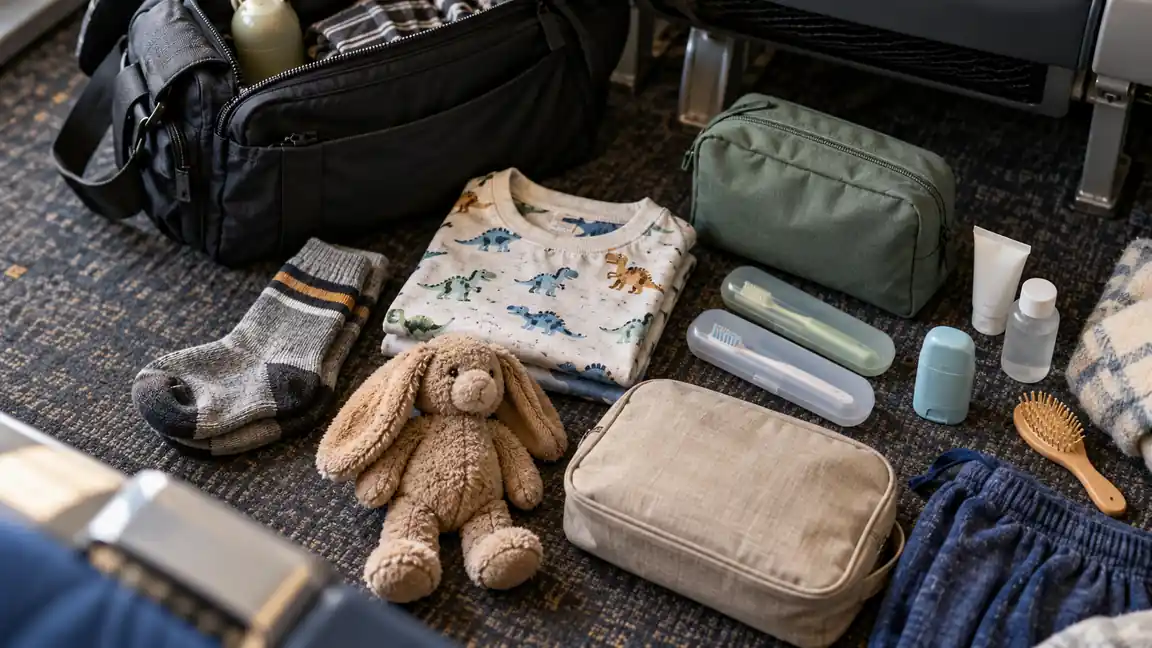
This is why a cabin bag should contain the first night’s basics: necessary medication, charging kit, underwear, a child’s change, and a small familiar comfort item. A complete wardrobe is optional. A clean shirt after a spill can change the whole evening.
Before leaving the airport, confirm whether you need to collect or recheck anything in the morning. Save the bag tags and the staff instructions. The same suitcase should not require a new detective story at every stage.
If an important item is inaccessible, tell the airline what you need rather than asking only when all luggage will be returned. A specific problem is easier to address than a general complaint.

Food Comes Before the Second Planning Session
Feed the family while the options are still open. Check whether food will be available at the hotel when you arrive. “There is a restaurant” means little if the kitchen closes before your shuttle gets there.
A simple meal now can be better than a theoretically nicer one later. Take dietary needs seriously, and keep familiar options for children who are past the point of experimenting.
Get water and the basic toiletries you need if they are not available in your bags or at the hotel. Ask reception what they can supply before buying replacements for everything.
Tell people at the destination that plans have changed. A short message with the current arrival estimate is enough. You can provide the full saga after you have stopped living inside it.
For a business trip, identify the work commitment that needs adjusting. Ask whether a colleague can cover, a meeting can move, or a remote alternative is appropriate. Do not promise to perform normally after an overnight disruption simply because you dislike disappointing people.
If a Hotel Is Not Available
Ask airport staff about the arrangements for stranded passengers: designated waiting areas, overnight terminal access, available facilities, and any assistance for families. Do not assume every terminal stays open or that you can remain airside.
Stay together in an appropriate staffed area and keep documents and valuables secure. Follow airport instructions. If something feels unsafe or you need help, approach staff or airport security rather than improvising in a remote corner.
Make the next few hours basic: food, water, charging, toilets, and warmth. Keep bags out of walkways. Use any designated facilities according to the airport’s rules, and avoid relying on equipment or areas not intended for sleeping.
Check alternatives through reputable transport and accommodation providers, but do not let urgency push you into an unclear payment request from an unknown person. Verify who you are booking with and where you are going.
This is uncomfortable, and there is no useful prize for pretending otherwise. Keep the children informed, take turns resting when another responsible adult can supervise, and focus on the confirmed next step.
Make the Morning Boring
Before going to sleep, check the departure once more, set alarms, confirm transport, and work backward from the airline’s deadlines. Leave the essential bags ready. Charge what needs charging safely according to the device instructions.
Do not schedule a tight hotel breakfast between waking and departure. If there is enough time, enjoy it. If not, arrange a simple alternative. You have already had one night of improvisation.
At the airport, check the whole family’s seats and onward plans again. Keep last night’s documentation until the journey and any claims are resolved. For the coverage questions to check before your next trip, see the guide to insurance for a combined business and family trip.
Then lower the expectations for arrival day. A gentle meal, a shower, and an early night can be a perfectly successful end to a disrupted journey. The itinerary has already demonstrated enough ambition for everybody.
Write the Morning Note Before You Sleep
A tired brain should not have to remember which of six conversations contained the final arrangement. Put the next morning’s essentials in one note that both adults can open.
Start with the replacement flight and whether seats are confirmed. Add the departure airport and terminal information you have verified, the airline’s check-in or bag-drop deadline, and the planned time to leave the hotel. If a detail is still uncertain, label it uncertain rather than letting a guess become a fact.
Next, record the transfer: who provides it, where to wait, and what to do if it does not arrive. If the shuttle cannot be reserved, understand how it works and allow the appropriate margin. Do not arrange a departure that depends on catching one particular vehicle with no alternative.
Add the luggage instruction. Are you collecting bags, checking them again, or going straight through with cabin baggage? If staff gave you a reference number, save it with the instruction. A photograph of the tag can help, but keep the original where required.
Then list the two people who need an update: perhaps your host and the person covering a meeting. Drafting a short message now can be easier than composing it while organizing children in the morning. Send only confirmed information and update it if the flight changes again.
Put receipts and supporting evidence together in the same trip folder. Keep personal and business costs identifiable if the trip mixes the two. You can review what is claimable later with the relevant provider or finance team; tonight’s job is not to lose the record.
Finally, agree the wake-up jobs. One person checks the flight and transport while the other gets the children ready, or whatever division suits your family. Set the alarms accordingly. A clear plan lets everybody stop discussing the disruption for a few hours.
The note should be short enough to read while half awake. If you have produced a document longer than the original itinerary, edit it. Tomorrow needs a departure time and a confirmed next step, not the complete history of how the airline disappointed you.
The Rebooking Playbook
Once tonight is under control, check the route, the ticket, and the replacement journey.