

Short answer: For a work trip to NYC, stay within a 10-minute walk of your actual meeting and let that pick your neighborhood, not the other way around — Midtown for most corporate offices, the Financial District for banking and law, Hudson Yards for media and tech. Skip cabs from the airport unless you’re hauling luggage and exhaustion in equal measure; as of 2026 the subway runs $3 a tap with a weekly cap of $35, and OMNY means you just tap your phone. Eat fast at the counter, not the table. Tip 18–20% on sit-down meals, nothing on a coffee you grabbed yourself, and ignore the iPad that asks for 25% when you bought a bagel. That’s the whole game. (Fares move — confirm current numbers on the official MTA and airport sites before you go.)
My first solo work trip to New York, I took a cab from LaGuardia to Midtown in Friday rush hour. Forty minutes, mostly stationary, watching the meter climb like a slot machine that never pays out. The driver and I made eye contact in the mirror exactly once, and we both knew.
Heads up: some links below are affiliate links — I may earn a small commission at no cost to you. I only point you toward stuff I’d actually use.
Pick Your Neighborhood by Your Meeting, Not the Skyline
Here’s the mistake everyone makes. They book a hotel because it looked nice in the photos, or because it was near a thing they wanted to see. Then they spend 45 minutes each way getting to a conference room that turns out to be a 12-minute walk from a different hotel they could’ve booked for the same money.
New York isn’t one city. It’s a stack of villages that happen to share a subway. Where you sleep should be decided by one question: where’s the meeting?
If your office is a big corporate tower — finance-adjacent, consulting, most Fortune 500 satellite offices — you’re probably in Midtown, somewhere between roughly 34th and 59th Streets. Stay there. It’s not charming. It’s a canyon of suits and chain salad shops. But it’s central, it’s walkable to Grand Central and Penn, and you can fall out of bed into your 9 a.m.
If you’re doing banking, law, or anything with the word “capital” in the company name, your meeting is likely in the Financial District (FiDi) at the bottom of Manhattan. The place goes quiet and a little eerie after 7 p.m. on weekdays — the bankers leave — but hotels are often cheaper than Midtown and the walk to your tower is short.
If you’re in media, tech, fashion, or a startup that describes itself as “a platform,” there’s a good chance you’re at Hudson Yards or the far West Side. Newer, shinier, more expensive, and a bit of a transit dead-end until you learn the 7 train. Stay close or budget extra commute time. I learned that one the hard way, standing on a corner of 11th Avenue at 8:50 wondering where all the taxis went.
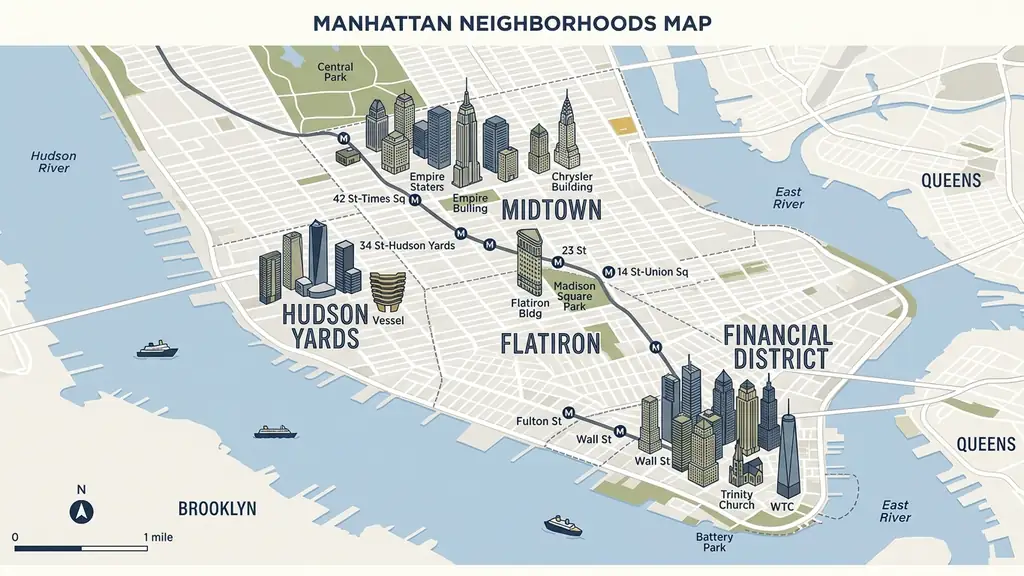
Where to Stay: The Grumpy Dad Neighborhood Table
I built this so you don’t have to. Match the left column to your meeting, read across, book accordingly. Rates are ballpark for a decent business hotel on a weekday in 2026 — they swing wildly with conventions and season, so confirm live before you book.
| Neighborhood | Best if your meeting is… | Vibe after work | Rough nightly rate (2026) | Watch out for |
|---|---|---|---|---|
| Midtown East / Grand Central | Corporate, consulting, anything near Park Ave | Business-y, dies early, easy dinners | $250–$420 | Bland chains; tourist-priced restaurants |
| Midtown West / Times Square edge | Broadway-adjacent clients, media | Loud, crowded, neon | $220–$400 | Times Square itself — don’t eat there |
| Financial District (FiDi) | Banking, law, “capital,” fintech | Quiet at night, weekend ghost town | $200–$360 | Limited dinner options after 8 |
| Hudson Yards / Chelsea | Tech, fashion, media, startups | Newer, polished, pricey | $280–$480 | Transit access; far-West walks |
| Flatiron / NoMad | Anywhere central — great default | Best food, walkable to most things | $260–$450 | Books up fast; worth it |
My honest default, if I have any flexibility, is Flatiron/NoMad. It’s roughly the middle of everything, the food is genuinely good instead of tourist-good, and you can walk to half your meetings. Midtown is the safe corporate pick. FiDi is the value pick if your client is downtown. (Rates above are estimates, not gospel — NYC pricing does what it wants.)
Subway vs. Cab: The Math That Actually Matters
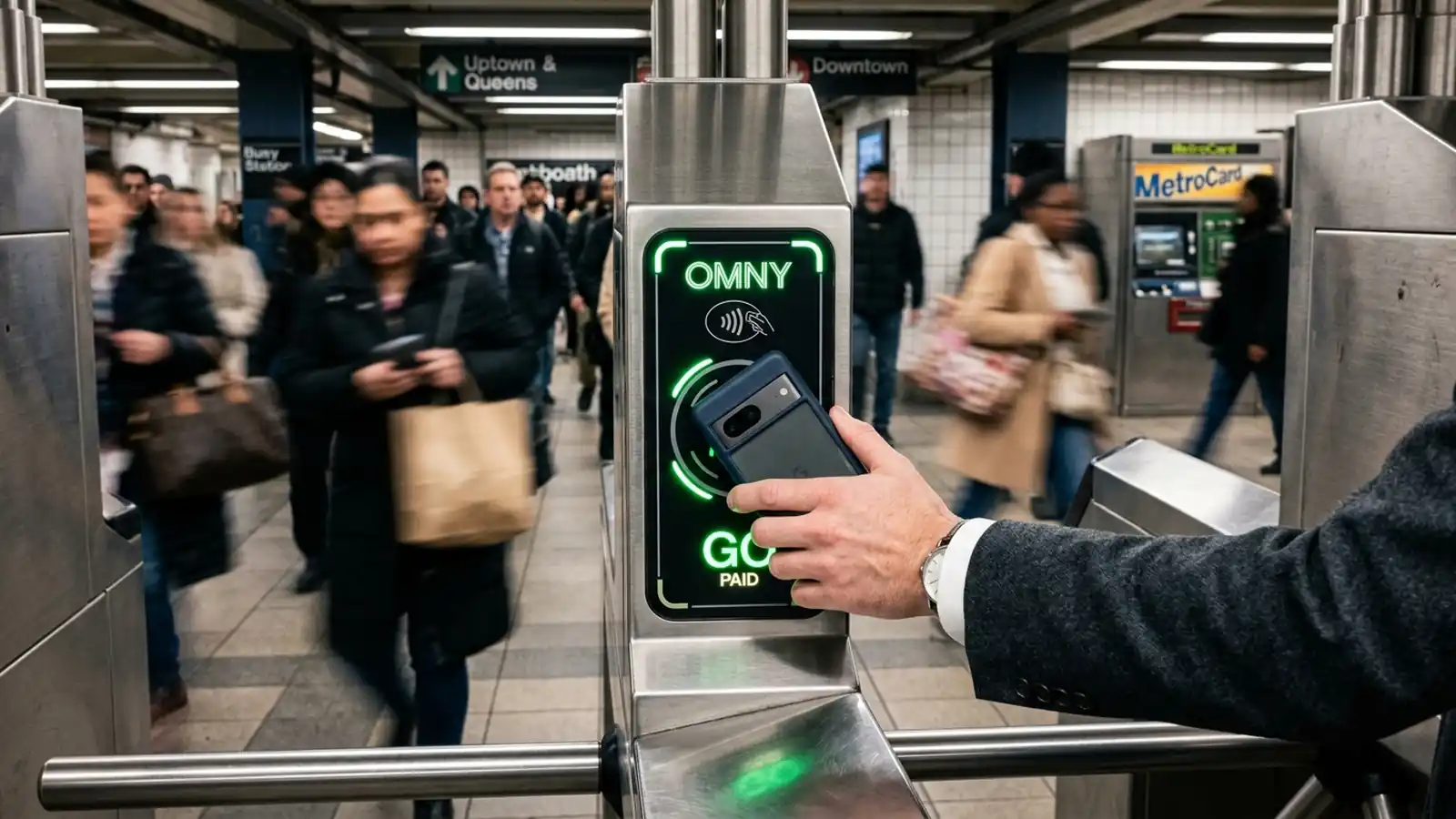
Let’s settle this with numbers instead of vibes. As of 2026, a single subway ride is $3 per tap — it went up a dime from $2.90 on January 4, 2026 (confirm the current fare on the MTA site, because they nudge it). You pay with OMNY, which means you tap your phone, your watch, or any contactless credit card right at the turnstile. No card to buy, no machine to fight. Tap and walk.
Here’s the genuinely useful part. OMNY has a weekly fare cap of $35 (reduced-fare riders cap at half that). The cap runs on a rolling 7-day window that starts with your first tap — not a Monday-to-Sunday calendar week — so once you’ve tapped enough rides to hit $35, every ride for the rest of that window is free. On a multi-day work trip where you’re bouncing around the city, you essentially get an unlimited week without buying anything. The one rule: tap the same card or phone every single time, or the cap won’t track. (Verify the figure on omny.info if you want the official line.)
Now the cab. A yellow cab inside Manhattan starts at $3 on the meter and ticks up fast in traffic, plus a $2.50 congestion surcharge on trips below 96th Street, plus tip. A 20-block crosstown crawl in rush hour can easily run $20–$30 and take longer than the train. The subway does the same trip for $3 and doesn’t care about traffic.
My rule: subway for anything along a line, anything during rush hour, anything you can walk to in under 25 minutes. Cab or rideshare only when you’re hauling luggage, it’s late and you’re done, it’s pouring, or you’re going somewhere genuinely awkward to reach by train. That’s it. Don’t let the cab become a habit — that’s how a $3-a-day trip quietly becomes $80.
From the Airport Without Getting Fleeced
The airport is where business travelers bleed the most money, usually in the first 20 minutes off the plane when they’re tired and just want it over with. Here’s the 2026 reality by airport — verify the current numbers on the official airport and TLC sites before you go, because surcharges change.
- JFK: Yellow cabs run a flat $70 base fare to/from Manhattan, but tolls, the congestion surcharge, and tip push the real total to roughly $90–$115. The cheaper move is the AirTrain ($8.75) to the subway. Budget more time, keep more money.
- LaGuardia (LGA): No flat rate — it’s metered plus a $5 surcharge, so a cab to Midtown is often $40–$60 with tip and traffic. The grumpy-dad hack: the free Q70 LaGuardia Link bus runs from the terminals to the subway hub at Jackson Heights, then it’s one $3 OMNY tap into Manhattan. Total: $3. Works best with carry-on-sized luggage.
- Newark (EWR): Metered cab plus a $20 Newark surcharge plus return tolls — easily $80+ to Manhattan. The AirTrain normally connects to NJ Transit, but note that in 2026 the Newark AirTrain is running weekday daytime construction suspensions with free replacement shuttle buses (roughly 5 a.m.–3 p.m., as part of the full replacement project). Check newarkairport.com before you rely on it, or you’ll be standing on a platform inventing new words.
For all of this, do yourself a favor and travel in comfortable walking shoes. NYC is a walking city whether you planned for it or not, and the difference between a good trip and a miserable one is sometimes just your feet. Pack accordingly — my packing list by trip length covers exactly what to bring so you’re not buying blister bandages at a Duane Reade at 9 p.m.
Eating in 20 Minutes Between Sessions
Conferences and back-to-back meetings hand you a cruel little window: not enough time for a real lunch, too much time to skip eating without going feral by 3 p.m. New York is actually built for this if you know where to look.
The trick is to eat at the counter, not the table. A sit-down restaurant in Midtown will eat 75 minutes and a $40 bill before you’ve checked your phone. Instead:
- Deli / bodega. A real NYC deli will make you a sandwich in four minutes for around $12. Point, pay, leave. This is the move.
- Halal cart. The carts with the long lines are long for a reason. Chicken-and-rice, $10-ish, eaten standing up like a local. Fast, filling, glorious.
- Fast-casual chains. Sweetgreen, Chipotle, Dig — order on the app before you leave the meeting, walk in, grab the bag, gone in 90 seconds.
- Pizza by the slice. The most efficient lunch ever invented. Two slices, folded, eaten while walking. Three minutes, six bucks.
Avoid anything in Times Square unless someone else is paying and you enjoy disappointment. The good fast food is one or two blocks off the main drags, where actual New Yorkers eat.
The One Bleisure Half-Day (With Kids, If You Bring Them)
If you can tack on a half-day, NYC rewards it more than almost any city — everything’s close and the subway makes you mobile. I’ve written the full philosophy of stretching a work trip in my bleisure trip playbook, but here’s the NYC-specific version for a single free afternoon.
If you’re solo, walk the High Line into Chelsea Market, eat your way through it, and you’ve had a perfect low-effort afternoon. If you brought the kids — and adding a couple of nights so they can come is one of the better decisions I’ve made as a traveling dad — pick one anchor and don’t over-schedule. The American Museum of Natural History (dinosaurs, the blue whale, the planetarium) buys you three happy hours. Or Central Park with a hot dog and zero agenda, which is free and somehow always a hit. One big thing per half-day. Kids in New York burn out fast, and so do dads.

Tipping and the Cost Reality: How Not to Get Fleeced
The fleecing in New York is rarely dramatic. It’s a slow drip of $7 coffees, 25%-suggested tip screens, and cabs you didn’t need. Here’s how to plug the leaks.
- Sit-down restaurant or bar with a server: tip 18–20%. This is real and expected. New York runs on tips.
- Counter service / coffee / bagel you grabbed yourself: the iPad will suggest 20–25%. You’re allowed to hit “No Tip” or “Custom.” A buck in the jar is generous for a coffee. Don’t let a screen guilt you into 25% on a transaction with zero service.
- Cabs and rideshare: 15–20% is normal; the app pre-fills it.
- Hotel housekeeping: a few dollars a night on the pillow if you’re staying multiple nights. Bellhop, $2–$5 a bag.
The bigger discipline is structural: stay near your meeting so you’re not paying in cabs and time, ride the subway, eat at counters, and accept that a beer in Manhattan costs $12 and there’s nothing you can do about it except not have six of them. If you’re weighing whether a slightly nicer hotel or an extra night is worth it, I worked through that calculus in the dad math of travel — sometimes the upgrade pays for itself, sometimes it’s just the trip flattering your ego.
Book It: What I Use to Plan an NYC Work Trip
- Hotels & apartments: compare on Trip.com, or grab a family-size place on Vrbo.
- Airport transfer: a fixed-price ride from JFK, LaGuardia, or Newark via Kiwitaxi — no surge, no fumbling with the app after a red-eye.
- The one free day: skip-the-line tickets on GetYourGuide or Tiqets.
FAQ
Do I need to buy a MetroCard or a special subway pass for a short trip?
No. As of 2026 you just use OMNY — tap any contactless credit card, your phone, or your watch directly at the turnstile. Each tap is $3, and the $35 weekly cap (on a rolling 7-day window from your first tap) means heavy use during a multi-day trip effectively becomes an unlimited week automatically. Tap the same card or device every time so the cap tracks.
Is it ever worth taking a cab from the airport?
If you have heavy luggage, it’s late, the weather’s bad, or you simply don’t have the energy, yes — pay the $60–$115 and move on with your life. For everything else, the AirTrain-to-subway (JFK) or the free Q70 bus-to-subway (LaGuardia) saves you $50+ and isn’t much slower outside rush hour. Verify current fares on the airport and MTA sites before you go.
Which neighborhood is the safest default if I don’t know New York well?
Midtown if your meeting is corporate, Flatiron/NoMad if you have flexibility and want the best food and walkability. Both put you near transit and within walking distance of most business destinations. Don’t book purely for a view or for proximity to Times Square.
How much should I actually budget per day in NYC for a work trip?
Beyond your hotel, plan roughly $50–$90 a day for food and transit if you eat at counters and ride the subway — more like $150+ if you do sit-down meals and cabs. Tips and that inevitable $12 beer are the line items people forget. These are ballpark figures; confirm hotel rates live, since NYC pricing swings hard with conventions.
Can I really bring my kids on a work trip to New York?
Absolutely, and it’s one of the best cities to do it because everything’s close and transit-connected. Add a couple of nights, pick one big anchor activity per free half-day (a museum, the park, the High Line), and don’t over-schedule. Burned-out kids and burned-out dads make the same face.
New York will take your money if you let it. It’ll also give you one of the easiest, most walkable work trips you’ll ever have — stay near the meeting, ride the train, eat standing up, and keep your hand off the cab door. Pack the comfortable shoes. Tap the phone. You’ve got this.