

Short answer: Respect shows up fast. In formal cultures like Japan, Korea and China, bow, take business cards with both hands, and don’t fill silences. In Germany and France, be punctual and formal with titles. In Brazil, Mexico, India and the Gulf, slow down and let small talk do the work. When in doubt: slower, more formal, quieter than feels comfortable.
Ten minutes is enough to lose the room. After a decade of international meetings and a long list of small mistakes, here’s the country-by-country cheat sheet I actually keep on my phone.
Why the First Ten Minutes Are Weighted Heavier
The first ten minutes of an international business meeting carry more weight than the next two hours. That’s not a metaphor. That’s just how trust gets built — or doesn’t.
Substance matters. Eventually. But before anyone in the room cares about your numbers, your product, or your deck, they’re answering one question: did this person bother to learn how to be here?
If the answer is yes, you get heard. If the answer is no, you get politely listened to and quietly discounted.
This isn’t about memorizing every cultural detail. It’s about a small set of signals that, in the first ten minutes, tell the room you’ve done some homework. The cheat sheet below is what I keep on my phone, country by country, and review on the flight in. It’s not exhaustive. It’s the absolute minimum I want in my head before I walk into the meeting.
Japan: The Country That Taught Me This Lesson
I learned the importance of all of this in Tokyo, the hard way. The whole story is in my piece on how a single handshake almost cost me a deal in Tokyo. Short version of what I now do:
- Small bow on greeting, even when a handshake is offered
- Don’t sit until shown a seat, and read the placards
- Card exchange with two hands, study the card before placing it on the table
- Don’t fill silences — they’re thinking, not stalling
- Wait for the host to signal before drinking the tea
Tone: formal, restrained, calm. Less smile than you’d use in New York. More patience than you’d use anywhere.
South Korea: Closer to Japan, With Differences
Many of the surface rituals look like Japan, but the underlying culture is different — and so are the small details.
- Bow on greeting, but the bow is often slightly less deep than in Japan
- Two-handed business card exchange, but the receiving hand is sometimes supported by the other forearm — a sign of respect that doesn’t exist in Japan
- Hierarchy is even more visible. Always greet and address the most senior person first.
- Pouring drinks at dinner: never pour your own, and use both hands when pouring for someone older or more senior
- Hangover days exist. Drinking is part of business. Pace yourself; saying no to a first drink politely is fine, but never refuse the third toast outright
Tone: warm but hierarchical. Use titles, not first names, until you’re invited.
China: Hierarchy and Hosting
China surprised me the first time. I’d assumed the formality would resemble Japan, but it has its own rhythm.
- Handshakes are normal, often softer than in the West, sometimes with a small head nod
- Business cards: present with both hands, study, place on the table — same as Japan
- Hosting is a serious matter. The host orders all the food, often in volume. Eat well, but pace yourself.
- The most senior person sits facing the door, host opposite. Don’t take a seat until shown one.
- Toasts at dinner: “ganbei” means bottoms up. If you don’t drink, signal it early and politely. A small sip is acceptable for some, full empty glass is the rule for others — read the room.
- Gift-giving culture exists, but be modest. A small, thoughtful gift from your home country is appropriate. Avoid clocks (associated with funerals).
Tone: formal, business-first, but warmer at dinner than at the meeting.

India: Relationship Comes Before Transaction
India was the country where I most underestimated the importance of small talk. I treated it as filler. Indian counterparts treated it as the actual relationship-building work.
- Greetings vary by region and religion. The “namaste” with palms together and a slight nod is universally appropriate and never wrong.
- Handshakes are common in business, but follow the other person’s lead. Some women in business will greet with a namaste rather than a handshake.
- Titles matter — “Sir” and “Madam” are common forms of address. So is using a person’s first name with a respectful title attached.
- Small talk is not throwaway. Family, education, the journey — all of these are signals you’re invested in the relationship, not just the deal.
- Vegetarianism is widespread and serious. Hosts will often plan meals around it. Don’t be casual about food choices.
- Time can be flexible. A meeting starting fifteen minutes late is normal. Don’t let it rattle you.
Tone: warm, curious, patient. Don’t rush to substance.
Germany: Direct, Punctual, Substantive
Germany is, in many ways, the easiest country for an American to do business in — once you accept that small talk is not the warm-up.
- Handshake on greeting, firm but not aggressive, with direct eye contact
- Address people as Herr or Frau plus their last name until invited to first names. The invitation often takes longer than you’d expect.
- Punctuality is not a courtesy, it’s a baseline. Five minutes late is rude. Fifteen minutes late is a problem.
- Get to the point. Long preambles read as time-wasting.
- Disagreement is direct and not personal. If a German colleague says “this is wrong,” they’re not attacking you, they’re being efficient.
- Decision-making is often consensus-driven internally — the meeting may not produce a yes, but a follow-up after internal review
Tone: respectful, prepared, on time. Save the warmth for after the meeting, not during.
One specific German habit I had to adjust to: my counterparts in Frankfurt would correct facts in my deck mid-presentation. Not aggressively. Just precisely. A footnote was off by a year, a number was rounded the wrong way — they’d flag it, expect a clean acknowledgement, and want to move on. Early on this felt like an attack. Now I appreciate it. They’re saving us both the embarrassment of getting to a final draft with errors still in it.

France: Form and Conversation Matter
The French take their business meetings seriously, and they take their meals around those meetings even more seriously.
- Greet with “Bonjour, Monsieur/Madame” before anything else. Walking into a meeting and starting with English is read as rude.
- Handshake is brief, often less firm than American — don’t crush it
- Address people formally; first names come later, often after several meetings
- Lunch and dinner are part of the work. Long meals with wine are normal and expected. Don’t try to “skip ahead” to the contract.
- Disagreement is acceptable, even valued, but in a measured tone. Loud arguments are not.
- Conversation that ranges into culture, art, food — that’s not a distraction. That’s how trust gets built.
Tone: formal, intellectual, slow. Don’t try to be efficient. Try to be present.
Brazil: Warm, Personal, Patient
Brazil rewards warmth more than almost any country I’ve worked in. But that warmth has to be real, and it has to be patient.
- Greetings: handshakes for first meetings, hugs and cheek kisses (one or two depending on region) once you know each other a bit
- First names are common and quickly. Last names rarely used in conversation.
- Personal questions are welcome. Family, kids, weekend plans — these are how relationships are built.
- Time is flexible. A 9 AM meeting may start at 9:20. Don’t be late yourself, but don’t be visibly impatient if your hosts are.
- Decisions take time. Multiple meetings before any commitment is normal.
- Avoid hard sells. Direct American “let’s close this today” energy reads poorly.
Tone: warm, personal, unhurried. Plan to spend more time than you think you need.
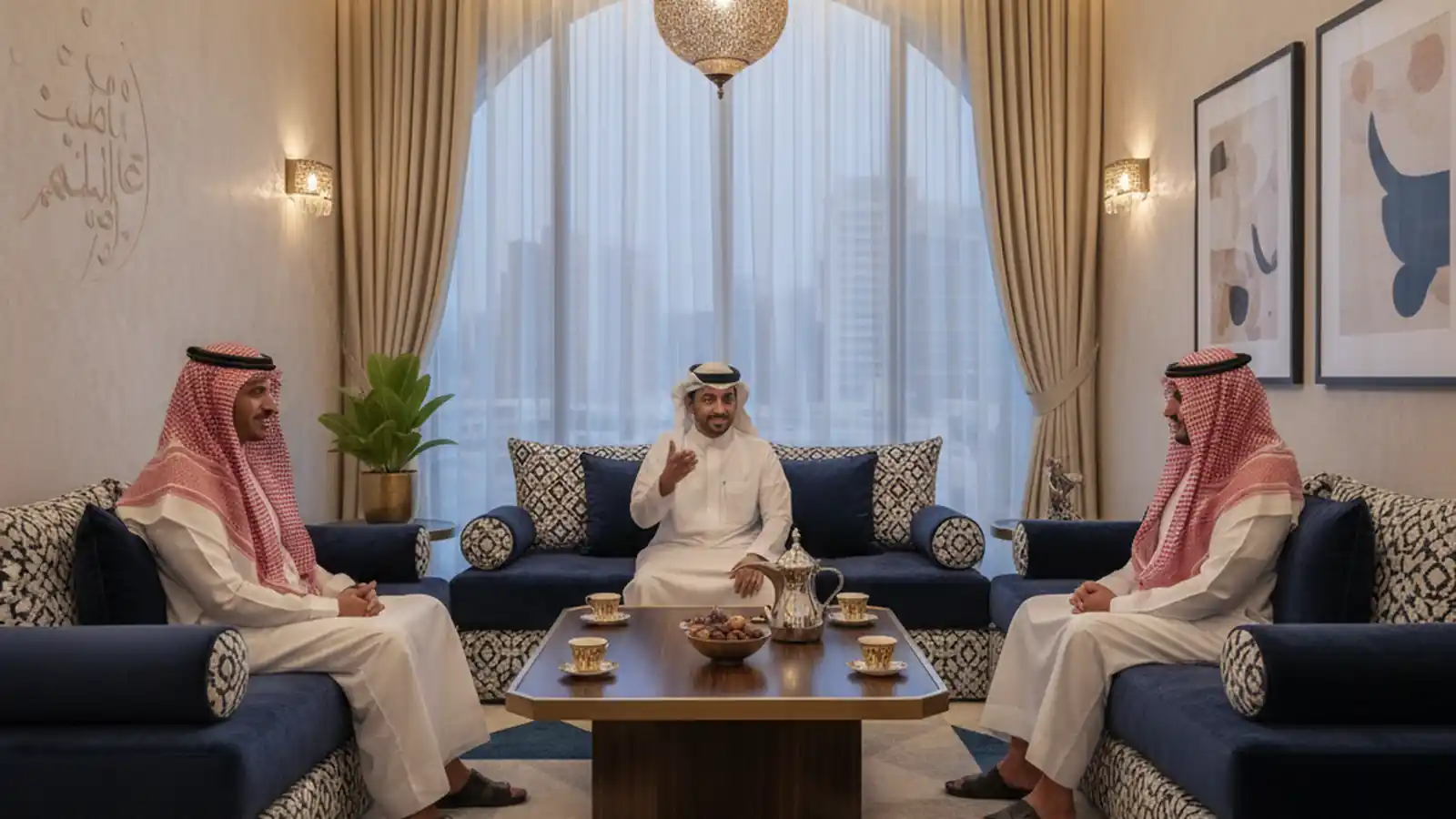
Saudi Arabia and the UAE: Hospitality Is the Meeting
The Gulf countries have their own rhythm, with significant variation between, say, Riyadh and Dubai. But some patterns hold.
- Greetings: handshake for men with men, with the right hand. Wait for women to extend a hand if she’s going to; many won’t, and a small nod is appropriate.
- Address people with their first name preceded by “Sheikh,” “Mr.,” or their title where applicable
- Coffee and dates will be served. Don’t refuse. Hold the cup with the right hand.
- Conversation will start with hospitality — your trip, your family, your impressions of the country. This is the meeting before the meeting. Don’t try to skip it.
- Time is flexible. Meetings may run long. Multiple meetings before substantive commitment is normal.
- Friday is the holy day. Schedule around it.
Tone: respectful, hospitality-first, patient. The pace is slower than you expect, and that pace is the point.
Mexico: Personal Relationships Drive Everything
Mexico is one of my favorite countries to work in. It’s also one of the easiest to misread, because the surface looks American and the substance is not.
- Greetings warm: handshakes, sometimes a light cheek kiss between people who know each other
- First names common, but with “Don” or “Doña” as a respectful prefix for senior figures
- Family and personal questions are not small talk — they’re the relationship
- Time is more flexible than the US, less flexible than Brazil. A 15-minute window is reasonable.
- Decisions are made by people, not committees. The relationship matters more than the formal title in many cases.
- Long lunches are common and expected. Don’t rush them.
Tone: warm, patient, personal. The deal is made between people, not companies.
I learned this in Mexico City on a trip where I’d been pushing for a contract signature on the second visit. The customer’s procurement lead, a man I’d met twice and barely knew, asked me about my kids over lunch on day two. I gave a quick answer and steered the conversation back to terms. He nodded politely. The contract didn’t move that trip. Six months and three more visits later — visits where I asked about his kids, his summer plans, his wife’s job in Monterrey — the contract closed in a single afternoon. The deal had always been there. The relationship was the part I’d been skipping.
The Pattern That’s Universal
Once you have ten countries on a cheat sheet, you start to notice the pattern that’s true everywhere:
The first ten minutes are about respect. Not the substance, the respect. Are you on time? Did you greet correctly? Did you address the senior person first? Did you treat the business card with care? Did you read the room before sitting?
If you do those things, you’ve earned the right to talk substance. If you don’t, the substance lands in a smaller room than you wanted. Every country has its own version of these signals. They’re not arbitrary. They’re how every culture has answered the same question: “is this person here as a guest or as a transaction?”
I prefer to be a guest. The deal goes better when you do.
What to Do When You’re Unsure
The cheat sheet doesn’t cover everything. There will be moments — a small ritual you didn’t know about, a phrase that lands wrong, a gesture that doesn’t translate — where you’re not sure what to do.
The default that works in every country I’ve been in:
- Slower than you’d be at home
- More formal than feels comfortable
- Quieter and more attentive than chatty
- Always defer to the most senior local in the room
- If you make a mistake, acknowledge it briefly and move on. Don’t over-apologize.
This default has gotten me through Vietnam, Indonesia, Egypt, and a dozen other countries I haven’t built a separate cheat sheet for yet. It’s not a substitute for actually learning a country. It’s the safety net while you’re still learning.
The Mistakes Westerners Always Make
If I had to pick three patterns I see again and again from American and European colleagues abroad, they would be:
1. Treating warmth and informality as universal positives. They’re not. In Japan, Korea, Saudi Arabia, and parts of Germany, formal is the warm setting. Informal reads as disrespectful.
2. Trying to be efficient with cultures that value process. “Let’s get to it” is a phrase that lands fine in Frankfurt and lands poorly in São Paulo. The process is part of the deal.
3. Treating the business card like a transactional artifact. Worth its own piece, which is why I went deep on business card etiquette in detail. The card represents the person. Treat it accordingly.
The pattern under all three: applying home-culture defaults to a culture that doesn’t share them, and being surprised when it doesn’t work. The cheat sheet exists to interrupt that pattern, ten minutes at a time.
One more layer that goes deeper than the cheat sheet — and honestly, even more deeply than I’m covering here — is reading indirect Asian business communication. That’s where most Westerners’ real misunderstandings happen, long after the handshake is done.
The cheat sheet gets you through the first ten minutes. The rest is paying attention.

Title: The business card case I now carry
Cheat sheets get you in the door. The card exchange is what carries you through it. Here’s the full ritual.
Inside:
- Why I now carry a leather card case
- Two-handed exchanges, country by country
- What to do with their card during the meeting
Key takeaways
| Country | Greeting | What actually trips you up |
|---|---|---|
| Japan | Small bow even if a hand is offered | Don’t fill silences; wait for the host’s signal before drinking. Cards: two hands, study it, then set it on the table. |
| South Korea | Bow, slightly less deep than Japan | Greet the senior person first, use titles. Never pour your own drink; don’t flat-out refuse the third toast. |
| China | Soft handshake, often a head nod | Don’t sit until shown. Modest gifts are fine; never a clock (funeral association). “Ganbei” means bottoms up. |
| India | Namaste, palms together, with a nod | Small talk is the work, not filler. Meetings starting fifteen minutes late is normal. Vegetarianism is serious. |
| Germany | Firm handshake, direct eye contact | Five minutes late is rude, fifteen is a problem. Herr/Frau plus last name. Blunt disagreement isn’t personal. |
| France | “Bonjour, Monsieur/Madame” first | Long lunches with wine are real work. Formal address; first names come later. No loud arguing. |
| Brazil | Handshake, then hugs and cheek kisses | Skip the American hard sell. First names fast. A 9 a.m. meeting may start at 9:20; expect several meetings. |
| Saudi Arabia / UAE | Right-hand handshake; wait for women to offer | Hospitality before business. Hold the coffee cup with your right hand. Friday is the holy day; plan around it. |
| Mexico | Warm handshake, sometimes a light cheek kiss | Family questions build the deal. Don/Doña for seniors. Decisions are made by people, not committees. |
FAQ
Why do the first ten minutes matter so much in international business?
Because that’s where trust gets built or broken before you’ve said anything substantive. A single wrong move, like the handshake mistake that nearly cost me a deal in Tokyo, can set the tone for everything that follows. The signals you send early tell people whether you respect their culture.
What should I do if I don’t know the etiquette for a country I’m visiting?
Default to a safety net: be slower than you’d be at home, more formal than feels comfortable, and quieter and more attentive than chatty. Defer to the most senior local in the room. If you slip up, acknowledge it briefly and move on, no over-apologizing.
Is small talk a waste of time in a business meeting?
Not abroad. In India I treated it as filler and got it wrong, it’s core relationship-building work. In Mexico City, questions about my kids were the actual deal. I once redirected to terms too fast and the contract stalled for six months; once I asked about the lead’s family and life in Monterrey, it closed in a single afternoon.