

Short answer: Business travel gets lonely fast because getting better at it doesn’t fix it. The more I optimized my Ho Chi Minh trips, the hollower they felt. What actually helps: bring someone so the memories are shared, build small rituals with the kids back home, protect your body, and stop taking trips that didn’t need to happen.
The Problem Nobody Talks About
If you travel for work a few times a year, you’ve probably noticed something: getting better at travel doesn’t make it feel better.
You learn the shortcuts. You optimize your packing. You know which hotels work and which coffee shops open early. But the trips still feel hollow. And the loneliness hits faster each time.
I learned this the hard way over three trips to Ho Chi Minh. By the third trip, I was objectively better at traveling there. I also felt worse than I did on the first trip. That contradiction taught me something important about what actually matters when you’re on the road.
This post is about what I figured out: the difference between optimizing solo travel and actually solving the loneliness problem. And why shared experience beats solo expertise every time.
Trip One: Everything Feels Like Discovery
The first time I flew to Ho Chi Minh, everything felt new. I was jet-lagged, disoriented, and running on adrenaline. I fell in love with Vietnamese coffee that first morning — the kind with condensed milk, sweet and strong enough to cut through the fog.
I grabbed pastries from a street vendor and watched people eat soup for breakfast, genuinely puzzled by the whole concept. Pho at 7am? I didn’t get it yet.
I was up at 6am anyway because of the time difference, so I went to the War Remnants Museum before my meetings started. Spent two hours walking through exhibits about a war I thought I understood. I didn’t. The museum was heavy, uncomfortable, and completely reframed my understanding of what happened there.
That trip felt productive. I was making the most of limited time. New city, new experiences, work getting done. It felt like I was doing it right.
Trip Two: Shared Experience Changes Everything
The second trip was different. I had two friends with me for part of it — colleagues who’d never been. That changed the entire dynamic.
I took them to the War Remnants Museum. Had to. It’s one of those places you can’t skip if you’re trying to understand where you are. We spent more time there than I did the first trip, talking through what we were seeing. The conversations that came out of that visit stayed with us the rest of the trip.
We hit Notre Dame de Saigon, the Central Post Office, took a tour of the Mekong Delta. We went to the Cu Chi Tunnels and crawled through spaces built during the war. One of my friends bought toys made from bullet casings at the tunnel gift shop. They were confiscated at the airport. He learned that lesson the hard way.
We also went to Noir — a restaurant where blind people work as waiters and you eat in complete darkness. You don’t see your food. You just choose a menu type and trust the experience. That meal changed how I thought about food. Not being able to see what I was eating forced me to actually pay attention. We tried fruits I’d never seen before. I had weasel coffee for the first time.
Here’s what mattered: having my friends there turned everything into a shared thing. We talked about the museum afterward. We argued about what we were eating in the dark. We made jokes about the bullet casings. Those experiences stuck because someone else held them with me.
I went deeper into the food scene that trip. Started looking for potential business partners. Explored more intentionally. The whole trip felt like discovery, but grounded — not just consuming a place, but experiencing it with people who’d remember it too.
Trip Three: Better at Everything, Worse Overall
By the third trip, I’d leveled up. Black weasel coffee, no condensed milk. Pho for breakfast like a local. I knew which hotel room I’d get, which restaurant served the best coffee, exactly how long the commute would take.
I was objectively better at traveling to Ho Chi Minh. My taste had refined. My logistics were dialed in. I wasn’t wasting time or energy on amateur mistakes.

But I was alone. And that changed everything.
The novelty was gone. What replaced it wasn’t comfort. It was the quiet realization that hotel rooms blur together and experiences don’t land the same way when you’re alone. I finished a productive day of meetings, grabbed dinner by myself, and sat in a hotel room scrolling through photos my wife had sent of the kids at a soccer game I’d missed.
The trip was successful by every work metric. But it felt hollow.
That’s when it hit me: I’d gotten better at solo travel, but that didn’t solve the actual problem. The problem wasn’t efficiency. It was isolation.
The Lesson: Shared Experience Beats Solo Optimization
Here’s what those three trips taught me:
Getting better at solo travel doesn’t fix the loneliness. It just makes you more efficient at being alone.
Trip two wasn’t objectively better than trip three. The coffee on trip three was actually better. I knew the city better. I didn’t waste time. But trip two felt better because my friends were there. We shared the War Remnants Museum, the Noir restaurant, the Mekong Delta, the bullet casing incident. Those experiences stuck because someone else remembered them too.
Trip three had refined taste and optimized logistics. Trip two had meaning.
If you’re traveling alone and it feels empty, it’s not because you’re doing it wrong. It’s because some experiences need to be shared to feel complete. A good meal alone is just food. A good meal with someone becomes a memory. The same museum visit either sits in your head as information, or it becomes a conversation that changes how you see things.
This hit harder after becoming a dad. Before kids, solo travel felt independent. After kids, it just feels like I’m missing something on both ends — absent from home while experiencing things alone that nobody will remember but me.
Performing While Disconnected Is Exhausting
Here’s what nobody expenses: the cost of being present in two places at once and doing neither one well.
Jet lag and back-to-back meetings are one thing. Add in the mental weight of being away from home, and it turns into an emotional flatline. You’re performing at work, performing on calls with the family, and quietly running on fumes in between.
I’ve tried the daily video calls. My kids are 9 and 14 now, old enough to ask real questions. “When are you coming back?” “What time is it there?” “Can you see us tomorrow morning?” The time difference makes it harder than it should be. When it’s 6-13 hours off, there’s no clean window. Either I’m catching them before school while I’m barely awake, or they’re going to bed while I’m mid-workday. The calls happen, but they feel rushed and slightly off.

And the thing about being gone is that life doesn’t pause. My wife handles bedtime alone. My 14-year-old has questions about school I’m not there to answer. My 9-year-old forgets I’m traveling and just expects me to be around. It’s not dramatic. It’s just the slow accumulation of small absences.
The video calls help, but they’re not the same as being there. You can see your kids on a screen, but you can’t help with homework spread across the kitchen table. You can hear about their day, but you miss the tone that tells you something’s actually wrong. You’re connected, but at a distance that makes everything feel just slightly off.
And then there’s the guilt. Not the dramatic kind — just the low-grade awareness that your absence creates extra work for someone else. Your wife doesn’t complain about it. She handles it. But you know she’s doing double duty, and there’s no real way to make that up from a hotel room halfway around the world.
You’re “there,” but you’re not fully present anywhere. And that wears on you faster than any flight.
What Actually Helps: Bring Someone When You Can
The most obvious fix is also the one nobody talks about: when possible, bring someone.
Not always. Not every trip. But when it makes sense — a colleague who’d benefit from the meeting, a business partner you’re trying to build a relationship with, even your family if you can extend the trip — the difference is enormous.
I remember a conversation with my 14-year-old before one of my trips. He asked where I was going, and I told him. He looked at me and said, “That sounds cool. Can I come?” It was half-joking, but not really. And I realized he wasn’t asking because he wanted a vacation. He just wanted to see what I was doing. To understand where I go when I’m gone.
That question stuck with me. Because he was right — it probably would be cool to him. Not the meetings or the hotel, but the experience of being somewhere different together. The chance to turn “Dad’s work trip” into a shared memory instead of just another absence.
I’ve thought about bringing my family on a work trip. Extending a few days, letting the kids see a new place, turning a business obligation into something shared. I haven’t done it yet — the logistics feel complicated — but the idea sticks around because I know the trip would land differently if they were there.
Even if they can’t come along, they can still be part of it. That’s what I’ve started figuring out. The trip doesn’t need to be shared physically to feel less isolating. It just needs to be anchored to something beyond logistics.
When You Can’t Bring Someone: Create Connection Anyway
Most trips, you’ll be alone. That’s just the reality of occasional business travel. But there are small changes that actually help.
Not revolutionary. Just intentional.
I started bringing something small back from each trip. Not souvenirs in the traditional sense — I’m not hauling back keychains. Just something my kids would actually care about. A book from a local bookstore. A snack they’ve never tried. Something that turns the trip into a shared experience, even in a small way.
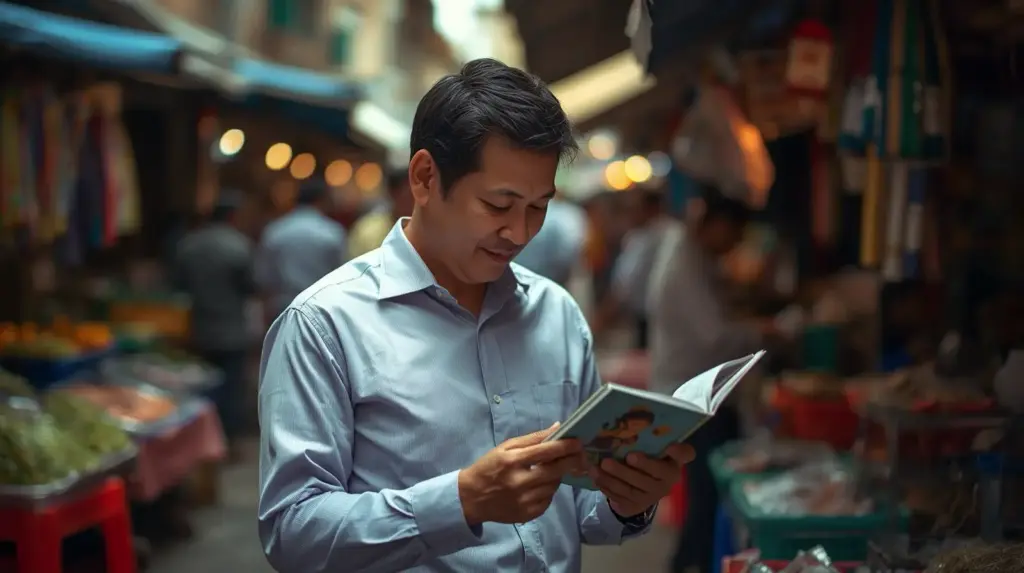
It sounds minor, but it works. My 9-year-old asks what I brought back before asking how the trip went. My 14-year-old has started requesting specific things. It gives the trip context beyond “Dad was gone for work again.”
The key is that it’s specific. Not generic airport gift shop stuff. Something that actually came from where I was. A candy they don’t sell here. A book about the city written for kids. A small object that has a story attached to it. The item itself doesn’t matter as much as the fact that I thought about them while I was gone.
I also started preparing my kids before I leave. Not just telling them where I’m going, but actually showing them. If I’m heading to a new city, I’ll pull up a map, show them photos, explain what makes the place different. It’s a small effort, but it makes the trip feel less abstract to them. They know I’m not just “away.” They know where I am.
Sometimes I’ll tell them about the coffee I had, or the soup people eat for breakfast, or the restaurant where you eat in the dark. Not to impress them — just to give them context. My 9-year-old thought the idea of weasel coffee was hilarious. My 14-year-old wanted to know if the pho was actually good. Small details, but they turn the trip into something we talked about instead of something that just happened to me.
Sometimes I’ll show them the hotel on Google Maps. Or explain the time difference in a way they understand. “When you’re getting ready for school, I’ll be eating dinner.” It gives them a mental picture. And when we do connect on video calls, they have context for where I am and what I’m doing.
The video calls are still imperfect. Time zones make scheduling hard, and some days we miss each other entirely. But when they do happen, they’re intentional. Not just a quick check-in while I’m distracted. Actual conversation.
I’ve learned to schedule them at the same time each trip when possible. It becomes a routine. My kids know that around 7 PM their time, I’ll call. It’s not always possible — some days the schedule doesn’t cooperate — but the consistency helps when it works.
Protect Your Energy: The Physical Side Matters Too
Travel is already draining. Jet lag, meetings, dinners, being away from home — it all adds up. If you don’t manage the physical side, you’ll show up depleted at work and exhausted when you get home.
I’ve learned that when stress builds up — and it does — I need ways to actually deal with it instead of just powering through.
If the hotel has a decent pool, I’ll swim. Not for fitness or to hit some arbitrary goal. Just to move and clear my head. Same with exercise — a quick session in the hotel gym or even just a walk helps reset things in a way that sitting in the room doesn’t.
And if there’s a spa, I’ll get a massage. That’s not something I do at home, but on the road it makes a difference. An hour where someone else handles the logistics and you’re not thinking about meetings or time zones or what you’re missing at home. It’s practical stress management, not indulgence.
These aren’t luxuries. They’re maintenance. The trip is already draining. If spending an hour at the pool or scheduling a massage keeps me functional, it’s worth it.
Be Selective About Which Trips to Take
I’ve also started being more selective about which trips to take. If a meeting can happen over video, it probably should. If the trip doesn’t move something forward in a meaningful way, I push back. Not every invitation needs to be accepted.
This isn’t about being difficult or uncooperative. It’s about being realistic. Every trip has a cost — not just financially, but in time away from home. If the return on that cost isn’t there, it’s okay to say no.
When you travel 2-3 times a year, each trip matters more. You can’t afford to waste one on a meeting that could’ve been an email. The opportunity cost is too high — both at work and at home.
What I Miss Most When I’m Away
It’s not the big moments. It’s the quiet ones.
I miss weekend mornings. The kind where nobody’s rushing anywhere, and you’re just around. My kids are at the age where they still want to hang out in the same room, even if they’re doing their own thing. That doesn’t last forever.
Those mornings aren’t structured or planned. They’re just time. My 9-year-old might be drawing. My 14-year-old might be reading or scrolling on his phone. I might be working through emails or just sitting there with coffee. Nobody’s talking much, but everyone’s present. That matters more than I realized before I started missing it.
I miss physical presence. Not doing anything specific — just being there. Being the person they can ask a random question to without waiting for a video call. Being around when something small but important happens.
A lot of parenting happens in those small moments. The question about homework that turns into a bigger conversation. The offhand comment that gives you insight into what they’re actually thinking. The moment when they just need someone nearby, even if they don’t say it.
When you’re gone, you can’t get those moments back. You hear about them later, secondhand. And it’s fine — life moves on, and kids are resilient. But it adds up over time.
The hard part isn’t that they struggle without you. It’s that they don’t. They adapt. Your wife handles it. Your kids figure it out. And you come home to a routine that kept running while you were gone.
That’s when the loneliness hits. Not during the trip. After.
You walk back into your own life and realize it moved forward without you. Not in a dramatic way. Just in the steady accumulation of dinners, bedtimes, school drop-offs, and weekend mornings that happened while you were sitting in airports and hotel rooms.
The trip might have been successful. The work might have been good. But you still feel like you missed something that can’t be made up.
What Comes Next
If you’re reading this and thinking “that sounds familiar,” you’re probably in the same position I was on that third trip to Ho Chi Minh. You’ve gotten better at the logistics. You know how to pack, where to stay, how to navigate. But the trips still feel empty.
The fix isn’t more optimization. It’s rethinking what you’re actually trying to solve.
Your next trip doesn’t need to be perfect. It needs to mean something. That could be bringing a colleague along. Extending the trip to include your family. Or just finding better ways to stay connected to home while you’re gone.
I’ll be writing more about this. The practical side of making occasional business travel feel less isolating. How to manage jet lag without overthinking it. How to decide which trips are worth taking. How to protect your energy while still showing up at work. And most importantly — how to turn travel into something that connects you to the people who matter instead of just taking you away from them.
The biggest lesson from those three trips: optimizing solo travel makes you efficient. Sharing the experience makes it meaningful. You need both.
If this resonates, I write about this stuff regularly.
No fluff. No travel hacks. Just practical systems for dads who travel occasionally for work and want those trips to feel less draining and more intentional.
The goal isn’t to become a better traveler. It’s to make travel work for the life you already have.
Key takeaways
- Optimization makes it worse, not better. By my third trip I had the coffee order and the pho routine down cold, and felt emptier than the first time I bumbled through it. Shared experience beats solo efficiency.
- Bring someone when you can. The trip where colleagues came along — the museum, Notre Dame de Saigon, the Cu Chi Tunnels, the blind restaurant — is the one I actually remember fondly. Solo discovery fades; shared memory sticks.
- Build a thread home. Bring back small meaningful things, prep the kids before you leave with maps and photos, and schedule the video call at the same time so it becomes a routine they can count on.
- Protect your body, not just your calendar. Use the hotel pool or gym to clear your head. A spa massage to reset isn’t indulgence — it’s stress management.
- Be ruthless about which trips you take. If the meeting could’ve been a video call, decline it. Only go when the return is worth the time away from home.
- Performing while disconnected is exhausting. Showing up sharp in meetings while feeling cut off from your people drains you in a way no airport lounge fixes.
FAQ
Why does business travel get lonelier the more experienced you get?
Because efficiency replaces discovery. On my first Ho Chi Minh trip everything was new. By the third I knew exactly what to order and how to run my mornings — and it felt hollow. Getting good at solo travel just sharpens how alone you are in it.
How do I stay connected to my kids while I’m away?
Prep them before you leave with maps and photos so they understand where you’re going. Use a hotel map and explain the time difference so they can picture it. Schedule the video call at a consistent time so it becomes a routine, and bring back small, specific things they asked for.
Should I just accept every trip my job offers?
No. Be selective. If a meeting could happen over video, decline it. Time away from family is the cost, so only take trips where the return actually justifies it. Saying no to the pointless ones is part of protecting yourself.
📍 Part of: Bleisure & the Traveling Dad.