
London offers a wonderful opportunity to turn a work trip into a family weekend. It also offers a wonderful opportunity to spend a fortune moving tired children between attractions you booked too close together.
In winter, I would build the weekend around one substantial indoor visit, one short evening walk, and places to get warm. Everything else is optional. That leaves room for the things a booking calendar does not show: wet gloves, slow lunches, and somebody suddenly becoming fascinated by a bus.
This plan suits a family adding a couple of days after meetings in November, December, or early January. It is deliberately modest. London will still be there if you fail to inspect every famous building on the first attempt.
The important seasonal catch comes first: do not build a Christmas-period trip around normal opening hours. Check the specific date for museums, attractions, and transport before paying for the rest of the day.
Finish the Work Trip Before Starting the Weekend
Give the family a real handover time. “I should be done sometime Friday” is not a plan they can use. If your last meeting may run late, let the family have an independent afternoon rather than waiting in a hotel lobby in holiday clothes.
Confirm the personal nights, room arrangement, and billing before the extension. Check whether you can stay in the same room if the family arrives later. A forced hotel move can eat a surprising amount of a short weekend.
Talk about the work you still need to do. If there is an unavoidable call, name the time and arrange somewhere suitable to take it. Do not sell a family weekend and deliver a mobile waiting room.
The wider cost and booking discussion belongs in the bleisure playbook. For the city itself, the existing London business-travel guide covers the broader geography. Winter mainly changes the pace and the fallback plan.
Agree one thing each person would like to do. Not a list of ten, and not a family vote conducted while everybody is hungry. One preference gives the weekend some shape without filling every hour.
Friday Evening: Eat, Walk a Little, Stop
If the family has just arrived, dinner is the main event. Choose somewhere convenient with food they will eat, then take a short walk if energy and weather allow. You do not need a late-night attraction to prove that the weekend has begun.
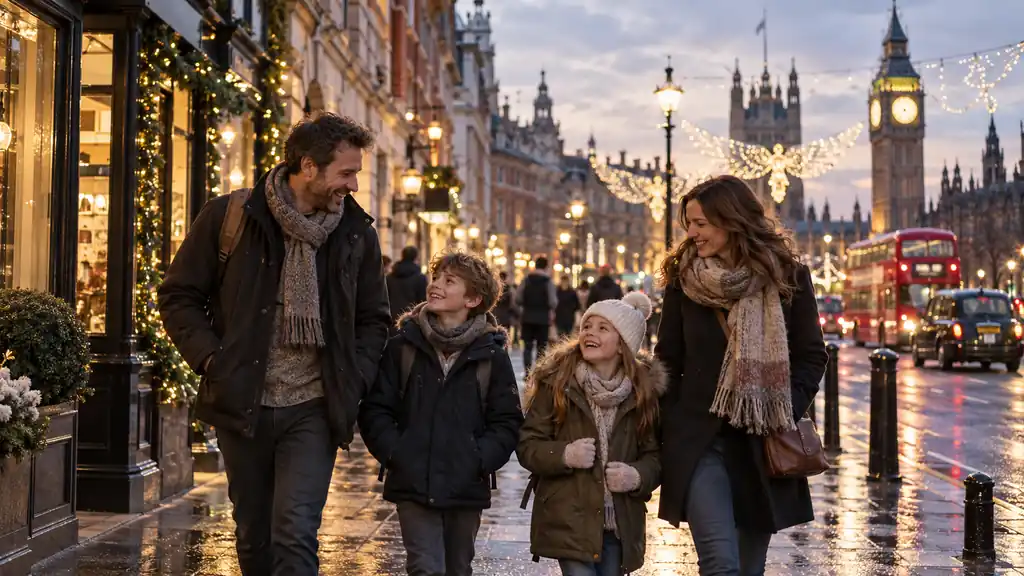
If everyone is settled already, choose one compact area for lights and shop windows. Avoid combining distant neighborhoods simply because their names all appear on the same list of seasonal highlights.
Keep the walk reversible. Know the nearest practical way back, and be willing to take it. A lovely evening can turn into a compulsory endurance event surprisingly quickly when the youngest person decides they have finished appreciating architecture.
Do not promise particular displays until you have checked their current dates. Seasonal installations and ticketed events change. The official Visit London family Christmas guide is a useful place to check what is announced for 2026, then follow the organizer’s own booking information.
One warm stop and an early return can be an excellent first evening. There is nothing wrong with saving the big day for people who have had some sleep.
Saturday: Choose One Museum and Give It a Small Mission
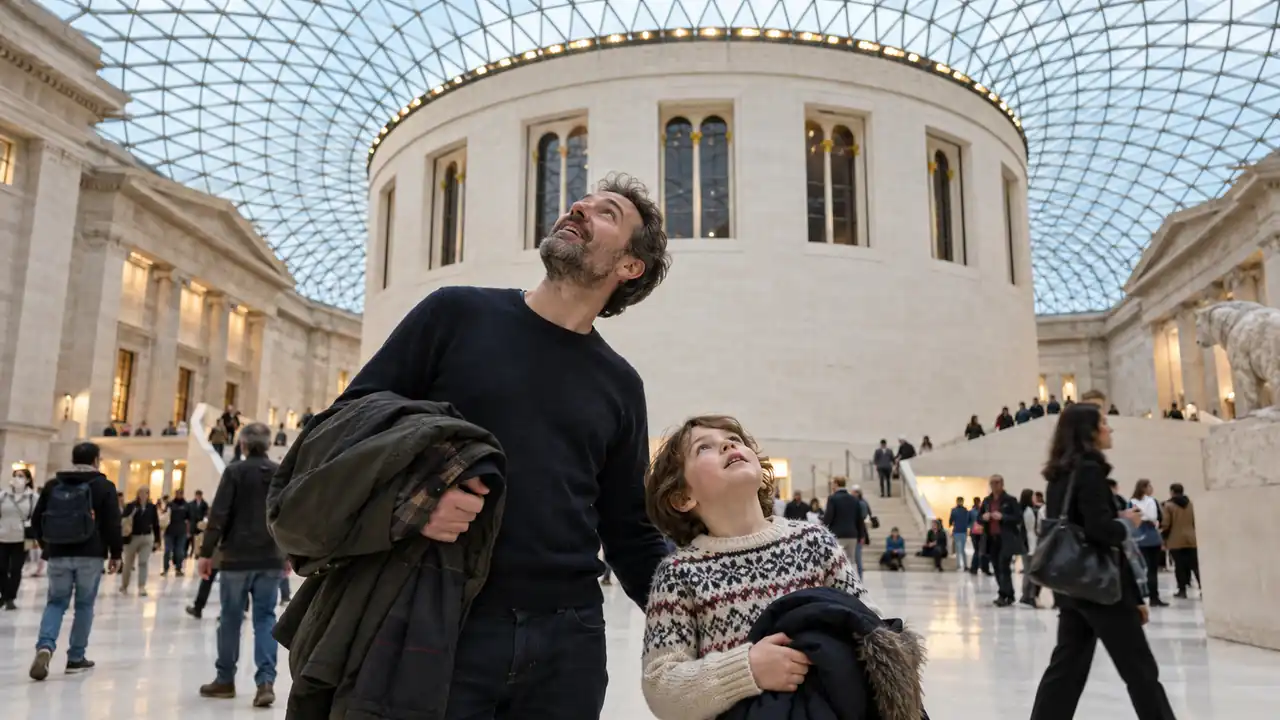
A large museum does not require a large visit. Pick a subject the children already care about and build around that. Dinosaurs, ancient history, transport, or a particular object are better starting points than “we should see a museum.”
For the British Museum, I would identify a few things to find and allow time to wander between them. The museum’s official visit page lists free general entry, recommends advance booking, and says the museum closes on 24–26 December. Check the date and any gallery changes before making it your main plan.
If natural history is the stronger interest, use the Natural History Museum’s official visitor information. Its permanent galleries are free to explore, and it also lists a 24–26 December closure. Check admission arrangements and book an appropriate entry slot where available.
I would choose between those museums rather than attempting both in one day with children. The building, queue, security arrangements, coats, and lunch are all part of the visit. A map showing the distance between two entrances does not account for any of that.
Tell the children what the small mission is and let them help choose. Leave while they still have enough attention for the last object. The goal is a visit they remember, not a complete inventory of rooms they were dragged through.
Put Lunch Where It Belongs: in the Plan
Find a realistic meal option near the day’s main activity. It does not have to be elaborate, and it should not require a long transfer. A convenient place with food everyone accepts can rescue a day more effectively than a restaurant famous on somebody else’s itinerary.
Allow time for coats, toilets, and a proper sit-down. In winter, this is also the moment to dry out a little and decide whether the afternoon should be shorter.
Keep a small familiar snack for the gap between leaving an attraction and reaching lunch. Follow venue rules about food, and do not assume every gallery or queue is a suitable picnic area.
If you have dietary needs, check the actual menu and discuss requirements with the venue. Seasonal popularity does not make a restaurant suitable for every family.
Then ask how everyone feels before announcing the next activity. Children have a way of telling you very clearly if you provide a question they are allowed to answer honestly.
Make the Afternoon a Choice, Not a Debt
After the main visit, choose among a short walk, a small second stop, or time back at the hotel. Which one is best depends on the day you are having rather than the day you imagined at home.
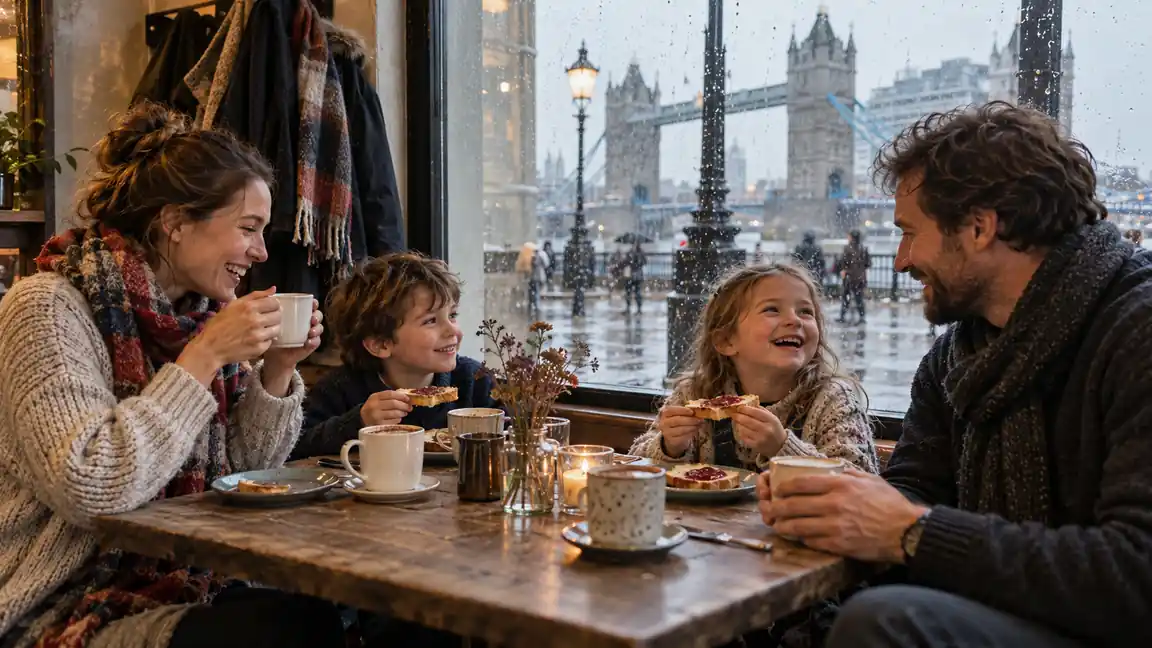
If the weather is decent, a park or neighborhood wander can provide a change of pace. If it is unpleasant, a bookshop, a café, or simply a break indoors may be better. Avoid replacing every rained-out walk with an expensive attraction out of panic.
For a ticketed festive event, check the location and entry time carefully. “London” covers a lot of ground. Add the journey, queues, and return before deciding that an evening booking fits after a full museum day.
Buy only what you are willing to structure the day around. Several timed tickets can turn a flexible weekend into a series of deadlines, with children cast as unusually reluctant colleagues.
I would rather pay for one event the family genuinely wants than several that merely fill the blank spaces. Leave some of those spaces blank. They are where a pleasant unplanned hour can happen.
Transport Needs the Date, Not Just the Destination
Check the route shortly before travel, including planned closures and any changes around the festive period. Transport for London’s major works and events page links to current service information. Do not assume a journey that worked on a summer visit will work unchanged in late December.
Keep the hotel address available offline and have a simple return option. If traveling with a pushchair, mobility needs, or children who struggle with stairs, check the actual access arrangements for the stations you intend to use.
Group activities geographically. A slightly less famous option nearby can be more enjoyable than the perfect one across town after a long day.
For airport departure day, look up the journey separately. The line you use to reach the centre is not necessarily running the same way on the day you leave. Allow for the airline’s deadlines and a realistic transfer margin.
And nominate who is watching navigation and who is watching the children when you move through busy places. The person staring at a map cannot also be the only person noticing where the family is going.
Sunday Is Shorter Than It Looks
A Sunday with an afternoon flight is not a full sightseeing day. There is breakfast, packing, checkout, luggage, and the airport journey. Put those in first, then see what remains.
If there is a useful pocket of time, choose something close and simple. Confirm whether the hotel can store bags and when you need to return for them. Do not discover the collection procedure while the car is waiting.
Keep the last meal convenient. A long queue for one more famous breakfast can eat the entire margin you built into departure. The airport journey should begin while you still feel slightly overprepared.
If you have a later departure, the family can choose a repeat favorite rather than a new attraction. Going back to the place a child loved is a perfectly respectable use of a second morning.
The Weekend I Would Actually Want
A finished workday. A comfortable room. A museum visit with a purpose small enough for a child to enjoy. Warm food. A short walk under the lights. Enough time to get back without an argument about whose idea this was.
That leaves plenty unseen. It also leaves a reason to return. For a winter extension to a business trip, I will take a family that wants another visit over a checklist that needs a holiday of its own.
Choose the Version That Fits Your Family
With a younger child, I would shorten the main visit and keep the return easy. Choose something visually immediate, build in a familiar meal, and leave room for the normal rest routine. A child who has had enough does not become more interested because the next room contains something historically important.
With older children, give them more of the route to choose. Ask for one subject or place that matters to them and let them help work out how it fits. They may happily spend longer at one attraction if they were involved in choosing it.
For a mixed-age family, look for a shared main stop and allow different levels of participation. One child might sketch an object while another reads about it. The adults do not need to deliver the same experience to everyone minute by minute.
If one adult is still working on Saturday morning, make the independent plan worthwhile on its own. Do not ask the family to postpone everything until a meeting that may overrun. Agree where to meet afterward and give them permission to start enjoying the city without you.
If the weather turns while you are out, make the change before everyone is soaked. Check how far the next warm place really is, choose a practical option, and reconsider the remaining plan once settled. Spending money because you are cold can make an already expensive city feel personally hostile.
For a family watching the budget, decide which paid event matters most and keep the rest simple. Free general museum entry can help, but transport, meals, special exhibitions, and shopping still need a place in the total. A free attraction across town is not a completely free outing.
At the end of each day, ask what the children would like more of tomorrow. The answer may be surprisingly ordinary: another bus ride, time in the bookshop, or a second look at the same object. You are allowed to follow that answer even if it never appeared in your original research.
A short family extension works best when the schedule can respond to the people using it. London supplies more than enough possibilities. Your useful contribution is choosing a manageable few and knowing when to stop choosing.
London Between Meetings
Use the wider London guide to choose a practical base and keep the city journeys manageable.