

The dangerous holiday itinerary is usually the one that looks excellent on a booking screen. Cheap fare. Short connection. Home in time for dinner. All it requires is that every aircraft, bag, child, security queue, and winter cloud behaves exactly as advertised.
I am willing to trust a lot of things. That particular committee is not one of them.
For the Thanksgiving and Christmas travel season, I would rather buy a little slack than spend the whole journey trying to recover an hour I never had. That does not mean paying for the most expensive flight or arriving at the airport before the employees. It means choosing an itinerary you can still live with when something ordinary goes wrong.
Here is the family flight plan I would use for the rest of 2026: fewer moving parts, a connection that allows for lunch, essentials in the cabin, and a backup decision made before the departure board starts delivering bad news.
Start With the Arrival You Actually Need
Before looking at fares, write down the thing you cannot miss. Thanksgiving dinner? A client meeting? A cruise departure? The first night of a prepaid family stay? These are different problems, and they deserve different amounts of protection.
If missing the arrival by a day would wreck the purpose of the trip, travel a day earlier when the budget and calendar allow. An extra hotel night can be an annoying cost. A missed event can make the entire journey pointless. Compare those two outcomes before congratulating yourself on the cheaper ticket.
For a flexible visit to relatives, I might accept a less convenient arrival. For a work trip with the family joining afterward, I would keep the work arrival and the family handover separate. The children do not need to spend their first vacation evening watching Dad negotiate with a conference organizer from the baggage hall.
Also ask who is collecting you. A flight landing late at night does not end when the wheels touch the runway. There is immigration on some trips, luggage, a tired child who needs a bathroom, and the drive afterward. Give the person at the other end a realistic arrival window rather than the prettiest number on the ticket.
One Flight Beats Two Chances to Get Stuck
A nonstop is worth pricing even when your first instinct is to dismiss it. Compare the difference for the whole family with the real cost of the connection: another meal, another boarding, another chance for a bag to go sightseeing without you.
That is a preference, not a guarantee. Nonstops get cancelled too. But removing a connection removes a set of decisions from a day that already contains enough decisions.
If connecting is unavoidable, look beyond the published connection time. Will you change terminals? Clear immigration? Collect and recheck luggage? Travel with a stroller? Move between airports? A connection that works for a fit adult with a backpack can be a poor family plan.
I would also look at what happens after a missed connection. Is there another flight to your destination that afternoon? Only one the next morning? Are all the later options on a different airline? The last flight of the day can be perfectly sensible. It just deserves an overnight plan rather than blind optimism.
My personal buffer is deliberately longer when children, checked bags, or border formalities are involved. There is no magic number that fits every airport. Read the airport and airline guidance for your route, then add time for the family you actually have.

Check What You Bought, Not Just What You Paid
Cheap fares become less charming when the family seating plan is four scattered middle seats and a hopeful conversation at the gate. Before paying, check seat selection, cabin baggage, checked baggage, change restrictions, and the operating airline.
Take family seating questions to the airline early. Explain the children’s ages and ask what arrangements apply to your booking. Do not make a gate agent your only plan for solving a problem that was visible six weeks earlier.
If the itinerary includes separate tickets, understand that you may be taking responsibility for a missed onward flight yourself. Two bookings on the same screen do not necessarily create one protected journey. Check the actual ticket arrangement with the seller.
When work pays for part of the trip, keep the booking inside your employer’s process. A cheap personal workaround can become expensive when the corporate travel team cannot service it during a disruption. Save the booking reference, ticket information, and the number for the people who are allowed to change it.
Then send the useful details to the other adult traveling with you. Not twenty screenshots buried in a message thread. One note containing the flight numbers, booking references, accommodation, and the first person to contact if the trip changes.
The Backup Plan Fits on Half a Page
Before departure, I want answers to four questions:
- What is the next workable route if this flight disappears?
- Where could we sleep if we cannot leave until tomorrow?
- Who needs to know if we arrive a day late?
- What amount can we spend without stopping to hold a family finance summit?
You are not buying replacement flights in advance. You are learning the shape of the problem. Check whether the alternative airport is truly useful, whether getting there requires a long drive, and whether that option still works in poor weather.
Put a couple of suitable hotels in the note, including their actual shuttle arrangements and reception hours. “Airport hotel” is a location category, not a promise that a van will appear at midnight. If you might need an accessible room, a cot, or a room permitted for your whole family, ask about that too.
For the actual rebooking sequence, keep my flight-cancellation playbook handy. This article is about making the itinerary less fragile. That one covers what to do when the airline has already pulled the plug.
Pack for the Night Your Suitcase Does Not Attend
The personal bag is where the useful family planning lives. Put travel documents, necessary medication, a change of basics, charging cables, and a small amount of familiar food where you can reach them without opening the whole carry-on.
Divide important items sensibly between the adults rather than putting every passport, every charger, and every child’s spare shirt in one bag. Keep documents secure and accessible to their owners. The goal is resilience, not a scavenger hunt.
A child who spills a drink before boarding has not failed the packing system. The packing system fails when the clean clothes are in the hold.
Keep spare lithium batteries and power banks in the cabin, protect them from damage and short circuit, and remove them if a cabin bag is gate-checked. The FAA’s battery guidance also makes clear that airlines may set tighter limits. Check your carrier before traveling, rather than assuming last year’s arrangement still applies.
For a winter journey, gloves and a hat should be reachable too. There is a special kind of bad mood that comes from standing outside a terminal with your warm things expertly packed in the least accessible corner of the bag.
Give the Airport Day Fewer Jobs
The evening before departure is for charging devices, checking the flight, and getting the bags to the door. It is not the ideal moment to discover that somebody’s passport expires too soon or that the airport transfer was only discussed, never booked.
Check your airport’s recommended arrival time and the airline’s deadlines for bag drop and boarding. Work backward from those, including the drive and a realistic margin. Your personal record for clearing security alone is not a useful family planning tool.
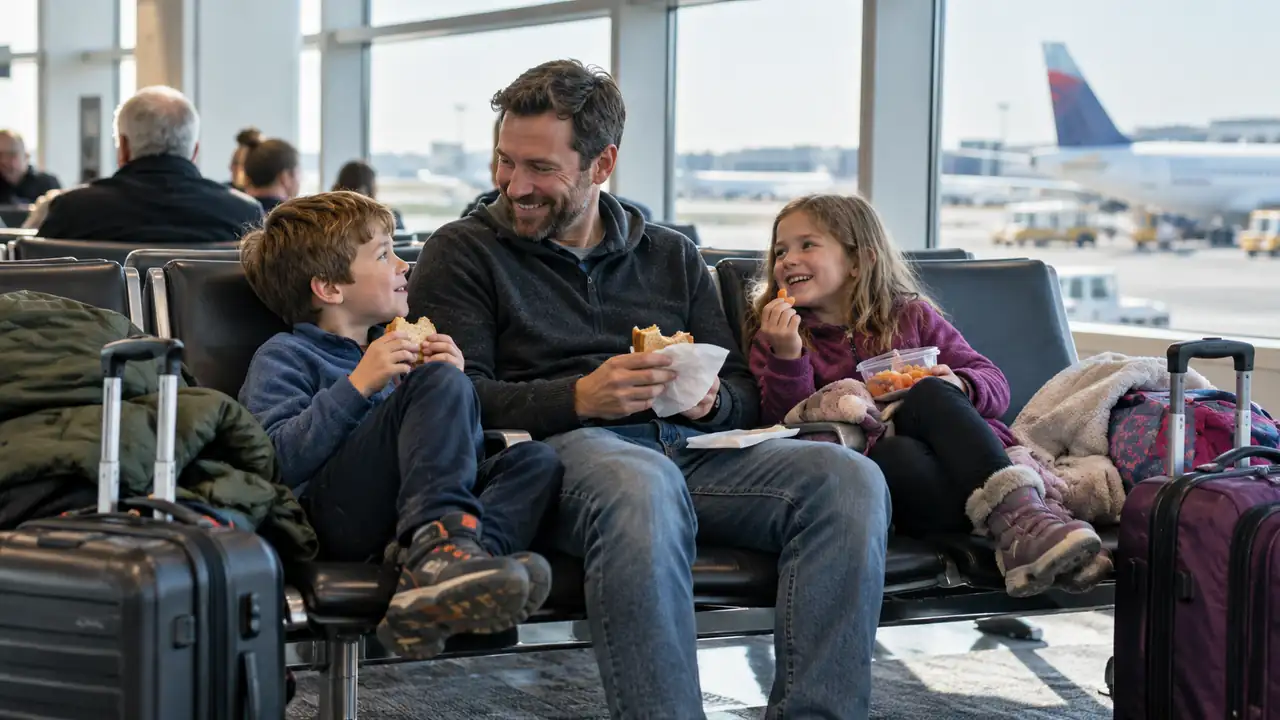
At the airport, assign jobs. One adult handles the documents and airline conversation. The other keeps track of the children and loose equipment. Swap when necessary, but make the handover explicit. Two people assuming the other one has the toy bag is how a stuffed rabbit acquires an airport residence.
After security, eat before everybody becomes hungry at once. Refill bottles where appropriate. Find the gate, verify the boarding information, and only then wander. I prefer a dull twenty minutes near the right gate to an exciting five minutes running toward it.
If a delay appears, look at the connection and onward options early. A late incoming aircraft is useful information, even if the airline has not yet changed your departure time. Ask sensible questions without converting the gate desk into a courtroom.
Know the Difference Between a Refund and a Rescue
For flights covered by U.S. rules, a cancellation can entitle you to a ticket refund if you choose not to travel or accept the alternatives offered. That is different from a promise that the airline will buy you another flight or a hotel room. The DOT refund guidance explains the distinction.
Do not cancel or accept a refund simply because the button is easy to find. If you still need transportation, understand what happens to your booking first. A refund might be the right decision; it might also leave you shopping for five new seats at the worst possible moment.
Hotel and meal arrangements depend on the disruption, route, and airline commitments. In the U.S., the DOT dashboard concerns disruptions within an airline’s control. Winter weather should not be treated as an automatic voucher generator. Ask what applies, keep receipts, and check any separate insurance terms.
Choose the Version of the Trip You Can Enjoy
There will always be a cheaper departure, a tighter connection, or a route that saves forty minutes if absolutely everything works. Sometimes that is the right choice. But make it a deliberate choice, with the consequences visible.
My holiday goal is modest: arrive with the family, the important bags, and enough goodwill left to enjoy the people we came to see. I will happily trade a little theoretical efficiency for that.
Before you book, ask one final question: if this itinerary slips by three hours, do we still have a workable day? If the answer is no, change one thing now. That is usually easier than changing everybody’s mood at gate C27.
Run the Two Scenarios Nobody Wants to Discuss
Before paying, imagine the outbound flight leaves late enough to miss the connection. What is the first sensible thing you do? If the answer involves a long drive, a different airport, or sleeping somewhere, check whether that solution is realistic with your family. Knowing it exists is different from deciding you are willing to use it.
Now imagine the return slips by a day. Who needs to know at work? Is there a school commitment? Who can collect the dog? Can you keep the accommodation longer, or would you need another place? These are ordinary questions, but they become much harder when every answer requires waking someone at home.
Make one clear decision about spending. For example, agree that a suitable overnight room and basic meals can be booked promptly if you are stranded, then review the details afterward. The amount is personal to your budget. The value is avoiding a negotiation while rooms disappear from the booking screen.
If relatives are meeting you, explain the flexible part in advance. “We expect to arrive Friday afternoon; if winter disrupts the route, we will update you rather than trying an unsafe overnight drive.” That is a more useful promise than insisting you will somehow be there.
For the children, describe the possible change without making it frightening. Sometimes flights move, and adults have another plan. You do not need to tell them about every theoretical failure. You do need to avoid presenting the original arrival as a personal guarantee.
Finally, decide what you would abandon. A restaurant reservation can move. An optional outing can disappear. The willingness to drop something small protects the rest of the visit. Carrying every original plan forward after a disruption is how one late flight manages to spoil three days.
If the family can answer those two scenarios calmly at home, the itinerary is probably more robust than it looked on the fare screen. You have made room for a real journey, including the parts that were never going to appear in the booking photograph.
When the Flight Is Cancelled
The airline has cancelled the flight. Here is the next sequence: rebooking, your options, and the questions to ask before accepting a refund.