

There are two kinds of Christmas gift: the one that makes somebody happy, and the one that makes you open a suitcase on an airport floor while strangers step around your underwear.
Sometimes they are the same gift. That is the problem.
If you are flying to see family, bringing presents home from a business trip, or adding a December weekend to work travel, think about the journey before buying. A beautiful object can still be the wrong object for a small cabin bag, a security checkpoint, or a connection where you need both hands free.
I would run every gift through five questions: can it fly, can I carry it, can I protect it, will the recipient use it, and can I avoid transporting it altogether? The last question has saved more luggage space than any packing technique.
First Ask Whether the Present Needs a Plane Ticket
If a gift is readily available where the recipient lives, compare delivery with carrying it yourself. The point is not to turn every present into an online transaction. It is to avoid hauling a large box across an ocean merely because buying it at home felt organized.
Check delivery timing, address accuracy, and whether somebody can receive it. A parcel sent to an empty house is not an improvement. Hotels may have restrictions or charges for receiving packages, so confirm before using one as a temporary warehouse.
For a relative who values the moment of opening something together, you can bring a small card or a compact related item and explain the larger present. The ceremony does not require you to transport the packaging designed for a retail shelf.
Experiences and digital gifts can work too, provided the recipient can use them in their location and the terms suit them. Do not buy a voucher that depends on a currency, platform, or region they cannot easily access.
If carrying the item is part of its meaning—a local craft, for example—then give it space deliberately. Do not buy it and hope physics becomes more festive on the return journey.
Buying a Gift and Packing a Gift Are Different Decisions
For travel, I like things that are small, robust, and useful without requiring three extra accessories. A book, a scarf, a compact game, or a modest local object can be easier than something fragile with an elaborate box.
That is a packing preference, not a claim that one category is always better. A large fragile present may be exactly right. If so, plan suitable transport instead of asking a soft bag to perform structural engineering.
Look at the dimensions of the actual item and its protection. Gift-shop staff are often good at making something look beautiful; they may not know the baggage allowance on your next airline.
Also think about what the recipient has to do afterward. Someone flying home with you does not acquire extra luggage space because the object is now technically theirs. A gift that creates a packing problem for the receiver deserves a second look.
If you are still choosing, the gift guide for dads who travel is a separate place to start. This is the less glamorous part: making sure the chosen present arrives in a condition that suggests affection rather than negligence.

Wrap at the Destination
For U.S. screening, TSA advises using gift bags or boxes that can be opened if inspection is needed. I would save the elaborate wrapping for arrival. A roll of beautiful paper has very little authority at a checkpoint.
Put the item in protective packing, keep related small parts together, and carry a folding gift bag or buy wrapping locally. Avoid adhesives or arrangements that make an ordinary inspection unnecessarily complicated.
Check current guidance through TSA’s travel tips and the departure airport’s information. For a trip involving another country’s screening, check that country’s rules too. Being allowed through your first airport does not settle the return journey.
If the present is a surprise for somebody traveling with you, keep the secret proportionate. Tell another adult where the object is if necessary. A surprise that requires you to deny owning a mysterious package during screening is a badly designed surprise.
I would rather arrive with unwrapped gifts and intact patience than protect a bow for nine hours while everything underneath it gets crushed.
Liquids Include Some Things That Do Not Look Like Drinks
Perfume, sauces, spreads, cosmetic sets, and decorative objects containing liquid deserve a rules check before they go in a cabin bag. Do not decide an item is fine merely because it came from a gift shop rather than a supermarket.
Use the security authority’s current item guidance for the exact product and route. Check the container, not just how much is left inside it. Airport arrangements can differ, and a rule at one checkpoint may not apply at the next.
If an item needs to travel in checked luggage, consider whether that changes the whole gift decision. Adding a checked bag for one modest present may cost more than delivery or buying something else.
For food, security screening and entry into another country are separate issues. Something can be acceptable on the aircraft but restricted at the destination. Check the destination customs and agriculture rules before buying food, plants, or animal products.
When returning to the U.S., review CBP’s declaration guidance and declare purchases as required. Do not rely on “but it is a gift” as an exemption you have invented in the arrivals line.
Batteries Need a Check of Their Own
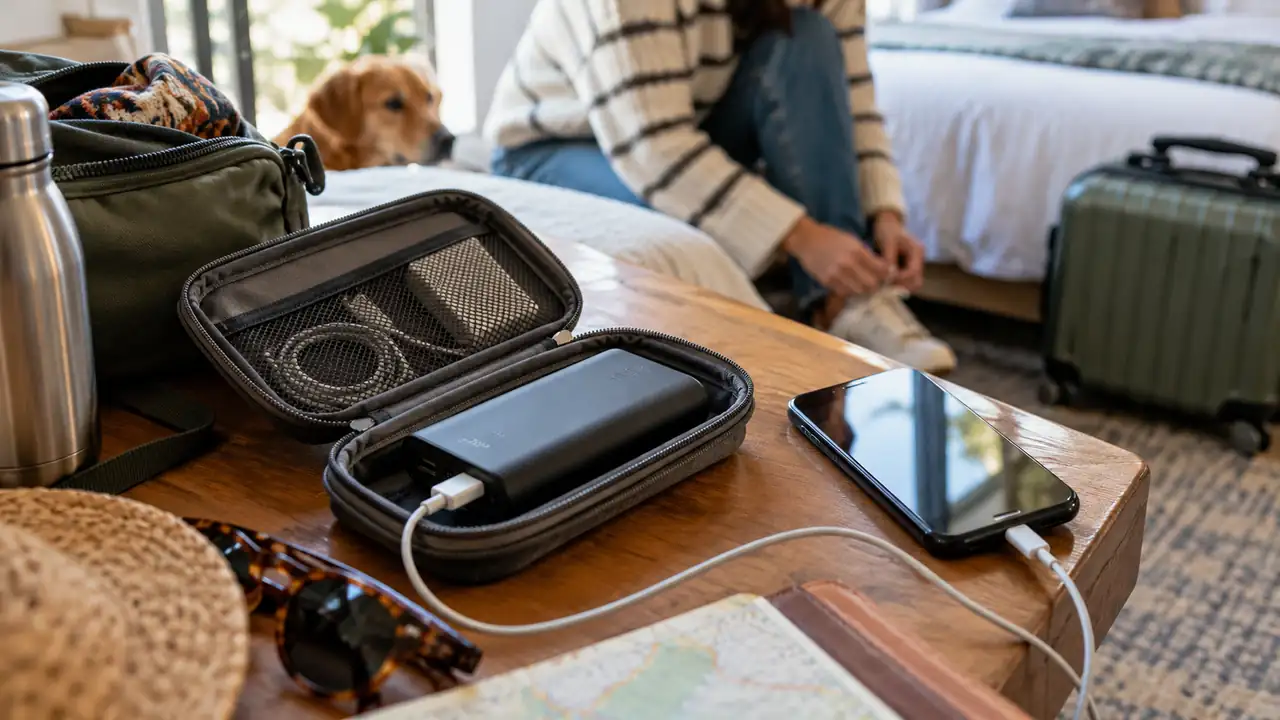
A compact electronic gift may be easy to carry, but its battery changes the packing question. Find the battery specifications and the operating airline’s current restrictions before departure, particularly for power banks and spare batteries.
Keep spare lithium batteries and power banks in cabin baggage, protect them against damage and short circuit, and remove them if the cabin bag is taken for gate-checking. Check airline limits and any rules about use on board. The FAA’s lithium-battery guidance is the useful starting point for U.S. flights.
For a device with an installed battery, read the rules for that type of device rather than treating it as a loose battery. Do not carry damaged or recalled battery products. A bargain is not improved by uncertainty about whether it is safe to transport.
Keep the relevant product details somewhere you can find them. If the rating is missing or unclear, ask the manufacturer or airline before traveling. The airport floor is a poor place to begin researching a technical specification.
And do not promise a child they can play with the gift on the flight until you know it is suitable, permitted, and usable without creating a soundtrack for the entire cabin.
Protect the Item Without Packing a Museum
Small, sturdy items can often sit within clothing, but do not assume a sweater makes every fragile object safe. Use appropriate protection, keep hard items from pressing against delicate surfaces, and consider what happens when the bag is lifted, tipped, or compressed.
Keep a gift you cannot afford to lose with you when airline rules allow. Check baggage and insurance terms for valuable items rather than assuming either one will reimburse whatever you packed.
Avoid packing a delicate present at the point where the suitcase bends or the handle mechanism intrudes. Close the bag gently and check that you are not forcing pressure onto it.
If you need to gate-check the bag, be ready to remove fragile or valuable permitted items along with your essentials. That works only if they are accessible. A present buried beneath every other possession is protected against the wrong problem.
For genuinely delicate or valuable gifts, specialist shipping or buying at the destination may be the sensible answer. Paying for proper transport can be cheaper than arriving with a heartfelt collection of shards.
Keep the Gift Allowance Visible
Before departure, leave a specific amount of room for the return. A small packing cube or empty soft bag can mark the space, but it does not create an extra airline allowance.
If you buy more than fits, make a decision early: ship it, replace something, or pay for a baggage arrangement that is actually allowed. Do not rely on carrying several shopping bags through boarding and hoping they are counted as seasonal decoration.
Consider the weight as well as the volume. A compact box can be heavy. Airline limits apply to what you carry, not to how efficiently it was folded.
For gifts purchased abroad, keep receipts accessible. They can help with customs questions, returns, or a damaged-item claim. You do not have to preserve a retail box large enough to house a small appliance merely to prove you bought a scarf.
If the item is for a business contact, check your employer’s gift policy and the recipient’s rules as well. Seasonal goodwill is better expressed within the limits than explained afterward.
A Five-Minute Gift Check Before You Leave
Lay out the presents beside the bags. Check what each contains, where it belongs, whether it needs inspection-friendly packing, and whether destination entry rules apply.
Make sure the person who will carry the bag knows what is inside. Keep necessary paperwork with the right item. Put fragile objects where you can remove them if plans change.
Then remove one thing that is creating more work than joy. There is usually a candidate: the oversized box, the second souvenir, or the object that looked portable while someone else was holding it.
A good present should not dominate the journey. Pack it thoughtfully, arrive, find some wrapping paper, and give it to the person you wanted to make happy. That part is supposed to be the easy bit.
Three Gifts, Three Different Packing Answers
Take a small book bought for a child at the destination. It is robust, easy to identify, and simple to protect from a leaking bottle. I would keep it unwrapped, slide it where the cover will not bend, and add the gift bag after arrival. The remaining questions are ordinary baggage space and any relevant customs declaration.
Now take a decorative glass object. The question is no longer only whether it fits. What happens if the cabin bag is checked, another bag presses against it, or you need both hands during a connection? If the answer requires holding it delicately for the entire journey, consider proper shipping or a different gift. Being able to carry something for ten minutes in a shop is not a transport plan.
Finally, take a rechargeable gadget. Check what the product is, whether the battery is installed or spare, its specifications, and the airline’s rules. Keep the information accessible. Decide where it belongs only after that check. Do not remove identifying information merely to reduce packaging if it will help establish what the item is.
The same decision process works for souvenirs on the way home. Name the transport problem, solve it, then buy. Do not reverse the order because the stall is charming or the shop is about to close.
If the item is expensive, check the seller’s return arrangements, authenticity, and any warranty limitations you care about. A gift bought abroad can be inconvenient to return, even when the purchase itself was perfectly legitimate. Keep the receipt without assuming it solves every after-sales question.
And ask the recipient when appropriate. A supposedly perfect surprise that they cannot use is less thoughtful than a short conversation. You can preserve some surprise in the color, the presentation, or the accompanying note without guessing about compatibility or size.
None of this makes giving less generous. It directs the effort toward the person rather than toward the logistics of a box. The ideal result is that they remember the present and you barely remember carrying it.
Gifts for the Traveling Dad
Choose a present that helps on an actual trip, then decide how it will get there.