
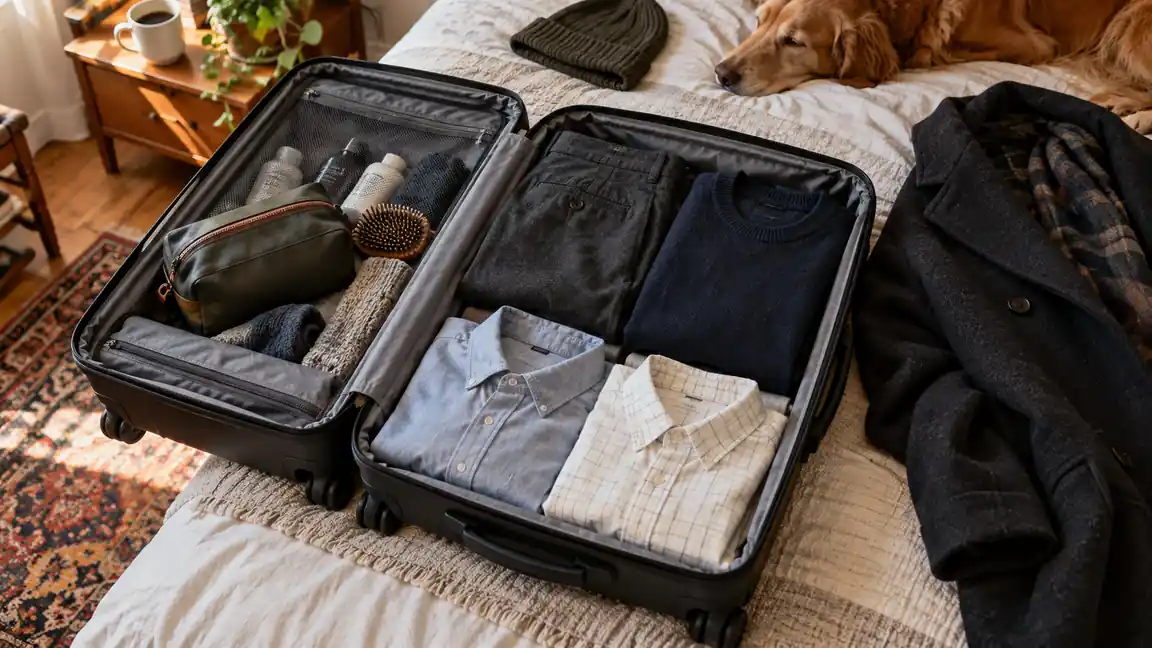
Summer packing lets you get away with optimism. A shirt folds small. Shoes dry eventually. You can pretend the weather will cooperate.
A winter business trip asks harder questions. Where does the coat go? Can the meeting shoes handle a wet pavement? How many sweaters fit before the carry-on becomes an upholstered cube? And why does a perfectly ordinary scarf occupy the same volume as an emergency parachute?
The answer is not to pack tiny clothes and suffer. It is to make each layer useful in more than one setting, decide which footwear earns the space, and stop treating every possible outfit as a separate emergency.
This is how I would build a carry-on for a few workdays followed by a winter family weekend. It suits a city trip with indoor meetings and outdoor walking. A ski holiday, prolonged exposure to serious cold, or a job that needs specialist equipment is a different packing problem.
Write the Actual Day Before Writing the Packing List
Start with the activities, not the wardrobe. Airport. Train or taxi. Meeting room. Dinner. A walk with the family. Repeat. Beside each one, write the dress requirement and the likely amount of time outside.
If the office is casual, a full suit and separate dinner outfit may be unnecessary. If the first meeting is formal, ask the host what that means rather than arriving with a bag full of interpretations. “Business casual” can cover a surprising amount of territory.
Then check the destination forecast close to departure. Look at rain, wind, and overnight temperatures as well as the afternoon high. A sunny icon does not tell you what a station platform feels like at seven in the morning.
The question is whether you will spend ten minutes outside between a car and a building or ninety minutes walking around after work. Those are different coats. Pack for the actual exposure rather than the temperature alone.
For the basic one-bag structure, the three-day business-trip packing list is the starting point. Winter changes the layers and drying strategy. It does not automatically require twice as many possessions.
Build One Warm System
I prefer several compatible layers to one enormous garment that works only outdoors. A comfortable base layer, a shirt or fine knit, and the right coat let you adjust between a warm meeting room and a windy street.
The layers must fit together before the trip. Put them on at home. Sit down. Lift your arms. Close the coat over the jacket you expect to wear underneath. Discovering that the combination squeezes your shoulders is useful information on a Sunday afternoon and irritating information in a taxi.
Choose a small color range. Navy, charcoal, and one other color are quite enough for a short trip. This is not a style doctrine. It is how I avoid packing trousers that need a particular shirt that needs different shoes that apparently need their own holiday.
A fine sweater that fits under a jacket is often more useful than two bulky casual ones. Bring a spare layer if you need it, but make it a different function: perhaps something comfortable for the flight rather than another nearly identical office sweater.
Base layers should be comfortable against your skin and appropriate to your destination. Try new ones before departure. A fabric that irritates you at home will not develop a better personality over the Atlantic.
The Coat Gets Its Own Plan
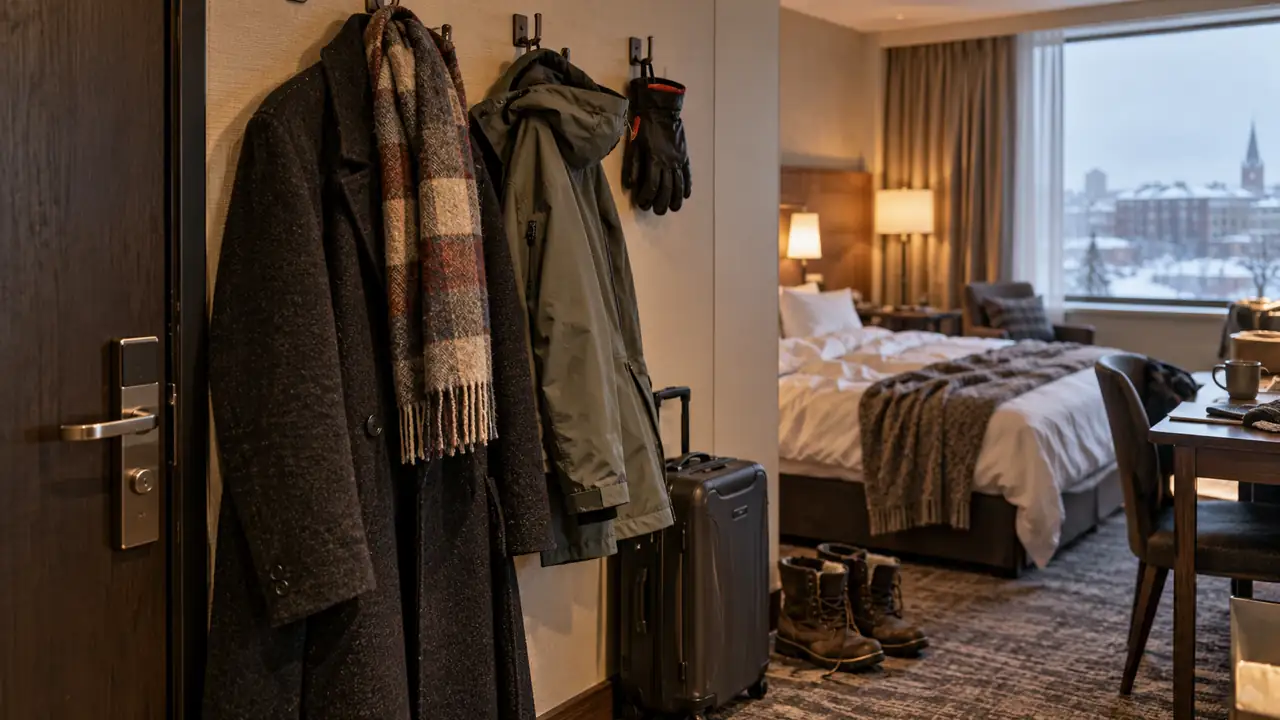
Wear or carry the largest outer layer on the journey if practical, but remember that an aircraft cabin is not a personal cloakroom. Keep the coat manageable. Follow crew instructions about where it can go, and do not assume an empty overhead bin will remain empty.
A wool coat can look right at meetings and dinner. A weatherproof insulated coat can be better for long outdoor stretches. A lighter outer shell over warm layers can suit changeable weather. None wins every trip.
Look at the hood, pockets, and wet-weather performance rather than buying on silhouette alone. If you need a separate compact rain shell, try it over your normal layers. “Packable” is less impressive when it will not close over the sweater you packed.
Put gloves, hat, and scarf together in one reachable pouch or pocket. This sounds minor until you have unpacked three bags outside a station while somebody helpfully announces that they are cold.
Leave a little room for the return journey. Coats get wet, gifts appear, and careful departure-day folding seldom survives a family weekend. A bag that closes only with a knee on the lid has no room for real life.
Footwear Is Where the Bag Usually Loses
Three pairs of shoes can consume a carry-on before you add a shirt. Start by asking whether one pair can handle the journey, meetings, and ordinary city walking.
If dress expectations allow it, a clean, understated pair with useful grip and some wet-weather protection can do a lot of work. Try the shoes on a long walk before taking them abroad. A good-looking shoe that hurts after twenty minutes is luggage with a lacing system.
For a formal meeting, dedicated dress shoes may be justified. Wear the larger practical pair on the flight and pack the smaller pair in a protective bag. Be honest about whether you will really use trainers as well. The hotel gym does not become a binding commitment because you packed for it.
Consider the destination’s surfaces. Smooth soles and wet stone are not an inspiring partnership. Nor are delicate shoes and several evenings of rain. I would rather slightly underperform a fashion expectation than spend a work trip limping.
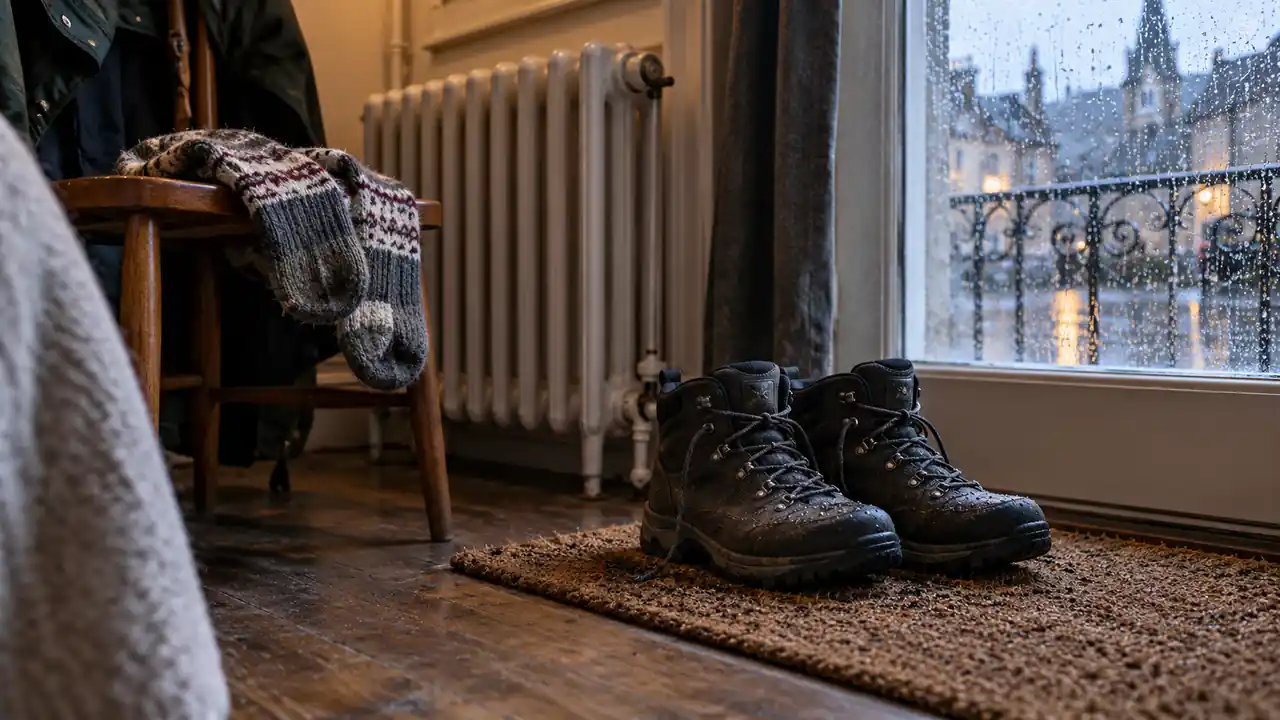
Bring enough suitable socks to change out of a damp pair. Drying time matters more in winter, especially if you move hotels. Let shoes air naturally and follow their care instructions; do not cook them on a radiator because tomorrow’s schedule looks impatient.
A Sample Bag for Four Nights
This is a starting allocation, not a law. Adjust for your work requirements, laundry access, and what you are wearing in transit.
- Two work-appropriate tops in the bag, plus the travel-day top.
- One spare pair of trousers that works with every top.
- One fine warm layer, with another worn if the weather calls for it.
- Underwear and socks for the trip, with a small sensible spare allowance.
- Sleepwear, a compact wash kit, necessary medication, and one comfortable change for downtime.
- At most one additional pair of shoes unless the itinerary has a specific reason for more.
- Hat, gloves, scarf, and the outerwear chosen for the destination.
Lay it all out before using packing cubes. Otherwise cubes can become a way to conceal overpacking from yourself. Put like items together, compress gently where suitable, and protect clothes that crease easily.
Keep the first meeting’s essentials accessible and presentable. If the airline takes the bag at the gate, remove documents, valuables, necessary medication, and anything else you need in the cabin. Check the airline’s baggage rules before choosing the bag; dimensions and weight allowances vary.
For a longer trip, add a laundry plan rather than automatically doubling everything. The difference between seven days and two weeks is covered in my packing list by trip length. The same logic matters more when every extra garment is thicker.
The Wash-and-Dry Question Comes Before Departure
If laundry is part of the plan, confirm the service and timing. A hotel offering laundry does not mean a shirt handed over on Saturday night will reappear before a Sunday morning flight.
For hand-washing small items, bring only fabrics you know will dry within your schedule and use facilities appropriately. A damp sweater packed into a suitcase is a problem transferred to another city.
Do not build the entire trip around wearing the same indispensable garment every day. A spilled coffee is not a rare event worthy of a risk model. It is breakfast. One compatible backup handles that better than six unrelated outfits.
Ask for an iron or steamer if you need one and check garment labels. Hotels vary, and not every room has equipment waiting in the wardrobe. Allow time to solve that before the meeting, not while the taxi is outside.
Do Not Let Winter Multiply the Electronics
The clothes are already taking more room. Keep the rest of the bag boring. One charging pouch, the adapters your route requires, and devices you will actually use.
Inspect cables and batteries at home. Carry power banks and spare lithium batteries in the cabin and protect them properly. If a cabin bag is gate-checked, remove those items first. The FAA’s baggage guidance explains the requirements; the operating airline may impose additional restrictions.
A compact personal bag should still have space for your gloves and an accessible warm layer. It should not be packed so tightly with electronics that you have to unpack a mobile office to find a hat.
For family extensions, each person’s bag needs a small amount of independence. A child’s spare warm clothes should not all depend on one suitcase turning up. Share responsibility sensibly without making the packing so complicated that nobody knows where anything lives.
Do the Doorway Test
Put on the travel clothes, shoulder the personal bag, lift the carry-on, and walk to the front door. Pick everything up without a spare hand. Imagine doing that in a station while also helping a child.
If the system already feels irritating, remove something. Do not wait for a staircase in the rain to provide the editorial feedback.
Finally, pack the coat and gloves the way you will actually carry them. The goal is a journey you can manage, not a photograph of an impressively minimal suitcase. Warm feet, decent meeting clothes, and a bag that closes without negotiation are plenty.
Try the Cold Tuesday Before You Leave
Picture one specific day: breakfast at the hotel, a walk to the station, two meetings, dinner, and a short evening outside with the family. Lay out what you will wear for that whole sequence. If the plan needs three separate outfits, ask which change is actually required.
Perhaps the meeting layer can stay on for dinner, with the tie removed if appropriate. Perhaps the comfortable walking shoes work all day because the host has confirmed a relaxed dress code. Or perhaps the dinner is formal and a change really does earn its place. Naming the occasion makes the choice more honest.
Next, run the wet-day version. Where does the coat go when you reach the room? How do you separate damp clothing from clean items? What will be dry enough to wear the following morning? A small laundry bag can be useful, but sealing wet garments away for days is not a drying strategy.
Now do the family-day version. Can you spend a reasonable amount of time outdoors without wishing you had brought a completely different coat? If not, change the layer system or shorten the outdoor plan. A business wardrobe should not force the whole family to shop for emergency clothes.
Give each item a job while it is laid out. The spare shirt handles spills and a fresh meeting day. The extra socks handle dampness. The second pair of shoes handles a specific dress requirement. The third sweater, which exists because you like it, may have to stay home.
Finally, weigh and measure the packed bag against the actual allowance. Include the things you will add at the last minute. A laptop, charger, and wash kit do not become weightless because they are routine.
This rehearsal takes a few minutes and exposes the uncomfortable compromises early. It is much easier to swap a layer at home than to discover abroad that your efficient winter bag is efficient only while you remain indoors.
The Three-Day Packing List
Start with the core bag, then add the layers your actual winter itinerary needs.